
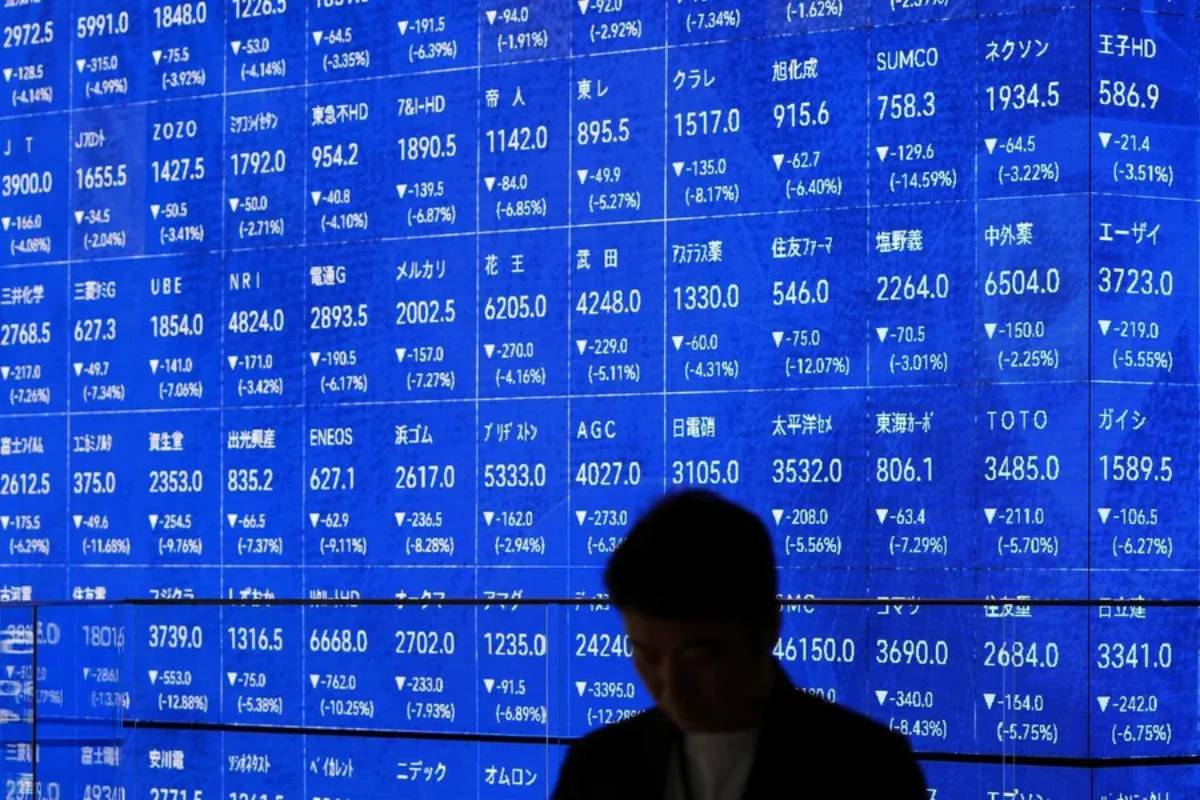
AI Investors Reassess Risk Outlook

Financial commentators and market analysts are increasingly drawing comparisons between the dot-com bubble era and the current AI investment cycle.

June 1, 2026
|
Image Source: Forbes

A renewed wave of caution is emerging among global investors as parallels between the early internet boom and today’s artificial intelligence surge gain traction in financial markets. The discussion centers on valuation discipline, speculative excess, and long-term value creation, as stakeholders reassess whether current AI enthusiasm is grounded in sustainable fundamentals. The debate is shaping capital allocation strategies across technology sectors, with implications for institutional investors, startups, and global equity markets.

Financial commentators and market analysts are increasingly drawing comparisons between the dot-com bubble era and the current AI investment cycle. The focus is on whether rapid capital inflows into AI-related companies are supported by proportional revenue growth and profitability.

Investors are closely examining whether AI-driven firms are delivering tangible business outcomes or relying heavily on future growth expectations. This scrutiny has intensified as valuations across certain AI-linked equities have surged significantly in recent periods.

Institutional capital continues to flow into AI infrastructure, including semiconductors, cloud computing, and data-center expansion. However, concerns are emerging around concentration risk, speculative positioning, and uneven monetization across the AI value chain.

The broader conversation reflects a shift from enthusiasm-driven investment behavior toward a more disciplined, fundamentals-based approach. The development aligns with a broader trend across global markets where transformative technologies often experience cycles of rapid expansion followed by periods of correction and rationalization. The internet boom of the late 1990s serves as a key historical reference point, where excessive speculation led to a sharp market downturn before long-term winners eventually emerged.

In the current cycle, artificial intelligence has become the dominant investment narrative, driving record capital inflows into technology companies positioned across hardware, software, and cloud infrastructure ecosystems. The rapid rise of generative AI since 2022 has accelerated expectations around productivity gains, automation, and new revenue models.

However, historical precedent suggests that transformative technologies often take longer than expected to generate widespread profitability. Early infrastructure buildouts tend to precede commercial maturity by several years, creating volatility in investor sentiment.

Geopolitically, AI has also become a strategic priority for major economies, reinforcing investment momentum even amid concerns about valuation sustainability. Governments view AI as a critical driver of future competitiveness, further amplifying capital inflows into the sector.

Market analysts emphasize that the most important lesson from the internet bubble era is not to avoid transformative technologies, but to distinguish between hype cycles and durable business models. They argue that long-term value creation ultimately depends on monetization capability, scalable adoption, and sustainable competitive advantages.

Financial strategists note that while AI adoption is real and accelerating, not all companies within the ecosystem will benefit equally. Infrastructure providers and foundational technology firms may capture a larger share of value compared to application-layer companies with weaker differentiation.

Investment experts also highlight that market corrections in high-growth sectors are not necessarily indicators of failure but often represent normalization phases where capital reallocates toward fundamentally stronger players.

Corporate executives within the technology sector continue to express confidence in AI’s long-term potential, while acknowledging that near-term expectations may need recalibration as markets mature.

For global executives, the renewed focus on valuation discipline underscores the importance of aligning AI investments with measurable business outcomes. Companies may face increased pressure from shareholders to demonstrate profitability and operational efficiency.

Investors are likely to become more selective, favoring firms with proven revenue models, strong infrastructure positioning, and clear paths to monetization. This could lead to increased market differentiation within the AI sector.

For policymakers, the rise of AI-driven market concentration raises questions around competition policy, systemic financial risk, and the broader economic impact of technology cycles. Consumers may ultimately benefit from more stable and reliable AI services, but could also experience volatility in innovation pace if investment cycles tighten.

The next phase of the AI investment cycle will likely be defined by greater scrutiny, selective capital deployment, and clearer separation between speculative narratives and sustainable business models. Decision-makers should monitor earnings performance, adoption rates, and infrastructure utilization trends. The central question remains whether AI will follow the same trajectory as previous technological revolutions delivering long-term transformation after short-term volatility.

Source: Forbes
Date:
May 31, 2026

  • Featured tools
Neuron AI
Free

Neuron AI is an AI-driven content optimization platform that helps creators produce SEO-friendly content by combining semantic SEO, competitor analysis, and AI-assisted writing workflows.

#
SEO
Learn more
Surfer AI
Free

Surfer AI is an AI-powered content creation assistant built into the Surfer SEO platform, designed to generate SEO-optimized articles from prompts, leveraging data from search results to inform tone, structure, and relevance.

#
SEO
Learn more

Learn more about future of AI

Join 80,000+ Ai enthusiast getting weekly updates on exciting AI tools.
Thank you! Your submission has been received!
Oops! Something went wrong while submitting the form.

AI Investors Reassess Risk Outlook

June 1, 2026

Financial commentators and market analysts are increasingly drawing comparisons between the dot-com bubble era and the current AI investment cycle.

Image Source: Forbes

A renewed wave of caution is emerging among global investors as parallels between the early internet boom and today’s artificial intelligence surge gain traction in financial markets. The discussion centers on valuation discipline, speculative excess, and long-term value creation, as stakeholders reassess whether current AI enthusiasm is grounded in sustainable fundamentals. The debate is shaping capital allocation strategies across technology sectors, with implications for institutional investors, startups, and global equity markets.

Financial commentators and market analysts are increasingly drawing comparisons between the dot-com bubble era and the current AI investment cycle. The focus is on whether rapid capital inflows into AI-related companies are supported by proportional revenue growth and profitability.

Investors are closely examining whether AI-driven firms are delivering tangible business outcomes or relying heavily on future growth expectations. This scrutiny has intensified as valuations across certain AI-linked equities have surged significantly in recent periods.

Institutional capital continues to flow into AI infrastructure, including semiconductors, cloud computing, and data-center expansion. However, concerns are emerging around concentration risk, speculative positioning, and uneven monetization across the AI value chain.

The broader conversation reflects a shift from enthusiasm-driven investment behavior toward a more disciplined, fundamentals-based approach. The development aligns with a broader trend across global markets where transformative technologies often experience cycles of rapid expansion followed by periods of correction and rationalization. The internet boom of the late 1990s serves as a key historical reference point, where excessive speculation led to a sharp market downturn before long-term winners eventually emerged.

In the current cycle, artificial intelligence has become the dominant investment narrative, driving record capital inflows into technology companies positioned across hardware, software, and cloud infrastructure ecosystems. The rapid rise of generative AI since 2022 has accelerated expectations around productivity gains, automation, and new revenue models.

However, historical precedent suggests that transformative technologies often take longer than expected to generate widespread profitability. Early infrastructure buildouts tend to precede commercial maturity by several years, creating volatility in investor sentiment.

Geopolitically, AI has also become a strategic priority for major economies, reinforcing investment momentum even amid concerns about valuation sustainability. Governments view AI as a critical driver of future competitiveness, further amplifying capital inflows into the sector.

Market analysts emphasize that the most important lesson from the internet bubble era is not to avoid transformative technologies, but to distinguish between hype cycles and durable business models. They argue that long-term value creation ultimately depends on monetization capability, scalable adoption, and sustainable competitive advantages.

Financial strategists note that while AI adoption is real and accelerating, not all companies within the ecosystem will benefit equally. Infrastructure providers and foundational technology firms may capture a larger share of value compared to application-layer companies with weaker differentiation.

Investment experts also highlight that market corrections in high-growth sectors are not necessarily indicators of failure but often represent normalization phases where capital reallocates toward fundamentally stronger players.

Corporate executives within the technology sector continue to express confidence in AI’s long-term potential, while acknowledging that near-term expectations may need recalibration as markets mature.

For global executives, the renewed focus on valuation discipline underscores the importance of aligning AI investments with measurable business outcomes. Companies may face increased pressure from shareholders to demonstrate profitability and operational efficiency.

Investors are likely to become more selective, favoring firms with proven revenue models, strong infrastructure positioning, and clear paths to monetization. This could lead to increased market differentiation within the AI sector.

For policymakers, the rise of AI-driven market concentration raises questions around competition policy, systemic financial risk, and the broader economic impact of technology cycles. Consumers may ultimately benefit from more stable and reliable AI services, but could also experience volatility in innovation pace if investment cycles tighten.

The next phase of the AI investment cycle will likely be defined by greater scrutiny, selective capital deployment, and clearer separation between speculative narratives and sustainable business models. Decision-makers should monitor earnings performance, adoption rates, and infrastructure utilization trends. The central question remains whether AI will follow the same trajectory as previous technological revolutions delivering long-term transformation after short-term volatility.

Source: Forbes
Date:
May 31, 2026

Promote Your Tool

Copy Embed Code

Similar Blogs

June 1, 2026
|

Amazon Faces AI Metric Scrutiny Reported

The controversy centers around concerns that AI performance metrics, particularly token usage benchmarks, may be optimized in ways that do not fully reflect real-world efficiency.
Read more
June 1, 2026
|

Smart Home AI Gains Traction

AI-enabled smart home features are increasingly being embedded across lighting systems, thermostats, security cameras, and voice assistants, offering users more adaptive and context-aware control over their living environments.
Read more
June 1, 2026
|

Acer Joins AI Smart Glasses Race

Acer has indicated its intent to develop smart glasses equipped with augmented reality features and integrated AI assistant capabilities, positioning the product as part of its broader expansion into AI-enabled hardware.
Read more
June 1, 2026
|

AI Consumer Gadget Sparks Crypto Debate

The reported concept centers around an AI-enabled vaping device designed to track user behavior and potentially reward usage patterns with cryptocurrency incentives such as Bitcoin.
Read more
June 1, 2026
|

SpaceX IPO Sparks Wealth Concentration Debate

Reports and market commentary suggest that SpaceX is moving closer toward a potential initial public offering, although no final timeline has been confirmed.
Read more
June 1, 2026
|

Gaming Market Competition Intensifies Launch Pricing

007 First Light has been made available at a reduced price shortly after its release announcement phase, with discounts observed on both console and PC digital storefronts, including PlayStation Store and Steam.
Read more