
AI Memory Surge Triggers Global Chip Supply Crunch

Major chipmakers and memory suppliers are struggling to expand output quickly enough, leading to tightening inventories and upward pricing pressure.

February 16, 2026
|

A fresh strain is emerging in the global semiconductor supply chain as surging demand for AI memory chips outpaces production capacity. The imbalance is driving price volatility and raising concerns among technology firms, investors, and policymakers about the resilience of critical digital infrastructure.

Major chipmakers and memory suppliers are struggling to expand output quickly enough, leading to tightening inventories and upward pricing pressure. The surge is closely tied to orders from hyperscale cloud providers and AI hardware leaders.

Supply constraints are also intersecting with geopolitical factors, including export controls and concentration of manufacturing capacity in East Asia, amplifying systemic risk.

The development aligns with a broader trend across global markets where AI infrastructure investment is accelerating faster than supply chains can adapt. Since 2023, AI-driven capital expenditure has reshaped semiconductor demand patterns, shifting focus from traditional computing chips to specialised GPUs and memory-intensive architectures.

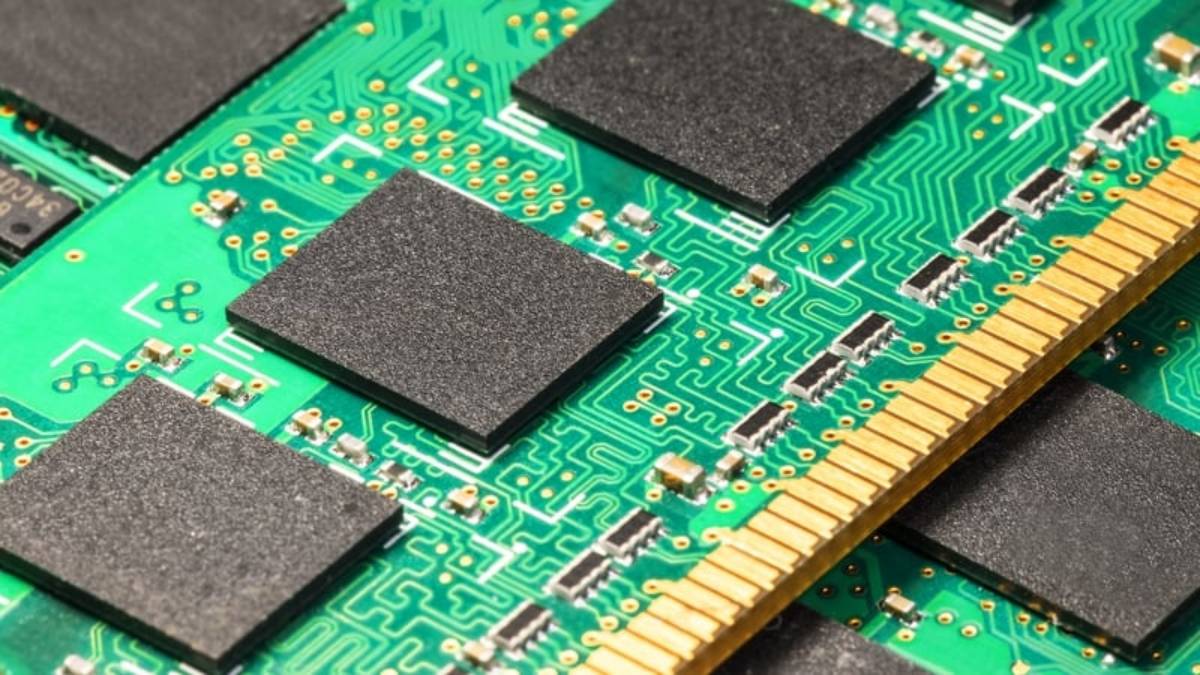
Memory, particularly high-bandwidth variants, has become a strategic bottleneck. AI workloads require rapid data throughput between processors and memory modules, making HBM a critical enabler of performance.

The semiconductor industry has historically experienced cyclical booms and busts. However, AI’s structural demand profile differs from consumer electronics cycles, as enterprise adoption and cloud deployment drive sustained infrastructure expansion.

Geopolitically, semiconductor production remains heavily concentrated in regions such as Taiwan and South Korea, heightening vulnerability to trade tensions and regional instability.

Industry analysts suggest that the current memory crunch underscores AI’s capital intensity and infrastructure dependency. Semiconductor strategists note that while logic chips often capture headlines, memory capacity determines real-world scalability of large language models and data-intensive systems.

Market observers point out that suppliers capable of producing advanced memory modules may gain pricing power in the near term. However, capacity expansion requires multibillion-dollar fabrication investments and long lead times.

Technology executives have indicated that supply prioritisation strategies are being implemented, allocating memory resources to the most profitable AI workloads. Meanwhile, policymakers in major economies are monitoring the situation as part of broader semiconductor resilience strategies.

Experts warn that prolonged imbalance could slow AI deployment timelines or increase costs for downstream industries integrating AI capabilities. For global executives, the shift could redefine procurement strategies and long-term infrastructure planning. Companies dependent on AI-driven analytics, automation, or cloud services may face higher costs or delayed rollouts if memory shortages persist.

Investors are likely to reassess semiconductor exposure, distinguishing between diversified chipmakers and specialised memory producers poised to benefit from pricing momentum.

Governments may accelerate domestic semiconductor incentive programmes to reduce reliance on concentrated supply chains. Strategic stockpiling, public-private partnerships, and targeted subsidies could re-emerge as policy tools.

In an AI-driven economy, memory capacity is no longer a peripheral component it is a core strategic asset. Capacity expansion plans from major memory manufacturers will be closely watched, alongside capital expenditure guidance from hyperscalers. Price trends in high-bandwidth memory markets will serve as a key indicator of supply stabilisation.

While investment pipelines are growing, structural constraints may persist in the near term. For decision-makers, securing reliable AI infrastructure supply could become as critical as software innovation itself.

Source: Bloomberg
Date: February 15, 2026

  • Featured tools
WellSaid Ai
Free

WellSaid AI is an advanced text-to-speech platform that transforms written text into lifelike, human-quality voiceovers.

#
Text to Speech
Learn more
Hostinger Website Builder
Paid

Hostinger Website Builder is a drag-and-drop website creator bundled with hosting and AI-powered tools, designed for businesses, blogs and small shops with minimal technical effort.It makes launching a site fast and affordable, with templates, responsive design and built-in hosting all in one.

#
Productivity
#
Startup Tools
#
Ecommerce
Learn more

Learn more about future of AI

Join 80,000+ Ai enthusiast getting weekly updates on exciting AI tools.
Thank you! Your submission has been received!
Oops! Something went wrong while submitting the form.

AI Memory Surge Triggers Global Chip Supply Crunch

February 16, 2026

Major chipmakers and memory suppliers are struggling to expand output quickly enough, leading to tightening inventories and upward pricing pressure.

A fresh strain is emerging in the global semiconductor supply chain as surging demand for AI memory chips outpaces production capacity. The imbalance is driving price volatility and raising concerns among technology firms, investors, and policymakers about the resilience of critical digital infrastructure.

Major chipmakers and memory suppliers are struggling to expand output quickly enough, leading to tightening inventories and upward pricing pressure. The surge is closely tied to orders from hyperscale cloud providers and AI hardware leaders.

Supply constraints are also intersecting with geopolitical factors, including export controls and concentration of manufacturing capacity in East Asia, amplifying systemic risk.

The development aligns with a broader trend across global markets where AI infrastructure investment is accelerating faster than supply chains can adapt. Since 2023, AI-driven capital expenditure has reshaped semiconductor demand patterns, shifting focus from traditional computing chips to specialised GPUs and memory-intensive architectures.

Memory, particularly high-bandwidth variants, has become a strategic bottleneck. AI workloads require rapid data throughput between processors and memory modules, making HBM a critical enabler of performance.

The semiconductor industry has historically experienced cyclical booms and busts. However, AI’s structural demand profile differs from consumer electronics cycles, as enterprise adoption and cloud deployment drive sustained infrastructure expansion.

Geopolitically, semiconductor production remains heavily concentrated in regions such as Taiwan and South Korea, heightening vulnerability to trade tensions and regional instability.

Industry analysts suggest that the current memory crunch underscores AI’s capital intensity and infrastructure dependency. Semiconductor strategists note that while logic chips often capture headlines, memory capacity determines real-world scalability of large language models and data-intensive systems.

Market observers point out that suppliers capable of producing advanced memory modules may gain pricing power in the near term. However, capacity expansion requires multibillion-dollar fabrication investments and long lead times.

Technology executives have indicated that supply prioritisation strategies are being implemented, allocating memory resources to the most profitable AI workloads. Meanwhile, policymakers in major economies are monitoring the situation as part of broader semiconductor resilience strategies.

Experts warn that prolonged imbalance could slow AI deployment timelines or increase costs for downstream industries integrating AI capabilities. For global executives, the shift could redefine procurement strategies and long-term infrastructure planning. Companies dependent on AI-driven analytics, automation, or cloud services may face higher costs or delayed rollouts if memory shortages persist.

Investors are likely to reassess semiconductor exposure, distinguishing between diversified chipmakers and specialised memory producers poised to benefit from pricing momentum.

Governments may accelerate domestic semiconductor incentive programmes to reduce reliance on concentrated supply chains. Strategic stockpiling, public-private partnerships, and targeted subsidies could re-emerge as policy tools.

In an AI-driven economy, memory capacity is no longer a peripheral component it is a core strategic asset. Capacity expansion plans from major memory manufacturers will be closely watched, alongside capital expenditure guidance from hyperscalers. Price trends in high-bandwidth memory markets will serve as a key indicator of supply stabilisation.

While investment pipelines are growing, structural constraints may persist in the near term. For decision-makers, securing reliable AI infrastructure supply could become as critical as software innovation itself.

Source: Bloomberg
Date: February 15, 2026

Promote Your Tool

Copy Embed Code

Similar Blogs

February 16, 2026
|

Alibaba Launches Qwen3.5, Escalating Global Agentic AI Race

Alibaba introduced Qwen3.5 as an advanced foundation model designed to power autonomous AI agents capable of reasoning, planning, and executing complex tasks.
Read more
February 16, 2026
|

India Positions as Global AI Power Hub at Summit

The summit, hosted by the Government of India, brought together executives from leading AI firms, policymakers, startups, and industry stakeholders to discuss innovation, regulation, and AI adoption at scale.
Read more
February 16, 2026
|

Cognizant Deepens Google Cloud Alliance to Scale Agentic AI

Under the expanded collaboration, Cognizant will leverage Google Cloud’s AI infrastructure and foundation models to build and deploy agentic AI solutions for enterprise clients across industries.
Read more
February 16, 2026
|

Snowflake CEO Warns Software Giants Risk AI Irrelevance

Speaking amid accelerating enterprise AI adoption in early 2026, Ramaswamy argued that software companies failing to embed intelligence into their platforms could see value migrate to large AI model providers.
Read more
February 16, 2026
|

MiniMax Jumps 25% as Confidence Grows in China AI Revival

According to a report by MiniMax recorded a 25% jump in share value as sentiment improved toward Chinese AI developers. The surge reflects expectations of stronger product rollouts, enterprise adoption, and potential regulatory stabilisation in China’s tech sector.
Read more
February 16, 2026
|

Disney Confronts ByteDance in Escalating AI Copyright Clash

A new flashpoint in the global AI copyright battle has emerged as The Walt Disney Company issued a cease-and-desist notice to ByteDance over AI-generated videos allegedly using its intellectual property.
Read more