
AI Transforms Hiring With Human Skills

The rapid adoption of artificial intelligence is influencing recruitment strategies and redefining the skills companies seek from future employees.

July 10, 2026
|

Artificial intelligence is transforming the global employment landscape, changing how companies identify talent, evaluate skills, and structure workplaces. As automation expands across industries, employers are increasingly prioritizing adaptability, creativity, problem-solving, and digital expertise. The shift signals a major workforce transformation with implications for employees, businesses, and policymakers worldwide.

The rapid adoption of artificial intelligence is influencing recruitment strategies and redefining the skills companies seek from future employees. Organizations are increasingly using AI tools for hiring processes, productivity improvement, data analysis, and workplace automation.

While some routine tasks are becoming automated, demand is growing for professionals who can collaborate effectively with AI systems and apply human judgment to complex challenges. Skills such as critical thinking, communication, innovation, leadership, and AI literacy are becoming essential across industries.

Businesses are also investing in workforce training programmes to help employees adapt to changing job requirements and remain competitive in an AI-driven economy. The rise of artificial intelligence represents one of the most significant changes in the global labour market since the digital revolution. Advances in generative AI, automation, and machine learning are reshaping industries including technology, finance, healthcare, manufacturing, education, and professional services.

Historically, technological shifts have eliminated certain roles while creating new categories of employment. The current AI transformation follows a similar pattern, with companies seeking workers who can combine technical understanding with uniquely human capabilities.

Governments and businesses worldwide are focusing on reskilling initiatives to prepare employees for an evolving workplace. In Europe, policymakers are placing greater emphasis on digital skills, responsible AI adoption, and lifelong learning to ensure workers can benefit from technological progress rather than be displaced by it.

Workforce experts argue that AI should be viewed as a productivity partner rather than simply a replacement for human labour. They emphasize that employees who understand how to use AI tools effectively will gain a significant advantage in the future job market.

Industry analysts suggest that the most valuable professionals will be those who combine domain expertise with digital capabilities. Creativity, emotional intelligence, strategic thinking, and the ability to manage complex situations remain difficult for AI systems to replicate.

Business leaders are increasingly encouraging employees to develop AI literacy while strengthening interpersonal and leadership skills. Experts also highlight the importance of education systems adapting quickly to prepare future generations for AI-enabled careers, ensuring that technology adoption creates new opportunities rather than widening workforce inequalities.

For businesses, the AI-driven hiring shift requires a reassessment of recruitment strategies, employee development programmes, and workplace structures. Companies that invest in continuous learning and AI-enabled productivity tools are likely to gain competitive advantages.

Investors may increasingly evaluate organizations based on their ability to adapt workforce strategies alongside technological change. Policymakers face the challenge of supporting innovation while ensuring workers have access to training, education, and career transition opportunities.

For executives, the key priority will be creating workplaces where humans and AI systems collaborate effectively, combining automation benefits with creativity, judgment, and strategic decision-making.

AI will continue reshaping employment patterns as companies adopt new technologies and redefine workplace expectations. The future workforce will likely be defined less by traditional job roles and more by adaptable skill sets, digital fluency, and the ability to work alongside intelligent systems. Organizations and individuals that prioritize continuous learning will be best positioned to succeed in the evolving AI-powered economy.

Source: Silicon Luxembourg
Date: July 10, 2026

  • Featured tools
Figstack AI
Free

Figstack AI is an intelligent assistant for developers that explains code, generates docstrings, converts code between languages, and analyzes time complexity helping you work smarter, not harder.

#
Coding
Learn more
Tome AI
Free

Tome AI is an AI-powered storytelling and presentation tool designed to help users create compelling narratives and presentations quickly and efficiently. It leverages advanced AI technologies to generate content, images, and animations based on user input.

#
Presentation
#
Startup Tools
Learn more

Learn more about future of AI

Join 80,000+ Ai enthusiast getting weekly updates on exciting AI tools.
Thank you! Your submission has been received!
Oops! Something went wrong while submitting the form.

AI Transforms Hiring With Human Skills

July 10, 2026

The rapid adoption of artificial intelligence is influencing recruitment strategies and redefining the skills companies seek from future employees.

Artificial intelligence is transforming the global employment landscape, changing how companies identify talent, evaluate skills, and structure workplaces. As automation expands across industries, employers are increasingly prioritizing adaptability, creativity, problem-solving, and digital expertise. The shift signals a major workforce transformation with implications for employees, businesses, and policymakers worldwide.

The rapid adoption of artificial intelligence is influencing recruitment strategies and redefining the skills companies seek from future employees. Organizations are increasingly using AI tools for hiring processes, productivity improvement, data analysis, and workplace automation.

While some routine tasks are becoming automated, demand is growing for professionals who can collaborate effectively with AI systems and apply human judgment to complex challenges. Skills such as critical thinking, communication, innovation, leadership, and AI literacy are becoming essential across industries.

Businesses are also investing in workforce training programmes to help employees adapt to changing job requirements and remain competitive in an AI-driven economy. The rise of artificial intelligence represents one of the most significant changes in the global labour market since the digital revolution. Advances in generative AI, automation, and machine learning are reshaping industries including technology, finance, healthcare, manufacturing, education, and professional services.

Historically, technological shifts have eliminated certain roles while creating new categories of employment. The current AI transformation follows a similar pattern, with companies seeking workers who can combine technical understanding with uniquely human capabilities.

Governments and businesses worldwide are focusing on reskilling initiatives to prepare employees for an evolving workplace. In Europe, policymakers are placing greater emphasis on digital skills, responsible AI adoption, and lifelong learning to ensure workers can benefit from technological progress rather than be displaced by it.

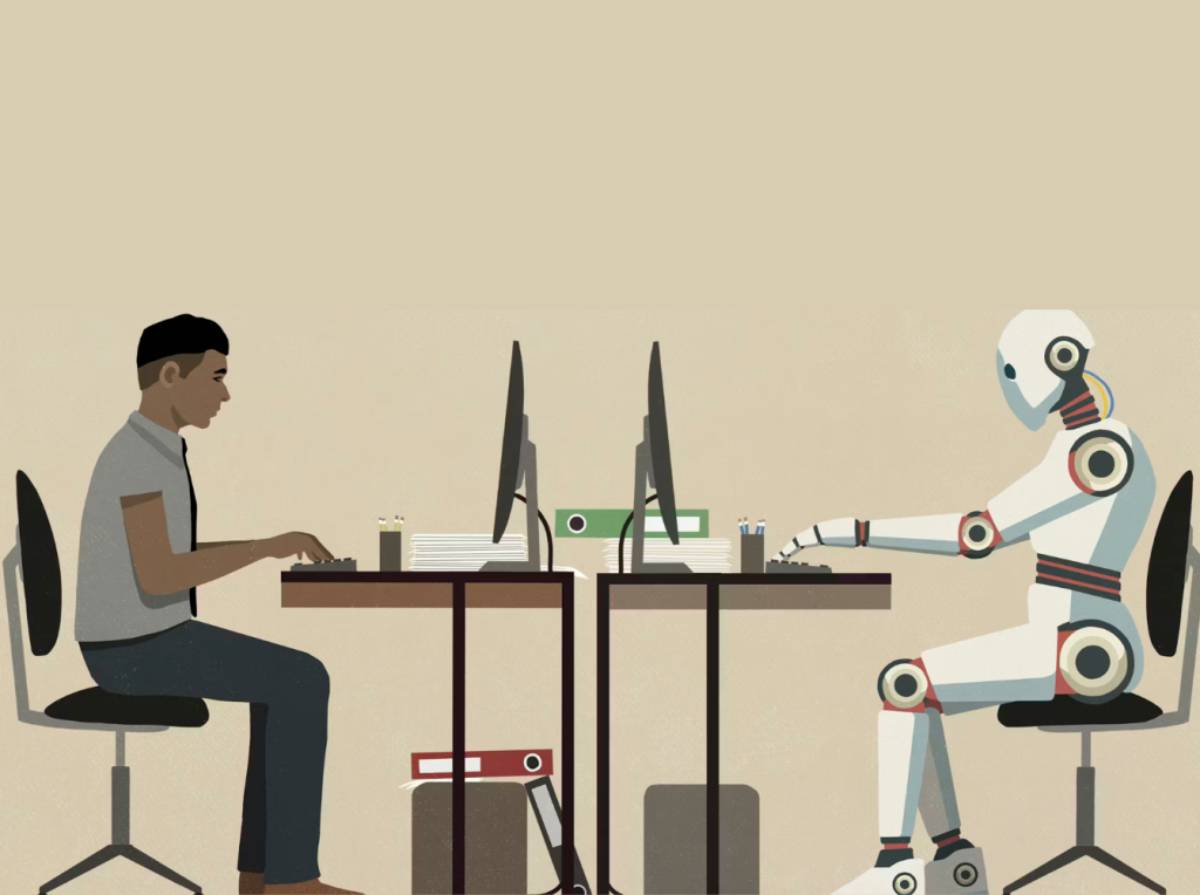
Workforce experts argue that AI should be viewed as a productivity partner rather than simply a replacement for human labour. They emphasize that employees who understand how to use AI tools effectively will gain a significant advantage in the future job market.

Industry analysts suggest that the most valuable professionals will be those who combine domain expertise with digital capabilities. Creativity, emotional intelligence, strategic thinking, and the ability to manage complex situations remain difficult for AI systems to replicate.

Business leaders are increasingly encouraging employees to develop AI literacy while strengthening interpersonal and leadership skills. Experts also highlight the importance of education systems adapting quickly to prepare future generations for AI-enabled careers, ensuring that technology adoption creates new opportunities rather than widening workforce inequalities.

For businesses, the AI-driven hiring shift requires a reassessment of recruitment strategies, employee development programmes, and workplace structures. Companies that invest in continuous learning and AI-enabled productivity tools are likely to gain competitive advantages.

Investors may increasingly evaluate organizations based on their ability to adapt workforce strategies alongside technological change. Policymakers face the challenge of supporting innovation while ensuring workers have access to training, education, and career transition opportunities.

For executives, the key priority will be creating workplaces where humans and AI systems collaborate effectively, combining automation benefits with creativity, judgment, and strategic decision-making.

AI will continue reshaping employment patterns as companies adopt new technologies and redefine workplace expectations. The future workforce will likely be defined less by traditional job roles and more by adaptable skill sets, digital fluency, and the ability to work alongside intelligent systems. Organizations and individuals that prioritize continuous learning will be best positioned to succeed in the evolving AI-powered economy.

Source: Silicon Luxembourg
Date: July 10, 2026

Promote Your Tool

Copy Embed Code

Similar Blogs

July 10, 2026
|

Swiss Bank Warns AI Investment Bubble Risks

Raiffeisen’s chief economist has cautioned investors about the possibility of an AI-driven investment bubble, pointing to rapidly increasing valuations and strong market expectations surrounding artificial intelligence companies.
Read more
July 10, 2026
|

Swiss Ethics Proposal Faces Limited Support

A Swiss government-backed counter-proposal on corporate responsibility has struggled to gain strong support, raising questions about the future direction of ethical business regulation in the country.
Read more
July 10, 2026
|

SWISS Faces IT Disruption Compensation Claims

SWISS is investigating claims for compensation after a Skyguide IT outage affected air traffic management operations and created disruptions across the aviation sector.
Read more
July 10, 2026
|

Moleculent Advances Spatial Biology Discovery

Moleculent’s $20 million funding round will support the development and commercialization of its spatial biology technology, which focuses on mapping molecular interactions within tissue samples.
Read more
July 10, 2026
|

G&W Electric Acquires Safegrid Grid Innovation

G&W Electric’s acquisition of Safegrid brings together established grid equipment expertise with advanced monitoring technology designed to improve power network visibility and operational efficiency.
Read more
July 10, 2026
|

Pit Raises $16M Enterprise Data Funding

Pit’s $16 million funding round, backed by prominent venture investors including Andreessen Horowitz (a16z), will support the company’s mission to build a new layer of enterprise workflow infrastructure.
Read more