



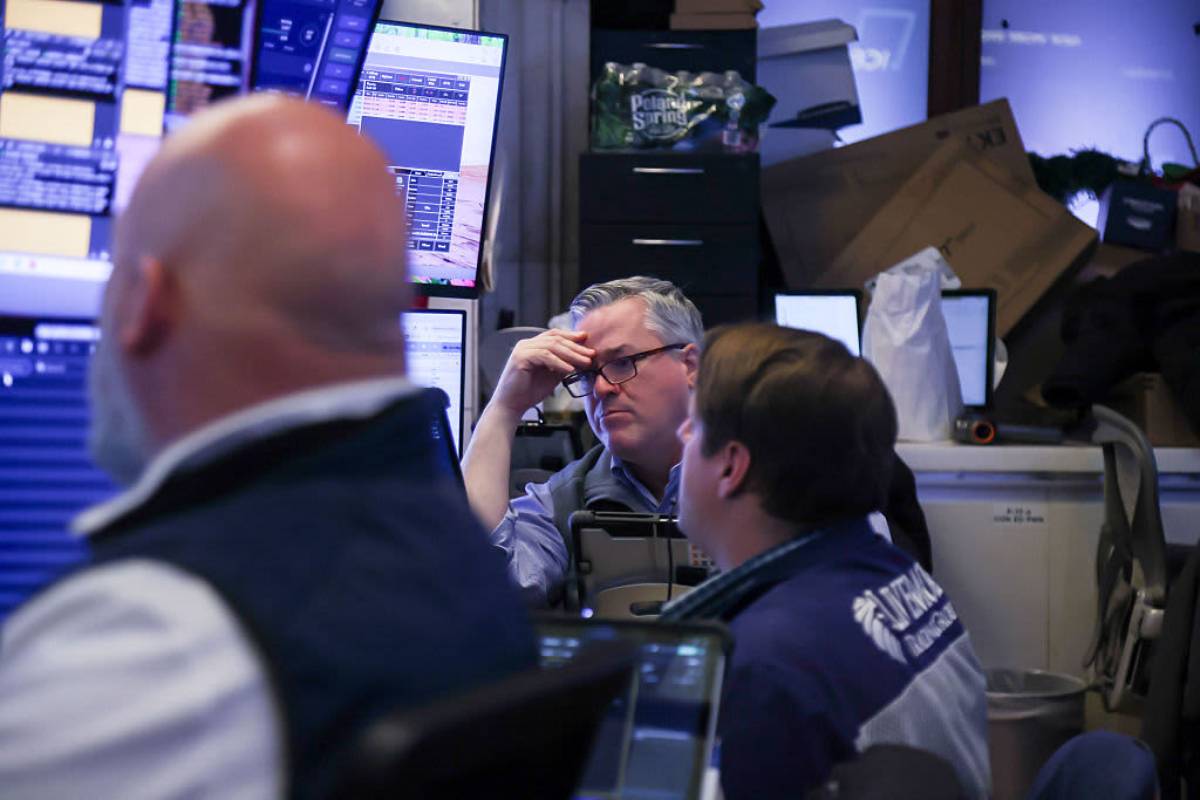
U.S. markets faced renewed turbulence as investor anxiety over artificial intelligence valuations combined with confusion surrounding potential tariff measures from Washington. The dual pressures unsettled equities, particularly in technology, signaling a fragile phase for global markets already navigating policy uncertainty and AI-driven sector rotation.
Major U.S. indices declined amid mounting concerns that AI-linked stocks may be overheated following months of aggressive gains. Investors reassessed positions in high-growth technology names as volatility resurfaced across the sector.
At the same time, uncertainty around potential tariff actions under the administration of Donald Trump added to market unease. Mixed messaging on trade measures created confusion for businesses reliant on global supply chains.
Technology and semiconductor stocks bore the brunt of the selloff, reflecting sensitivity to both AI demand expectations and geopolitical trade policy. The pullback highlights how quickly sentiment can shift when innovation optimism collides with macroeconomic risk.
The development aligns with a broader trend across global markets where AI enthusiasm has driven concentrated gains in select technology stocks. Investors have poured capital into companies perceived as leaders in AI infrastructure, software, and semiconductors.
However, elevated valuations have made the sector vulnerable to corrections, particularly when macroeconomic uncertainty intensifies. Trade policy remains a central variable for multinational corporations, especially in technology and manufacturing sectors dependent on cross-border supply chains.
Tariff ambiguity complicates corporate planning, affecting procurement costs, capital expenditure strategies, and pricing models. The convergence of AI-driven market exuberance and geopolitical trade risk creates a volatile environment for portfolio managers and corporate strategists alike.
For executives, the episode underscores the interconnectedness of innovation cycles and policy stability. Market analysts suggest the downturn reflects a recalibration rather than a structural rejection of AI’s growth potential. Strategists note that periods of rapid technological transformation often coincide with valuation swings as investors reassess earnings visibility.
Trade policy experts warn that unclear tariff frameworks can have immediate psychological impacts on markets, even before formal implementation. Companies exposed to global manufacturing networks are particularly sensitive to shifting signals from Washington.
Investment managers emphasize diversification and disciplined risk management in AI-heavy portfolios. While long-term demand for AI infrastructure remains strong, short-term volatility is expected as political and economic variables intersect.
Executives are being advised to maintain scenario planning for both supply chain disruptions and sector-specific valuation shifts. For global corporations, the combined shock of AI valuation concerns and tariff uncertainty necessitates strategic recalibration. Companies may need to reassess capital allocation plans, supplier diversification strategies, and exposure to trade-sensitive markets.
Investors could rotate into defensive sectors if volatility persists, reshaping short-term capital flows.
From a policy perspective, clearer communication on trade intentions may become critical to stabilizing market confidence. Regulatory clarity around AI investment and cross-border technology flows will also influence long-term competitiveness.
For boards and C-suite leaders, proactive risk management will be essential in navigating this dual-layered uncertainty. Markets will closely monitor forthcoming economic data, corporate earnings guidance, and official trade announcements for signals of stabilization. AI demand fundamentals remain intact, but valuation sensitivity is likely to persist.
Decision-makers should prepare for continued volatility as innovation momentum and geopolitical strategy evolve in parallel. Stability will depend as much on policy clarity as on technological performance.
Source: CNBC
Date: February 24, 2026


