
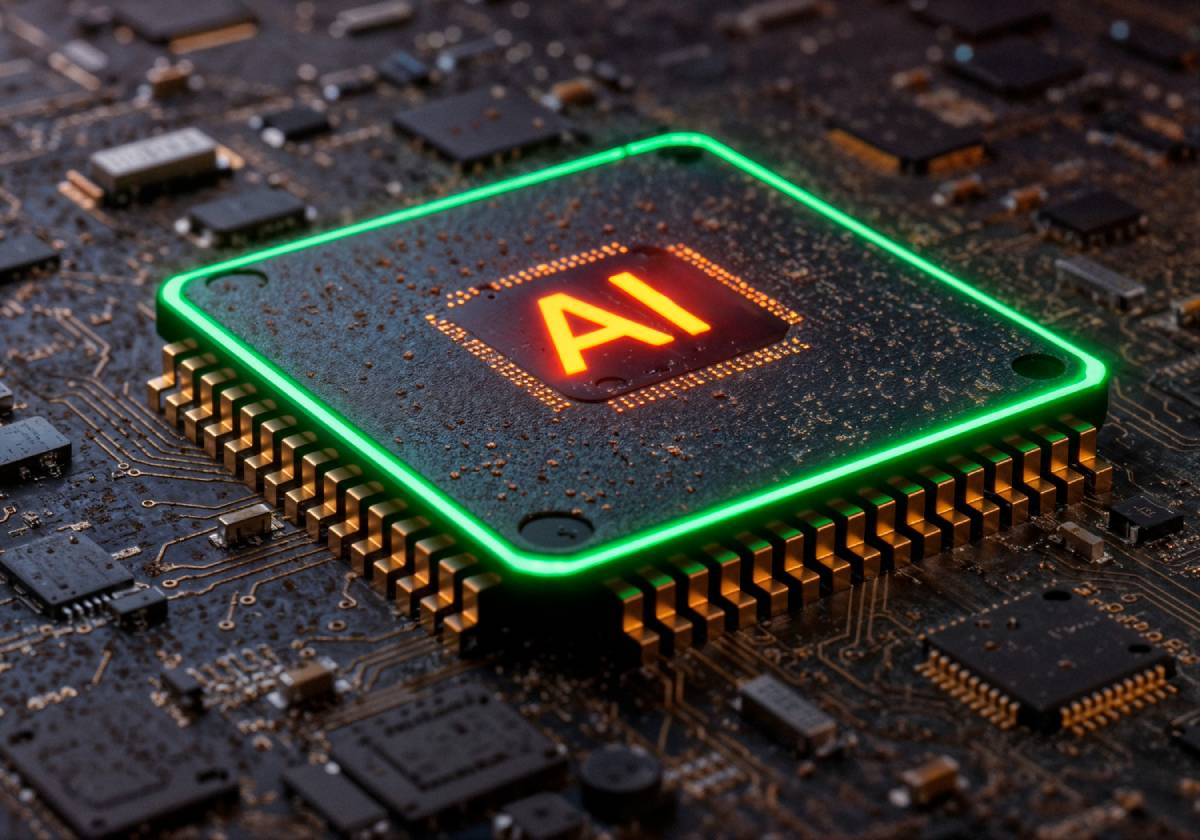
Alibaba Moves to Spin Off AI Chip Arm T-Head

Alibaba is said to be in the early stages of planning an IPO for T-Head, its in-house semiconductor division established in 2018. The unit is expected to undergo restructuring, including partial employee ownership.

January 23, 2026
|

A major development unfolded as Alibaba Group is reported to be preparing an initial public offering for its AI chipmaking unit, T-Head Semiconductor. The move signals a strategic shift to unlock value from advanced AI hardware capabilities, with implications for global technology competition, investors, and China’s push for semiconductor self-reliance.

Alibaba is said to be in the early stages of planning an IPO for T-Head, its in-house semiconductor division established in 2018. The unit is expected to undergo restructuring, including partial employee ownership, ahead of a potential listing. While no formal timeline or valuation has been disclosed, the move aligns with rising investor appetite for AI infrastructure assets. Market reaction was positive, with Alibaba shares gaining following reports of the plan. T-Head develops AI accelerators and processors used across Alibaba’s cloud and e-commerce platforms, and has also begun supplying chips to external clients. The IPO would mark one of the most significant listings by a Chinese AI hardware firm in recent years.

The development aligns with a broader trend across global markets where technology groups are spinning off high-growth AI and semiconductor units to sharpen focus and unlock shareholder value. Demand for AI chips has surged worldwide, driven by data-centre expansion, generative AI workloads, and national security considerations.
For China, the move carries additional strategic weight. U.S. export controls have limited Chinese access to advanced chips and manufacturing tools, accelerating Beijing’s push for domestic alternatives. Alibaba’s T-Head has emerged as a key pillar in that effort, developing products ranging from AI inference chips to general-purpose CPUs.
The planned IPO follows similar capital-market moves by Chinese semiconductor firms, reflecting policy support for local innovation and growing investor confidence in home-grown AI hardware. For Alibaba, it also represents a recalibration after years of regulatory pressure and restructuring.

Analysts view the potential listing as a strategic milestone for both Alibaba and China’s semiconductor ecosystem. Market observers suggest that separating T-Head could allow greater capital allocation toward research, talent retention, and commercial expansion beyond Alibaba’s internal needs.
Industry experts note that AI chip development is capital-intensive and benefits from clearer governance and independent balance sheets, which an IPO could provide. Some analysts argue that public markets may better recognise the long-term value of AI hardware assets compared to conglomerate structures.
While Alibaba has not formally confirmed the plan, people familiar with the matter describe it as part of a longer-term effort to position the group as a foundational AI infrastructure provider. The move is also seen as a signal to policymakers and partners that Alibaba intends to play a central role in China’s strategic technology ambitions.

For global businesses, Alibaba’s move underscores intensifying competition in AI hardware, potentially offering new alternatives to dominant Western chipmakers. Enterprises operating in Asia may see expanded sourcing options as Chinese AI silicon matures.
Investors could benefit from increased exposure to AI infrastructure through public markets, while policymakers may interpret the IPO as progress toward semiconductor self-sufficiency. At the same time, regulators are likely to scrutinise AI governance, data security, and national-interest considerations tied to advanced chip technologies.
For multinational firms, the development reinforces the need to reassess supply-chain resilience and geopolitical risk in AI and cloud infrastructure strategies.

Attention now turns to the timing, listing venue, and valuation of T-Head’s potential IPO. Decision-makers will closely watch regulatory approvals, investor demand, and the unit’s ability to compete commercially with global peers. Product performance, external customer adoption, and policy alignment will be key indicators of whether the spin-off can evolve into a globally competitive AI chip champion.

Source & Date

Source: Bloomberg
Date: January 22, 2026

  • Featured tools
Neuron AI
Free

Neuron AI is an AI-driven content optimization platform that helps creators produce SEO-friendly content by combining semantic SEO, competitor analysis, and AI-assisted writing workflows.

#
SEO
Learn more
Murf Ai
Free

Murf AI Review – Advanced AI Voice Generator for Realistic Voiceovers

#
Text to Speech
Learn more

Learn more about future of AI

Join 80,000+ Ai enthusiast getting weekly updates on exciting AI tools.
Thank you! Your submission has been received!
Oops! Something went wrong while submitting the form.

Alibaba Moves to Spin Off AI Chip Arm T-Head

January 23, 2026

Alibaba is said to be in the early stages of planning an IPO for T-Head, its in-house semiconductor division established in 2018. The unit is expected to undergo restructuring, including partial employee ownership.

A major development unfolded as Alibaba Group is reported to be preparing an initial public offering for its AI chipmaking unit, T-Head Semiconductor. The move signals a strategic shift to unlock value from advanced AI hardware capabilities, with implications for global technology competition, investors, and China’s push for semiconductor self-reliance.

Alibaba is said to be in the early stages of planning an IPO for T-Head, its in-house semiconductor division established in 2018. The unit is expected to undergo restructuring, including partial employee ownership, ahead of a potential listing. While no formal timeline or valuation has been disclosed, the move aligns with rising investor appetite for AI infrastructure assets. Market reaction was positive, with Alibaba shares gaining following reports of the plan. T-Head develops AI accelerators and processors used across Alibaba’s cloud and e-commerce platforms, and has also begun supplying chips to external clients. The IPO would mark one of the most significant listings by a Chinese AI hardware firm in recent years.

The development aligns with a broader trend across global markets where technology groups are spinning off high-growth AI and semiconductor units to sharpen focus and unlock shareholder value. Demand for AI chips has surged worldwide, driven by data-centre expansion, generative AI workloads, and national security considerations.
For China, the move carries additional strategic weight. U.S. export controls have limited Chinese access to advanced chips and manufacturing tools, accelerating Beijing’s push for domestic alternatives. Alibaba’s T-Head has emerged as a key pillar in that effort, developing products ranging from AI inference chips to general-purpose CPUs.
The planned IPO follows similar capital-market moves by Chinese semiconductor firms, reflecting policy support for local innovation and growing investor confidence in home-grown AI hardware. For Alibaba, it also represents a recalibration after years of regulatory pressure and restructuring.

Analysts view the potential listing as a strategic milestone for both Alibaba and China’s semiconductor ecosystem. Market observers suggest that separating T-Head could allow greater capital allocation toward research, talent retention, and commercial expansion beyond Alibaba’s internal needs.
Industry experts note that AI chip development is capital-intensive and benefits from clearer governance and independent balance sheets, which an IPO could provide. Some analysts argue that public markets may better recognise the long-term value of AI hardware assets compared to conglomerate structures.
While Alibaba has not formally confirmed the plan, people familiar with the matter describe it as part of a longer-term effort to position the group as a foundational AI infrastructure provider. The move is also seen as a signal to policymakers and partners that Alibaba intends to play a central role in China’s strategic technology ambitions.

For global businesses, Alibaba’s move underscores intensifying competition in AI hardware, potentially offering new alternatives to dominant Western chipmakers. Enterprises operating in Asia may see expanded sourcing options as Chinese AI silicon matures.
Investors could benefit from increased exposure to AI infrastructure through public markets, while policymakers may interpret the IPO as progress toward semiconductor self-sufficiency. At the same time, regulators are likely to scrutinise AI governance, data security, and national-interest considerations tied to advanced chip technologies.
For multinational firms, the development reinforces the need to reassess supply-chain resilience and geopolitical risk in AI and cloud infrastructure strategies.

Attention now turns to the timing, listing venue, and valuation of T-Head’s potential IPO. Decision-makers will closely watch regulatory approvals, investor demand, and the unit’s ability to compete commercially with global peers. Product performance, external customer adoption, and policy alignment will be key indicators of whether the spin-off can evolve into a globally competitive AI chip champion.

Source & Date

Source: Bloomberg
Date: January 22, 2026

Promote Your Tool

Copy Embed Code

Similar Blogs

January 23, 2026
|

Intel Faces AI Data Center Supply Crunch, Shares Slide 13%

Intel reported that its current production capacity is insufficient to meet skyrocketing demand from hyperscale data centers deploying AI workloads. Short-term supply constraints have affected new orders.
Read more
January 23, 2026
|

Johansson & Blanchett Support Campaign Accusing AI Firms Theft

A major development unfolded today as Scarlett Johansson and Cate Blanchett publicly endorsed a campaign alleging that AI companies are misappropriating creative content. The move highlights rising tensions.
Read more
January 23, 2026
|

OpenAI Faces Strategic Uncertainty Amid Investor Leadership Concerns

Noble, a renowned tech investor, publicly questioned CEO Sam Altman’s strategic decisions, citing risks tied to rapid scaling, competitive pressures, and operational governance.
Read more
January 23, 2026
|

Infosys Identifies Financial Services as Primary Catalyst for AI Growth

The CEO emphasized partnerships with global banks, insurers, and fintech firms to co-develop AI solutions tailored to sector-specific challenges. Investments in AI platforms, cloud integration.
Read more
January 23, 2026
|

Fossil fuels are a crutch: How AI’s unlikely winner could be renewable energy

AI applications are streamlining energy production, storage, and distribution in solar, wind, and battery systems, improving predictive maintenance and grid management. Several AI startups.
Read more
January 23, 2026
|

Apple Explores AI Pin with Cameras, Microphones, Next-Gen Wearable

Apple aims to leverage its ecosystem iOS, WatchOS, and AirPods for seamless connectivity, creating a cohesive experience across devices. Competitors in AI wearables, including Google, Meta, and emerging startups.
Read more