



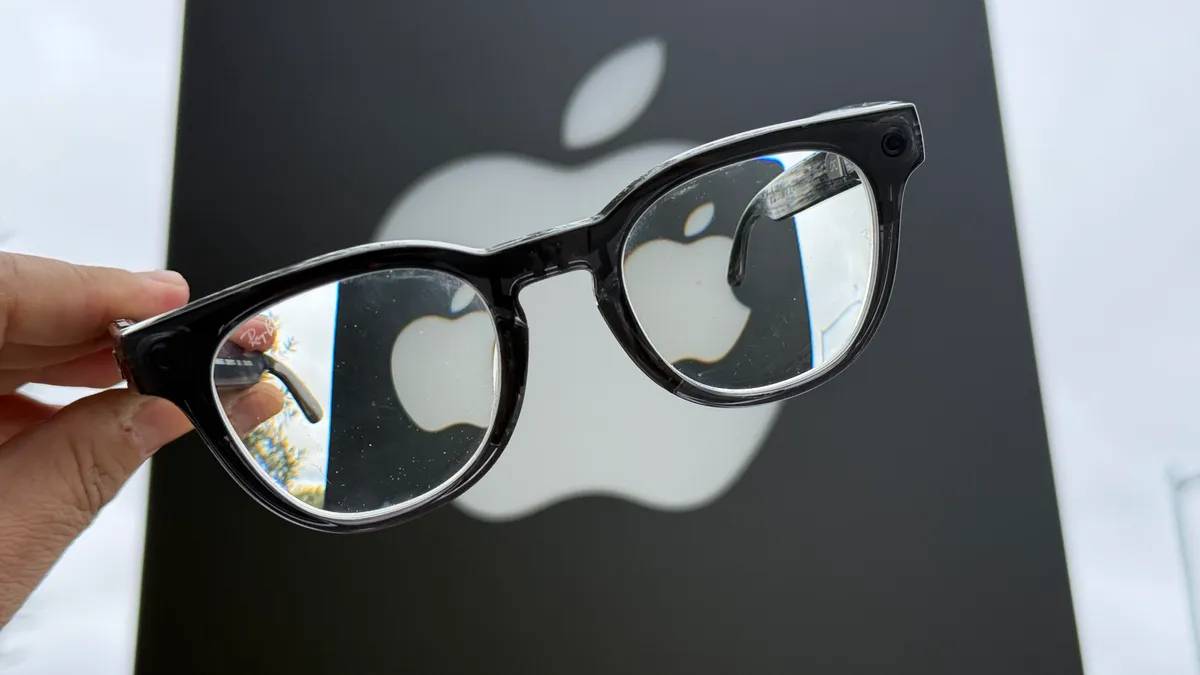
Apple is reportedly repositioning Siri as the foundational interface for its upcoming smart glasses, signaling a deeper shift toward ambient, voice-first computing. The move underscores Apple’s intent to embed AI-driven interaction across wearable devices, potentially reshaping how users engage with digital ecosystems. The development has implications for device makers, AI platforms, and consumer tech competition globally.
Apple is evolving Siri from a device-based assistant into a system-wide intelligence layer expected to power future smart glasses. The company is said to be integrating advanced contextual awareness, enabling real-time voice interaction, environmental understanding, and app-free computing.
The initiative aligns with Apple’s broader wearable strategy, following the Vision Pro ecosystem push. While timelines remain unconfirmed, industry reporting suggests early-stage development is already underway. Key stakeholders include Apple’s AI division, hardware engineering teams, and third-party developers expected to adapt services for voice-first interfaces. The shift also places pressure on competitors like Google and Meta in the wearable AI space.
The move reflects a broader industry transition toward ambient computing, where devices anticipate user needs rather than relying on manual input. Tech companies are racing to define the next computing interface beyond smartphones, with wearables and AI assistants emerging as central battlegrounds.
Apple’s strategy builds on years of incremental Siri integration but now appears to reposition it as a core operating layer rather than a peripheral tool. This aligns with global trends in generative AI, multimodal interaction, and spatial computing. Historically, Siri lagged behind rivals in conversational capability, prompting Apple to accelerate internal AI investments. Against this backdrop, smart glasses represent a strategic endpoint: lightweight, always-on devices powered by contextual AI.
Industry analysts suggest Apple’s approach reflects a “platform-first AI strategy” rather than competing directly on standalone chatbot models. Experts note that embedding Siri into wearables could give Apple a structural advantage through hardware-software integration, especially if latency and privacy controls are optimized at the device level.
Technology strategists argue that voice-first computing may finally become viable at scale due to improvements in on-device neural processing. However, concerns remain around accuracy, hallucination risks, and user adoption beyond early tech enthusiasts.
While Apple has not issued detailed public statements on smart glasses, executives have previously emphasized privacy-centric AI design. Market observers also highlight that competitors are rapidly advancing similar ecosystems, intensifying the race for dominance in next-generation personal computing interfaces.
For businesses, Apple’s shift signals a new interface paradigm that could disrupt app-centric ecosystems. Developers may need to optimize services for conversational and contextual interactions rather than screen-based navigation.
Investors are likely to watch Apple’s wearable roadmap closely, as success in smart glasses could unlock a new high-margin hardware category. Meanwhile, competitors in AI assistants and augmented reality face intensified pressure to integrate vertically.
From a policy standpoint, deeper AI integration into always-on devices raises questions around data privacy, surveillance boundaries, and consent frameworks. Regulators may increasingly scrutinize how contextual AI systems collect and process environmental and behavioral data in real time.
Apple’s smart glasses strategy will likely depend on breakthroughs in miniaturization, battery efficiency, and real-time AI processing. The next key milestone will be how Siri performs in multimodal environments beyond smartphones. Market watchers expect early prototypes or developer previews to signal direction over the next product cycles. The central uncertainty remains whether consumers will adopt voice-led wearable computing at scale or resist the shift away from screen-based control.
Source: CNET
Date: June 2026


