
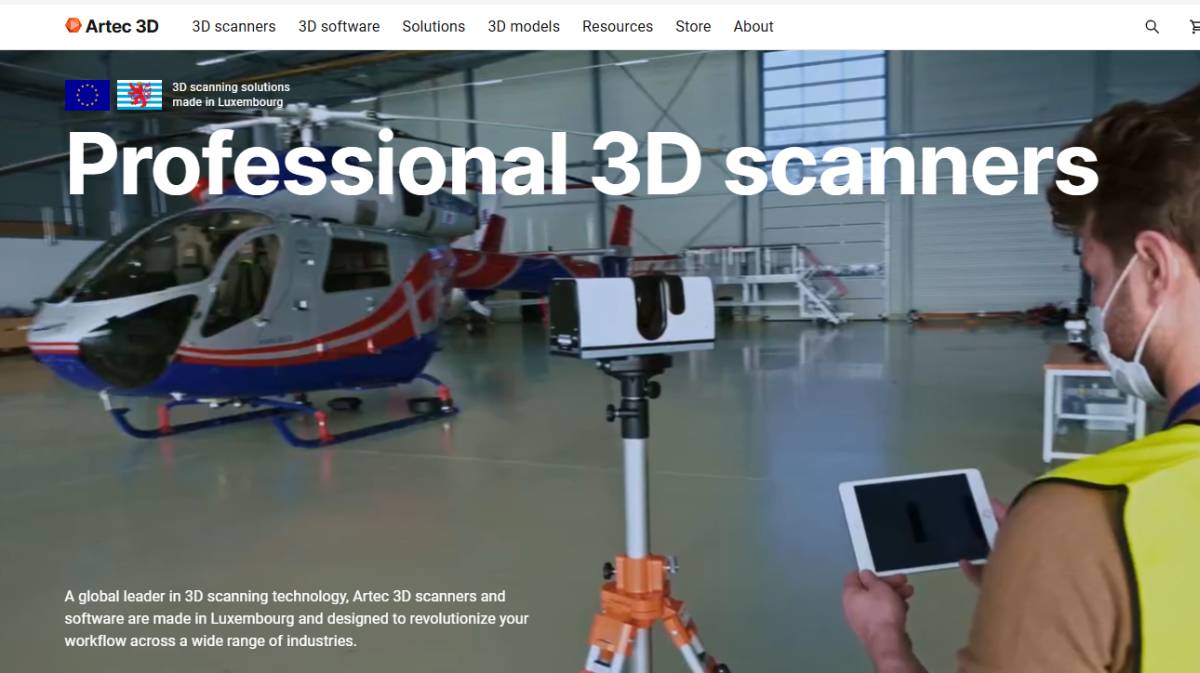
Artec 3D Powers Digital Manufacturing

Artec 3D presented its methodology for developing next-generation 3D scanning solutions, emphasizing continuous innovation, close collaboration with customers, and investment in research and engineering.

July 29, 2026
|

Artec 3D has outlined the principles behind its innovation-driven business model, highlighting how advanced 3D scanning technologies, continuous research, and customer-focused product development are fueling global growth. The approach underscores the increasing strategic importance of digital manufacturing, industrial automation, and precision engineering across multiple industries.

Artec 3D presented its methodology for developing next-generation 3D scanning solutions, emphasizing continuous innovation, close collaboration with customers, and investment in research and engineering. The company has built its strategy around combining advanced hardware with intelligent software to deliver high-precision digital capture technologies.

Its solutions support industries including manufacturing, healthcare, aerospace, automotive, cultural heritage preservation, and industrial inspection. By focusing on usability alongside technical performance, Artec 3D aims to accelerate digital transformation for enterprise customers while expanding its international market presence.

The company's innovation framework demonstrates how technology firms can sustain long-term competitiveness through continuous product evolution. The global market for 3D scanning and digital reality technologies has expanded rapidly as businesses adopt Industry 4.0 practices, digital twins, automation, and AI-powered manufacturing. High-precision 3D data has become essential for engineering, quality control, product design, predictive maintenance, and reverse engineering.

Manufacturers increasingly rely on advanced scanning technologies to reduce production errors, improve operational efficiency, and accelerate product development cycles. At the same time, healthcare organizations are adopting 3D imaging for prosthetics, surgical planning, and personalized medical applications, while museums and research institutions use digital scanning to preserve historical artifacts.

Luxembourg has emerged as a growing centre for advanced technology companies, supported by strong digital infrastructure, international talent, and government initiatives promoting research and innovation. Companies like Artec 3D demonstrate the country's ability to compete in high-value industrial technology markets.

Technology analysts view Artec 3D's approach as representative of a broader shift toward integrated hardware and software ecosystems that deliver end-to-end digital solutions. Rather than competing solely on device performance, leading industrial technology companies increasingly differentiate themselves through software intelligence, artificial intelligence integration, and customer experience.

Artec 3D has consistently emphasized innovation, engineering excellence, and customer collaboration as central elements of its growth strategy. By continuously refining both scanning hardware and data processing software, the company aims to meet evolving industrial requirements while maintaining technological leadership.

Industry experts also note that demand for accurate digital models will continue rising as businesses adopt digital twins, robotics, augmented reality, and AI-powered inspection systems. Companies investing heavily in research and development are therefore expected to remain well positioned within increasingly competitive global markets.

For manufacturers and industrial enterprises, advanced 3D scanning technologies offer opportunities to improve product quality, accelerate design processes, and reduce production costs. Businesses adopting digital inspection and modeling capabilities can strengthen competitiveness while supporting broader digital transformation initiatives.

Investors may continue viewing industrial software, automation, and precision engineering as attractive long-term growth sectors. Policymakers are also likely to expand support for advanced manufacturing, digital innovation, and workforce development to strengthen national industrial competitiveness.

For executives, integrating digital engineering technologies is becoming a strategic investment that enhances operational resilience and innovation capacity. Artec 3D is expected to continue expanding its technology portfolio as demand grows for AI-enabled industrial automation and digital manufacturing solutions. Business leaders should monitor developments in digital twins, intelligent inspection systems, robotics integration, and enterprise adoption of advanced scanning technologies. As Industry 4.0 accelerates globally, companies capable of combining hardware innovation with intelligent software are likely to capture increasing market opportunities.

Source: Silicon Luxembourg
Date:
July 10, 2026

  • Featured tools
Beautiful AI
Free

Beautiful AI is an AI-powered presentation platform that automates slide design and formatting, enabling users to create polished, on-brand presentations quickly.

#
Presentation
Learn more
Wonder AI
Free

Wonder AI is a versatile AI-powered creative platform that generates text, images, and audio with minimal input, designed for fast storytelling, visual creation, and audio content generation

#
Art Generator
Learn more

Learn more about future of AI

Join 80,000+ Ai enthusiast getting weekly updates on exciting AI tools.
Thank you! Your submission has been received!
Oops! Something went wrong while submitting the form.

Artec 3D Powers Digital Manufacturing

July 29, 2026

Artec 3D presented its methodology for developing next-generation 3D scanning solutions, emphasizing continuous innovation, close collaboration with customers, and investment in research and engineering.

Artec 3D has outlined the principles behind its innovation-driven business model, highlighting how advanced 3D scanning technologies, continuous research, and customer-focused product development are fueling global growth. The approach underscores the increasing strategic importance of digital manufacturing, industrial automation, and precision engineering across multiple industries.

Artec 3D presented its methodology for developing next-generation 3D scanning solutions, emphasizing continuous innovation, close collaboration with customers, and investment in research and engineering. The company has built its strategy around combining advanced hardware with intelligent software to deliver high-precision digital capture technologies.

Its solutions support industries including manufacturing, healthcare, aerospace, automotive, cultural heritage preservation, and industrial inspection. By focusing on usability alongside technical performance, Artec 3D aims to accelerate digital transformation for enterprise customers while expanding its international market presence.

The company's innovation framework demonstrates how technology firms can sustain long-term competitiveness through continuous product evolution. The global market for 3D scanning and digital reality technologies has expanded rapidly as businesses adopt Industry 4.0 practices, digital twins, automation, and AI-powered manufacturing. High-precision 3D data has become essential for engineering, quality control, product design, predictive maintenance, and reverse engineering.

Manufacturers increasingly rely on advanced scanning technologies to reduce production errors, improve operational efficiency, and accelerate product development cycles. At the same time, healthcare organizations are adopting 3D imaging for prosthetics, surgical planning, and personalized medical applications, while museums and research institutions use digital scanning to preserve historical artifacts.

Luxembourg has emerged as a growing centre for advanced technology companies, supported by strong digital infrastructure, international talent, and government initiatives promoting research and innovation. Companies like Artec 3D demonstrate the country's ability to compete in high-value industrial technology markets.

Technology analysts view Artec 3D's approach as representative of a broader shift toward integrated hardware and software ecosystems that deliver end-to-end digital solutions. Rather than competing solely on device performance, leading industrial technology companies increasingly differentiate themselves through software intelligence, artificial intelligence integration, and customer experience.

Artec 3D has consistently emphasized innovation, engineering excellence, and customer collaboration as central elements of its growth strategy. By continuously refining both scanning hardware and data processing software, the company aims to meet evolving industrial requirements while maintaining technological leadership.

Industry experts also note that demand for accurate digital models will continue rising as businesses adopt digital twins, robotics, augmented reality, and AI-powered inspection systems. Companies investing heavily in research and development are therefore expected to remain well positioned within increasingly competitive global markets.

For manufacturers and industrial enterprises, advanced 3D scanning technologies offer opportunities to improve product quality, accelerate design processes, and reduce production costs. Businesses adopting digital inspection and modeling capabilities can strengthen competitiveness while supporting broader digital transformation initiatives.

Investors may continue viewing industrial software, automation, and precision engineering as attractive long-term growth sectors. Policymakers are also likely to expand support for advanced manufacturing, digital innovation, and workforce development to strengthen national industrial competitiveness.

For executives, integrating digital engineering technologies is becoming a strategic investment that enhances operational resilience and innovation capacity. Artec 3D is expected to continue expanding its technology portfolio as demand grows for AI-enabled industrial automation and digital manufacturing solutions. Business leaders should monitor developments in digital twins, intelligent inspection systems, robotics integration, and enterprise adoption of advanced scanning technologies. As Industry 4.0 accelerates globally, companies capable of combining hardware innovation with intelligent software are likely to capture increasing market opportunities.

Source: Silicon Luxembourg
Date:
July 10, 2026

Promote Your Tool

Copy Embed Code

Similar Blogs

July 31, 2026
|

Dodo MIDI Enhances Music Production Workflows

Dodo MIDI is part of the music technology ecosystem, focusing on MIDI-based tools that help users create, control, and manage digital musical compositions.
Read more
July 31, 2026
|

Polar Cloud Advances Secure Data Management

Polar Cloud is positioned within the cloud computing ecosystem, offering users technology solutions focused on managing and accessing digital resources through cloud-based environments.
Read more
July 31, 2026
|

Metastream Enhances Shared Digital Entertainment

Metastream is a digital platform designed to enable synchronized media playback, allowing multiple users to watch online content together from different locations.
Read more
July 31, 2026
|

Deep Realms Advances Immersive Digital Experiences

Deep Realms is positioned within the category of immersive digital experiences, offering users a platform focused on exploration, creativity, and interactive engagement.
Read more
July 31, 2026
|

Starbackpage Evolves Digital Marketplace Platforms

Starbackpage is part of the online classified marketplace category, where users can create listings, discover services, and interact through digital platforms.
Read more
July 31, 2026
|

Calyx VPN Strengthens Digital Privacy Security

Calyx VPN is a privacy-focused virtual private network solution designed to provide users with secure internet connections and enhanced online privacy.
Read more