
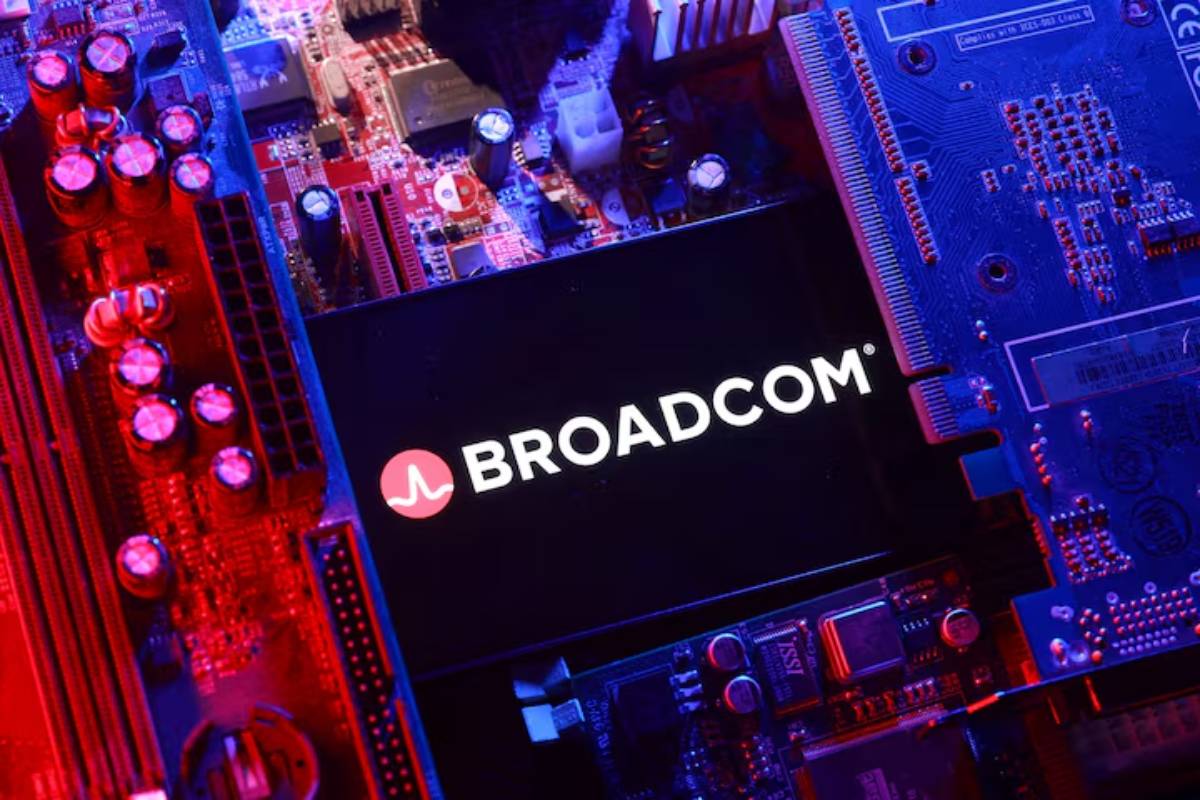
Broadcom Selloff Follows AI Revenue Disappointment

Broadcom's shares came under significant pressure after the company's latest financial results and outlook failed to satisfy investors who had anticipated stronger momentum from its AI-related businesses.

June 5, 2026
|

A major market shake-up unfolded as Broadcom faced a steep decline in valuation after investors reacted negatively to results that failed to meet elevated expectations tied to the artificial intelligence boom. The selloff underscores growing pressure on technology companies to deliver tangible AI-driven growth as markets become increasingly selective in rewarding industry leaders.

Broadcom's shares came under significant pressure after the company's latest financial results and outlook failed to satisfy investors who had anticipated stronger momentum from its AI-related businesses. The market reaction placed hundreds of billions of dollars in market value at risk as concerns emerged about the pace of revenue growth linked to AI infrastructure spending.

The company has been viewed as a major beneficiary of surging demand for AI networking, custom silicon, and data-center technologies. However, investors appeared disappointed by results that did not fully align with bullish expectations. The sharp market response highlights the increasingly high performance benchmarks facing technology firms associated with the AI investment cycle.

The development aligns with a broader trend across global markets where artificial intelligence has become the dominant driver of technology valuations. Over the past several years, investors have poured capital into semiconductor manufacturers, cloud providers, networking companies, and infrastructure suppliers expected to benefit from the rapid expansion of AI computing.

This enthusiasm has helped propel technology stocks to record highs and fueled significant gains across the semiconductor sector. However, the AI investment boom has also raised expectations to unprecedented levels. Companies are no longer being evaluated solely on growth but on whether they can consistently exceed forecasts tied to AI demand.

Broadcom occupies a critical position in the AI ecosystem through its networking products, custom chip development, and data-center technologies. As a result, its performance is increasingly viewed as a barometer for broader AI infrastructure spending and enterprise investment trends. Any sign of slowing momentum can have outsized effects on market sentiment.

Market analysts note that the reaction reflects the changing dynamics of AI investing. During the early stages of the AI boom, investors broadly rewarded companies with exposure to the sector. Today, however, markets are demanding clearer evidence of sustainable revenue growth, profitability, and long-term competitive advantages.

Some analysts argue that the selloff may reflect expectations rather than operational weakness. Broadcom continues to hold a strong position within key segments of the AI supply chain, including networking solutions and custom semiconductor design. Nevertheless, investors increasingly expect quarterly results to justify premium valuations.

Industry observers also point out that the broader AI market remains highly competitive. Technology companies face pressure to continuously expand product offerings, secure major customers, and demonstrate measurable returns on AI investments. The episode illustrates how quickly market sentiment can shift when expectations and financial performance diverge.

For global executives, the development serves as a reminder that AI enthusiasm alone is no longer sufficient to sustain market confidence. Companies must demonstrate execution, scalable business models, and measurable financial returns from AI investments.

Investors may become more selective when evaluating AI-related opportunities, placing greater emphasis on earnings quality, customer demand, and long-term revenue visibility. This shift could lead to increased volatility across technology markets as expectations continue to rise.

For policymakers, the event highlights the growing influence of AI on financial markets and economic activity. As AI becomes a strategic driver of corporate investment, market movements within the sector may have broader implications for innovation, capital allocation, and economic growth.

Attention will now focus on Broadcom's ability to demonstrate stronger AI-driven growth in future quarters and reassure investors about long-term demand trends. Market participants will closely monitor enterprise spending, data-center expansion, and customer commitments across the AI ecosystem.

As the AI investment cycle matures, companies will increasingly be judged on execution rather than potential. The next phase of the AI boom may be defined not by promises of future growth, but by the ability to consistently deliver measurable results.

Source: Reuters
Date:
June 4, 2026

  • Featured tools
Symphony Ayasdi AI
Free

SymphonyAI Sensa is an AI-powered surveillance and financial crime detection platform that surfaces hidden risk behavior through explainable, AI-driven analytics.

#
Finance
Learn more
Twistly AI
Paid

Twistly AI is a PowerPoint add-in that allows users to generate full slide decks, improve existing presentations, and convert various content types into polished slides directly within Microsoft PowerPoint.It streamlines presentation creation using AI-powered text analysis, image generation and content conversion.

#
Presentation
Learn more

Learn more about future of AI

Join 80,000+ Ai enthusiast getting weekly updates on exciting AI tools.
Thank you! Your submission has been received!
Oops! Something went wrong while submitting the form.

Broadcom Selloff Follows AI Revenue Disappointment

June 5, 2026

Broadcom's shares came under significant pressure after the company's latest financial results and outlook failed to satisfy investors who had anticipated stronger momentum from its AI-related businesses.

A major market shake-up unfolded as Broadcom faced a steep decline in valuation after investors reacted negatively to results that failed to meet elevated expectations tied to the artificial intelligence boom. The selloff underscores growing pressure on technology companies to deliver tangible AI-driven growth as markets become increasingly selective in rewarding industry leaders.

Broadcom's shares came under significant pressure after the company's latest financial results and outlook failed to satisfy investors who had anticipated stronger momentum from its AI-related businesses. The market reaction placed hundreds of billions of dollars in market value at risk as concerns emerged about the pace of revenue growth linked to AI infrastructure spending.

The company has been viewed as a major beneficiary of surging demand for AI networking, custom silicon, and data-center technologies. However, investors appeared disappointed by results that did not fully align with bullish expectations. The sharp market response highlights the increasingly high performance benchmarks facing technology firms associated with the AI investment cycle.

The development aligns with a broader trend across global markets where artificial intelligence has become the dominant driver of technology valuations. Over the past several years, investors have poured capital into semiconductor manufacturers, cloud providers, networking companies, and infrastructure suppliers expected to benefit from the rapid expansion of AI computing.

This enthusiasm has helped propel technology stocks to record highs and fueled significant gains across the semiconductor sector. However, the AI investment boom has also raised expectations to unprecedented levels. Companies are no longer being evaluated solely on growth but on whether they can consistently exceed forecasts tied to AI demand.

Broadcom occupies a critical position in the AI ecosystem through its networking products, custom chip development, and data-center technologies. As a result, its performance is increasingly viewed as a barometer for broader AI infrastructure spending and enterprise investment trends. Any sign of slowing momentum can have outsized effects on market sentiment.

Market analysts note that the reaction reflects the changing dynamics of AI investing. During the early stages of the AI boom, investors broadly rewarded companies with exposure to the sector. Today, however, markets are demanding clearer evidence of sustainable revenue growth, profitability, and long-term competitive advantages.

Some analysts argue that the selloff may reflect expectations rather than operational weakness. Broadcom continues to hold a strong position within key segments of the AI supply chain, including networking solutions and custom semiconductor design. Nevertheless, investors increasingly expect quarterly results to justify premium valuations.

Industry observers also point out that the broader AI market remains highly competitive. Technology companies face pressure to continuously expand product offerings, secure major customers, and demonstrate measurable returns on AI investments. The episode illustrates how quickly market sentiment can shift when expectations and financial performance diverge.

For global executives, the development serves as a reminder that AI enthusiasm alone is no longer sufficient to sustain market confidence. Companies must demonstrate execution, scalable business models, and measurable financial returns from AI investments.

Investors may become more selective when evaluating AI-related opportunities, placing greater emphasis on earnings quality, customer demand, and long-term revenue visibility. This shift could lead to increased volatility across technology markets as expectations continue to rise.

For policymakers, the event highlights the growing influence of AI on financial markets and economic activity. As AI becomes a strategic driver of corporate investment, market movements within the sector may have broader implications for innovation, capital allocation, and economic growth.

Attention will now focus on Broadcom's ability to demonstrate stronger AI-driven growth in future quarters and reassure investors about long-term demand trends. Market participants will closely monitor enterprise spending, data-center expansion, and customer commitments across the AI ecosystem.

As the AI investment cycle matures, companies will increasingly be judged on execution rather than potential. The next phase of the AI boom may be defined not by promises of future growth, but by the ability to consistently deliver measurable results.

Source: Reuters
Date:
June 4, 2026

Promote Your Tool

Copy Embed Code

Similar Blogs

June 16, 2026
|

Best Revenue & Sales Enablement Consulting Services in USA

Revenue and sales enablement consulting firms play a crucial role in helping organizations build scalable growth engines. Whether the goal is improving sales execution, implementing revenue operations, optimizing technology platforms.
Read more
June 16, 2026
|

Best Sales Consulting Services in USA

The best sales consulting firms do more than improve sales performance they help organizations build scalable revenue engines that support long-term growth.
Read more
June 16, 2026
|

Best CRM Consulting Services in USA

A successful CRM implementation requires more than technology it requires the right strategy, processes, and expertise. The best CRM consulting firms help organizations align customer relationship management with broader business objectives.
Read more
June 16, 2026
|

Best Pricing Strategy Consulting Services in USA

Pricing strategy remains one of the highest-impact growth levers available to modern businesses. Whether you're launching a new product, optimizing an existing pricing structure.
Read more
June 16, 2026
|

Best GTM Consulting Services in USA

Go-to-market execution has become one of the most important drivers of business success. Organizations that effectively align product strategy, marketing, sales, customer success.
Read more
June 16, 2026
|

Best Revenue Management Consulting Services in USA

Revenue management has become a critical discipline for organizations seeking sustainable growth in increasingly competitive markets. Companies that effectively align pricing, sales, marketing, operations.
Read more