
Clever AI “Humanizer” Tools Surge in Authenticity Battle

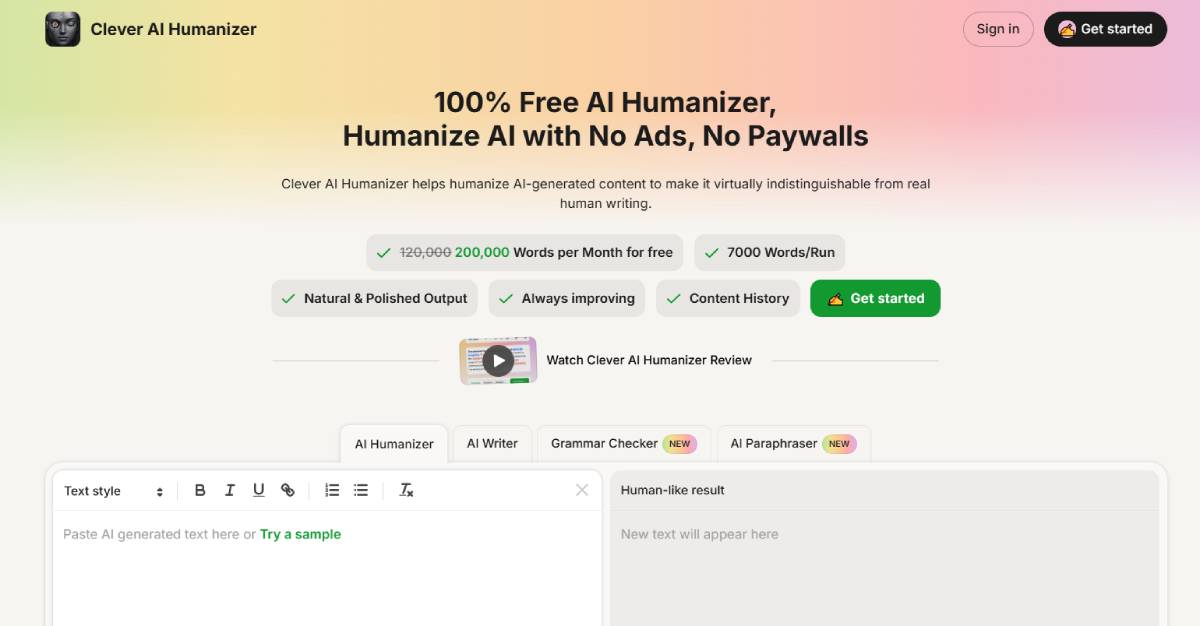
Clever AI Humanizer positions itself as a free tool designed to transform AI-generated text into more natural, human-like language. Its primary value proposition lies in bypassing AI detection systems while improving readability and tone.

April 13, 2026
|

The rise of tools like Clever AI Humanizer underscores a growing arms race in the generative AI ecosystem where content is not only created by machines but also refined to appear human. This shift is reshaping digital trust, with implications for enterprises, educators, regulators, and content platforms worldwide.

Clever AI Humanizer positions itself as a free tool designed to transform AI-generated text into more natural, human-like language. Its primary value proposition lies in bypassing AI detection systems while improving readability and tone.

The emergence of such tools reflects increasing demand from users seeking to refine outputs from generative AI platforms. Key stakeholders include content creators, marketers, students, and enterprises managing large-scale digital communications.

This trend highlights a growing dual-market dynamic: AI generation tools on one side, and AI detection or humanization tools on the other. The result is an escalating cycle of innovation where each layer attempts to outpace the other in accuracy and effectiveness.

The development aligns with a broader trend across global markets where generative AI adoption has surged across industries, from media and marketing to education and enterprise communications. As AI-generated content becomes more prevalent, concerns around authenticity, originality, and trust have intensified.

In response, a new category of AI detection tools has emerged, aimed at identifying machine-generated text. However, humanization tools are now challenging the reliability of these systems by refining outputs to evade detection.

This dynamic mirrors earlier technological cycles, such as cybersecurity, where offensive and defensive capabilities evolve in tandem. The stakes are particularly high in sectors like education, journalism, and compliance, where distinguishing between human and AI-generated content carries ethical and operational significance.

Industry experts view the rise of humanization tools as both a technological advancement and a governance challenge. Some analysts argue that these tools enhance usability by improving the quality and accessibility of AI-generated content, making it more suitable for professional and consumer use.

Others raise concerns about misuse, particularly in contexts where authenticity is critical, such as academic submissions or regulatory disclosures. Experts warn that widespread use of such tools could undermine trust in digital content ecosystems.

From a policy perspective, the debate is shifting toward transparency rather than detection alone. Thought leaders suggest that watermarking, disclosure standards, and AI content labeling may become necessary to maintain accountability.

The discussion reflects a broader tension between innovation and control in the rapidly evolving AI landscape. For businesses, AI humanization tools could enhance content quality and scalability, enabling more efficient communication strategies. However, they also introduce risks related to brand authenticity, compliance, and reputational integrity.

Investors may see growth opportunities in both AI generation and detection markets, as demand for content verification solutions increases. Meanwhile, enterprises may need to implement stricter governance frameworks around AI usage.

From a policy standpoint, regulators face the challenge of defining acceptable use cases while preventing misuse. This could lead to new standards for AI-generated content disclosure, particularly in sectors such as education, media, and financial communications.

The interplay between AI generation, detection, and humanization is expected to intensify, driving continuous innovation across the ecosystem. Decision-makers should monitor regulatory developments, enterprise adoption patterns, and advances in detection technologies.

As the line between human and malchine-generated content continues to blur, maintaining trust and transparency will become a defining challenge for the next phase of the digital economy.

Source: CleverHumanizer.ai
Date: April 2026

  • Featured tools
Beautiful AI
Free

Beautiful AI is an AI-powered presentation platform that automates slide design and formatting, enabling users to create polished, on-brand presentations quickly.

#
Presentation
Learn more
Neuron AI
Free

Neuron AI is an AI-driven content optimization platform that helps creators produce SEO-friendly content by combining semantic SEO, competitor analysis, and AI-assisted writing workflows.

#
SEO
Learn more

Learn more about future of AI

Join 80,000+ Ai enthusiast getting weekly updates on exciting AI tools.
Thank you! Your submission has been received!
Oops! Something went wrong while submitting the form.

Clever AI “Humanizer” Tools Surge in Authenticity Battle

April 13, 2026

Clever AI Humanizer positions itself as a free tool designed to transform AI-generated text into more natural, human-like language. Its primary value proposition lies in bypassing AI detection systems while improving readability and tone.

The rise of tools like Clever AI Humanizer underscores a growing arms race in the generative AI ecosystem where content is not only created by machines but also refined to appear human. This shift is reshaping digital trust, with implications for enterprises, educators, regulators, and content platforms worldwide.

Clever AI Humanizer positions itself as a free tool designed to transform AI-generated text into more natural, human-like language. Its primary value proposition lies in bypassing AI detection systems while improving readability and tone.

The emergence of such tools reflects increasing demand from users seeking to refine outputs from generative AI platforms. Key stakeholders include content creators, marketers, students, and enterprises managing large-scale digital communications.

This trend highlights a growing dual-market dynamic: AI generation tools on one side, and AI detection or humanization tools on the other. The result is an escalating cycle of innovation where each layer attempts to outpace the other in accuracy and effectiveness.

The development aligns with a broader trend across global markets where generative AI adoption has surged across industries, from media and marketing to education and enterprise communications. As AI-generated content becomes more prevalent, concerns around authenticity, originality, and trust have intensified.

In response, a new category of AI detection tools has emerged, aimed at identifying machine-generated text. However, humanization tools are now challenging the reliability of these systems by refining outputs to evade detection.

This dynamic mirrors earlier technological cycles, such as cybersecurity, where offensive and defensive capabilities evolve in tandem. The stakes are particularly high in sectors like education, journalism, and compliance, where distinguishing between human and AI-generated content carries ethical and operational significance.

Industry experts view the rise of humanization tools as both a technological advancement and a governance challenge. Some analysts argue that these tools enhance usability by improving the quality and accessibility of AI-generated content, making it more suitable for professional and consumer use.

Others raise concerns about misuse, particularly in contexts where authenticity is critical, such as academic submissions or regulatory disclosures. Experts warn that widespread use of such tools could undermine trust in digital content ecosystems.

From a policy perspective, the debate is shifting toward transparency rather than detection alone. Thought leaders suggest that watermarking, disclosure standards, and AI content labeling may become necessary to maintain accountability.

The discussion reflects a broader tension between innovation and control in the rapidly evolving AI landscape. For businesses, AI humanization tools could enhance content quality and scalability, enabling more efficient communication strategies. However, they also introduce risks related to brand authenticity, compliance, and reputational integrity.

Investors may see growth opportunities in both AI generation and detection markets, as demand for content verification solutions increases. Meanwhile, enterprises may need to implement stricter governance frameworks around AI usage.

From a policy standpoint, regulators face the challenge of defining acceptable use cases while preventing misuse. This could lead to new standards for AI-generated content disclosure, particularly in sectors such as education, media, and financial communications.

The interplay between AI generation, detection, and humanization is expected to intensify, driving continuous innovation across the ecosystem. Decision-makers should monitor regulatory developments, enterprise adoption patterns, and advances in detection technologies.

As the line between human and malchine-generated content continues to blur, maintaining trust and transparency will become a defining challenge for the next phase of the digital economy.

Source: CleverHumanizer.ai
Date: April 2026

Promote Your Tool

Copy Embed Code

Similar Blogs

April 13, 2026
|

US Urged to Lead Global AI Race

Sundar Pichai stated in a televised interview that the United States should take a leading role in artificial intelligence development to ensure technological competitiveness and strategic advantage.
Read more
April 13, 2026
|

AI Megacap Valuation Reset Sparks Timing Debate

The stock part of the dominant group of large-cap U.S. technology firms often referred to as the “Magnificent Seven” has experienced renewed price pressure despite continued investor interest in artificial intelligence exposure.
Read more
April 13, 2026
|

AI Valuation Concerns Trigger Market Reality Check

A recent analysis from Centre for Economic Policy Research questions whether current AI market valuations are aligned with realistic economic outputs.
Read more
April 13, 2026
|

Amazon Expands AI, Robotics, Space Bet

Amazon is advancing a multi-pronged innovation strategy spanning AI, robotics, satellite internet, and semiconductor design. The company continues to scale its custom AI chips through AWS.
Read more
April 13, 2026
|

Meta’s Muse AI Enters Daily Decision Making

Meta’s Muse Spark AI demonstrates the ability to analyze user inputs such as food choices and provide contextual recommendations, including rating meals and suggesting future options.
Read more
April 13, 2026
|

CFOs Shift from AI Funders to Strategic Operators

CFOs are increasingly embedding AI into core financial functions, including forecasting, budgeting, risk management, and performance analysis. This transition reflects a move from passive capital allocation to active operational leadership in AI adoption.
Read more