



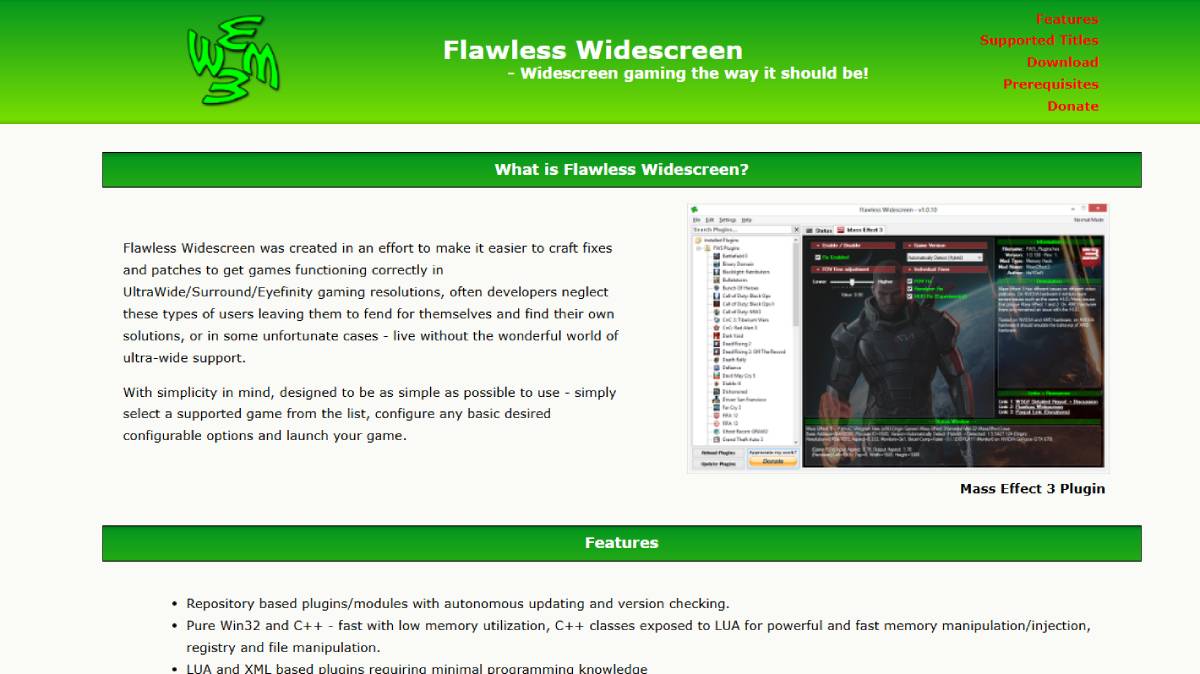
A notable development in the PC gaming ecosystem highlights the continued relevance of Flawless Widescreen, an application that enables ultrawide and multi-monitor support for compatible PC titles. As demand for immersive gaming experiences grows worldwide, the software reinforces the industry's shift toward display optimization, benefiting gamers, hardware manufacturers, and developers alike.
Flawless Widescreen continues to provide automated fixes that remove field-of-view limitations, correct aspect ratios, and improve compatibility for ultrawide monitors across numerous PC games. The platform remains community-driven, with regular compatibility updates expanding support for both legacy and modern titles.
The solution addresses an increasingly important segment of the gaming market as premium ultrawide displays become more accessible. By extending compatibility beyond native developer support, the software helps maximize hardware investments while improving user satisfaction. Its continued availability also reflects broader demand for open, community-supported enhancement tools that complement commercial gaming ecosystems without modifying core game functionality.
The global gaming industry has experienced rapid hardware innovation over the past decade, particularly in display technology. Ultrawide monitors, high-refresh-rate screens, and multi-monitor configurations have become increasingly common among enthusiasts, esports competitors, content creators, and professional streamers. However, many games continue to launch without full support for unconventional display formats.
This compatibility gap has created opportunities for community-developed utilities that improve visual experiences without requiring official game updates. Flawless Widescreen represents one of several projects designed to bridge this divide, enabling broader adoption of premium gaming hardware while extending the lifespan of existing titles.
The development aligns with wider industry trends emphasizing personalization, accessibility, and hardware optimization. As PC gaming remains an open platform, independent software tools continue to complement commercial game development by addressing technical limitations that developers may not prioritize after release.
Gaming industry analysts frequently note that software optimization has become nearly as important as hardware performance in delivering premium gaming experiences. Utilities like Flawless Widescreen demonstrate how community innovation can enhance value for consumers while supporting broader hardware adoption across the PC gaming ecosystem.
Technology experts suggest that improved compatibility encourages consumers to invest in advanced displays by ensuring a larger catalog of games benefits from modern hardware capabilities. Developers also gain indirect advantages as enhanced user experiences can extend engagement with existing titles.
Industry observers further emphasize that community-driven projects often identify compatibility issues before official updates are released, providing valuable insights into evolving consumer expectations. Although official developer statements vary by title, the broader market increasingly recognizes display optimization as a critical component of long-term player satisfaction and platform competitiveness.
For gaming hardware manufacturers, wider compatibility strengthens the commercial appeal of ultrawide monitors and premium display technologies. Software developers may increasingly consider broader native support as consumer expectations evolve toward immersive gaming experiences.
Publishers also benefit from longer engagement cycles when older games remain visually competitive through optimization tools. Investors monitoring gaming infrastructure may view these developments as indicators of sustained demand for complementary software ecosystems surrounding core entertainment products.
From a policy perspective, the continued success of community-developed utilities highlights the importance of maintaining open PC platforms that encourage innovation while respecting software licensing, intellectual property rights, and cybersecurity standards.
As display technology continues advancing with higher resolutions, OLED panels, and increasingly immersive aspect ratios, demand for compatibility solutions is expected to grow. Decision-makers across gaming hardware, software development, and publishing should monitor evolving consumer expectations surrounding display optimization. The long-term competitive advantage will likely favor companies that integrate broader hardware compatibility into product strategies while embracing community-driven innovation.
Source: AlternativeTo
Date: July 30, 2026


