



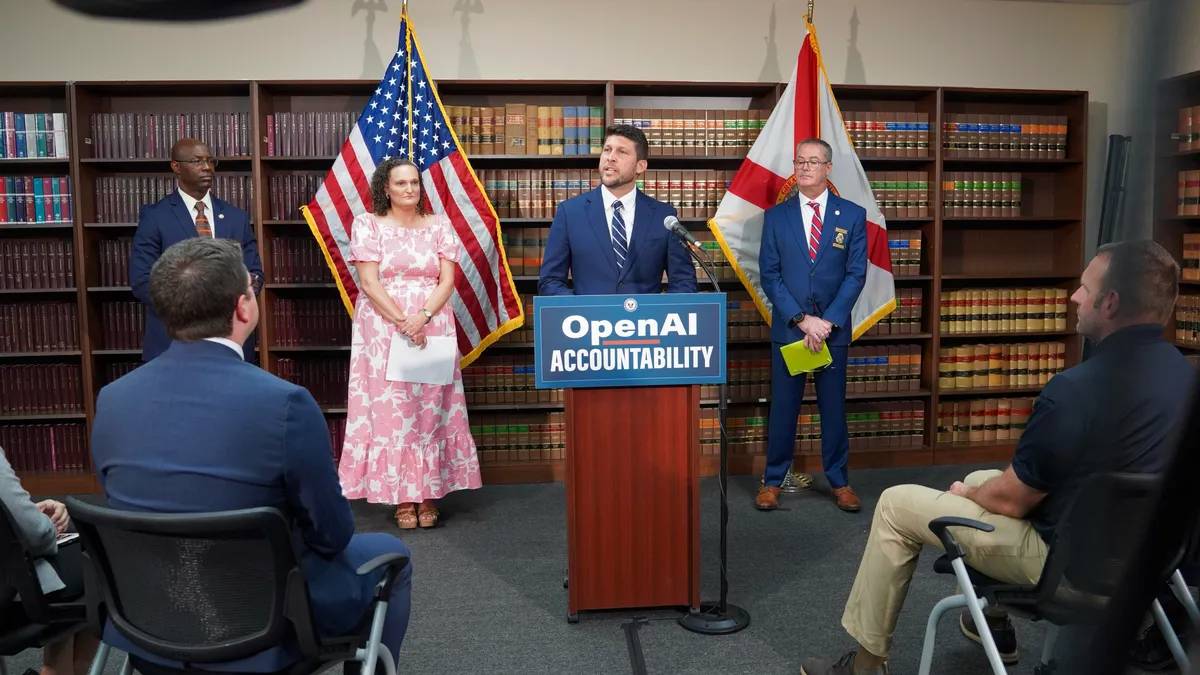
A significant legal and regulatory development has emerged as the state of Florida files a lawsuit against OpenAI, alleging safety concerns related to ChatGPT’s outputs and user interactions. The case underscores growing scrutiny of generative AI systems in the United States and signals rising pressure on AI developers to strengthen safeguards, transparency, and accountability in rapidly deployed large language models.
Florida’s legal action targets OpenAI over allegations that ChatGPT may produce misleading, harmful, or unsafe outputs, raising concerns about consumer protection and the responsible deployment of artificial intelligence systems.
The lawsuit claims that insufficient safeguards may expose users particularly minors and vulnerable populations to inaccurate or potentially damaging information. It also raises broader questions about how AI systems are trained, monitored, and governed in real-world applications.
The case represents one of several recent regulatory challenges facing generative AI providers as governments increase oversight of rapidly evolving AI technologies. While specific remedies sought by the state have not been fully detailed, the legal action signals a push for stricter compliance and accountability standards.
OpenAI has previously stated that it continues to improve safety systems, implement content moderation layers, and refine model behavior through iterative updates and user feedback mechanisms.
The development aligns with a broader trend across global regulatory markets where governments are increasingly scrutinizing the safety, transparency, and societal impact of generative AI systems.
Since the widespread adoption of large language models like ChatGPT, concerns have emerged regarding hallucinations, misinformation, data privacy, and the potential misuse of AI-generated content. These concerns have prompted regulatory bodies in the United States, Europe, and other regions to explore frameworks for AI governance.
Florida’s lawsuit comes amid a broader wave of legal and legislative activity aimed at defining accountability standards for AI developers. Policymakers are grappling with how existing consumer protection laws apply to systems that generate dynamic, probabilistic outputs rather than deterministic responses.
Historically, transformative technologies such as social media platforms and search engines have faced similar regulatory scrutiny during their early growth phases. AI is now undergoing a comparable phase of institutional and legal adjustment as governments attempt to balance innovation with public safety.
The case also reflects growing public awareness of AI risks, particularly as generative tools become widely accessible across education, healthcare, business, and personal use cases.
Legal and technology analysts view the lawsuit as part of an accelerating trend in AI governance, where state and federal authorities are increasingly willing to challenge major technology firms over product safety and accountability.
Experts suggest that the core issue centers on whether AI-generated outputs should be treated as protected speech, product liability, or a regulated service. This legal ambiguity is expected to shape future court decisions and legislative frameworks.
Technology policy specialists emphasize that generative AI systems operate probabilistically, meaning outputs are not guaranteed to be factually accurate. This creates a complex regulatory challenge in determining liability when misinformation or harmful content is produced.
Industry observers note that OpenAI and similar companies have introduced multiple safety layers, including content filters, alignment training, and user reporting systems, but acknowledge that no system is fully immune to failure or misuse.
Analysts also highlight that increasing legal pressure may accelerate the development of standardized AI safety benchmarks and compliance frameworks across the industry. For AI companies, the lawsuit highlights rising legal exposure and the growing importance of robust safety architectures, compliance systems, and risk mitigation strategies in product design and deployment.
For businesses relying on generative AI tools, the case raises questions about liability, reliability, and governance in AI-assisted decision-making processes. Enterprises may need to reassess how AI outputs are validated before use in critical workflows.
For investors, regulatory uncertainty represents both a risk factor and a catalyst for more mature AI governance frameworks that could stabilize long-term market expectations.
For policymakers, the case underscores the urgent need to define clear legal standards for AI accountability, safety thresholds, and consumer protection in the era of generative systems. The lawsuit is expected to contribute to ongoing national debates around AI regulation, potentially influencing future federal guidelines or court precedents. Decision-makers should watch for legal interpretations that define responsibility for AI-generated outputs and set boundaries for acceptable risk.
As AI systems become more deeply embedded in daily life, regulatory clarity will play a critical role in shaping innovation trajectories. The outcome of such cases may determine how quickly and under what constraints generative AI continues to scale across industries.
Source: CNET
Date: June 2, 2026


