



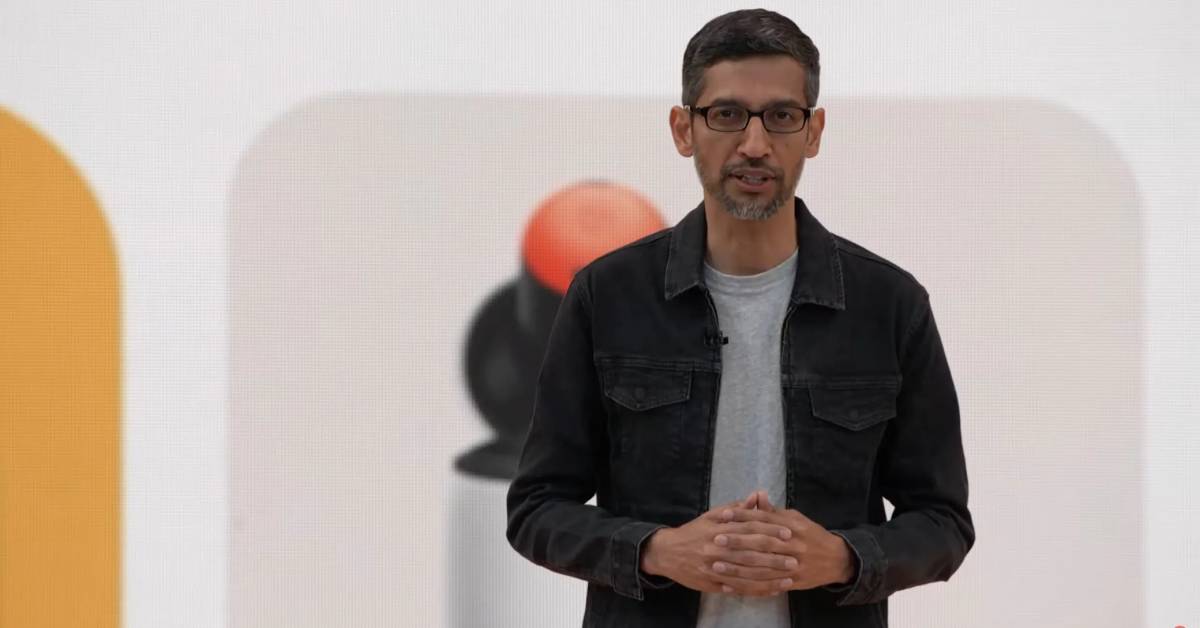
Google CEO Sundar Pichai has outlined a vision for an AI-first search ecosystem, highlighting how artificial intelligence is reshaping information discovery and the broader web economy. The remarks underscore a strategic transition in how digital content is accessed, organized, and monetized, with wide implications for users, publishers, and technology platforms globally.
In recent remarks, Google CEO Sundar Pichai discussed the evolution of search in an era dominated by generative AI, emphasizing a shift toward more conversational, context-aware information systems.
He highlighted how AI is increasingly reducing friction in how users access information, while also transforming traditional web navigation patterns. The discussion also touched on the changing role of publishers and content creators as AI systems increasingly summarize and synthesize web content.
The comments reflect Google’s broader strategy of integrating AI deeply into search, advertising, and content ecosystems, potentially redefining how users interact with the internet itself.
The evolution described by Google reflects a fundamental restructuring of the web economy driven by artificial intelligence. For decades, search engines acted as primary gateways to online content, directing traffic to publishers, platforms, and services across the internet.
However, the rise of generative AI systems is shifting user behavior from link-based navigation to answer-based interaction, where information is synthesized directly within search interfaces. This transition has significant implications for digital publishing, advertising models, and content monetization.
Industry-wide, companies such as Microsoft, OpenAI, and others are also accelerating similar AI-first search experiences, intensifying competition over how users access and consume information.
Historically, shifts in search architecture have repeatedly reshaped the internet economy, but AI-driven summarization represents one of the most significant structural changes since the rise of mobile-first browsing.
Technology analysts suggest the perspective shared by Google leadership reflects a strategic acknowledgment that search is transitioning from a retrieval system to an intelligent synthesis layer.
Experts note that while AI-driven search improves efficiency and user experience, it also raises concerns about traffic diversion from original publishers and increased concentration of informational control within a few dominant platforms.
Digital economy researchers argue that this shift could fundamentally reshape the value chain of the internet, potentially reducing direct engagement with source websites while increasing reliance on AI intermediaries.
Some industry observers believe this evolution may force publishers to renegotiate distribution strategies, licensing agreements, and monetization models in order to remain viable in an AI-mediated information environment.
For businesses, the AI-first search direction outlined by Google signals a major shift in digital visibility strategies. Companies may need to optimize content not just for search engines but for AI systems that summarize and interpret information directly.
For advertisers and investors, changes in user navigation patterns could disrupt traditional search advertising models and reduce click-through-driven revenue structures.
From a policy standpoint, regulators may increasingly scrutinize how AI systems prioritize, summarize, and attribute online content. Concerns around market dominance, data control, and fair compensation for publishers are likely to intensify as AI becomes the primary interface for web discovery.
Looking ahead, AI-driven search is expected to become the default interface for digital information access, fundamentally altering web traffic patterns and content economics. Decision-makers should monitor how publishers adapt, how advertising models evolve, and how regulatory frameworks respond to AI-mediated information control. The long-term outcome will depend on whether the ecosystem can balance innovation in search with sustainability for the broader web economy.
Source: The Verge Podcast
Date: May 27, 2026


