



A major development unfolded as Google detailed a practical roadmap for deploying production-ready AI agents, drawing from its experience refactoring legacy monolithic systems. The guidance signals a strategic shift in enterprise architecture, with implications for scalability, operational efficiency, and AI adoption across global industries.
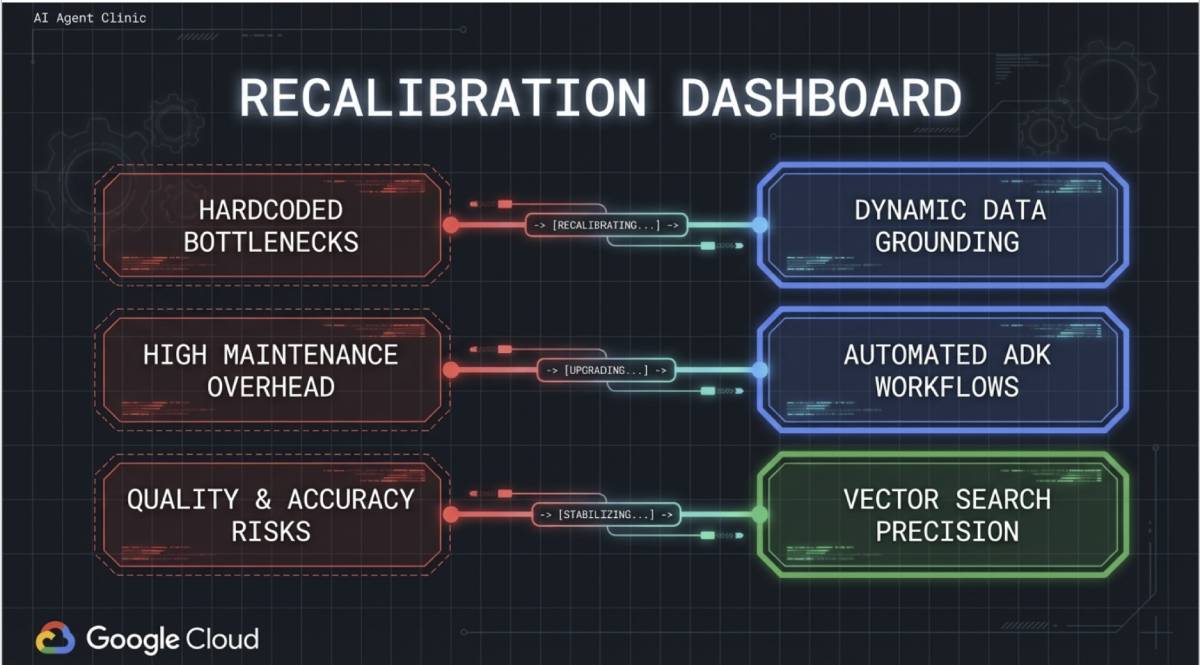
Google’s developer-focused release highlights five key lessons from transitioning a monolithic architecture into modular, AI-agent-driven systems. The insights emphasize the importance of orchestration layers, modular design, observability, and robust evaluation frameworks for deploying reliable AI agents at scale. The company underscores the need for iterative deployment and continuous monitoring to maintain performance and safety.
Stakeholders include enterprise developers, cloud architects, and AI platform providers. The timeline reflects ongoing transformation efforts as organizations modernize legacy systems to integrate AI capabilities. Economically, the move points to reduced operational bottlenecks and faster innovation cycles, particularly for companies seeking to embed AI into core business processes.
The development aligns with a broader trend across global markets where enterprises are shifting from monolithic software architectures to distributed, modular systems capable of supporting AI-driven workflows. As AI agents become more sophisticated, traditional system designs are proving inadequate for handling dynamic, context-aware operations.
Google’s guidance builds on years of industry evolution toward microservices and cloud-native architectures. Companies leveraging platforms such as Amazon Web Services and Microsoft Azure have already embraced modular infrastructure, but integrating AI agents introduces new complexities around coordination, latency, and reliability.
Historically, monolithic systems offered simplicity but lacked flexibility. The rise of generative AI and autonomous agents is accelerating the need for systems that can dynamically adapt, scale, and integrate multiple AI models reshaping enterprise IT strategies worldwide.
Industry experts interpret Google’s framework as a critical step toward operationalizing AI agents beyond experimental environments. Analysts suggest that while many organizations have piloted AI tools, few have successfully deployed them at scale due to architectural constraints.
Google’s approach highlights the importance of treating AI agents as production-grade services, requiring rigorous testing, monitoring, and governance. Experts emphasize that orchestration coordinating multiple agents and services is emerging as a core competency for enterprises.
Corporate commentary is expected to frame this transition as essential for unlocking AI’s full potential. However, analysts also caution that adopting such architectures demands significant investment in talent, infrastructure, and change management. Organizations must balance innovation with risk mitigation, particularly in regulated industries where reliability and compliance are critical.
For global executives, the shift toward production-ready AI agents could redefine enterprise technology strategies. Businesses may need to accelerate modernization efforts, moving away from legacy systems toward modular, AI-compatible architectures.
Investors are likely to view such transformations as indicators of long-term competitiveness, particularly in sectors reliant on automation and data-driven decision-making. Meanwhile, vendors offering orchestration tools and AI infrastructure could see increased demand.
From a policy perspective, the rise of autonomous AI agents introduces new considerations around accountability, transparency, and system reliability. Regulators may need to establish frameworks ensuring that AI-driven operations meet safety and compliance standards, especially in critical sectors such as finance, healthcare, and public services.
Looking ahead, enterprises will increasingly focus on scaling AI agents from pilot projects to mission-critical systems. Decision-makers should monitor advancements in orchestration technologies, evaluation frameworks, and regulatory guidance.
As organizations navigate this transition, the ability to integrate AI seamlessly into existing operations will become a key differentiator—marking a new phase in the evolution of enterprise digital transformation.
Source: Google Developers Blog
Date: April 2026


