



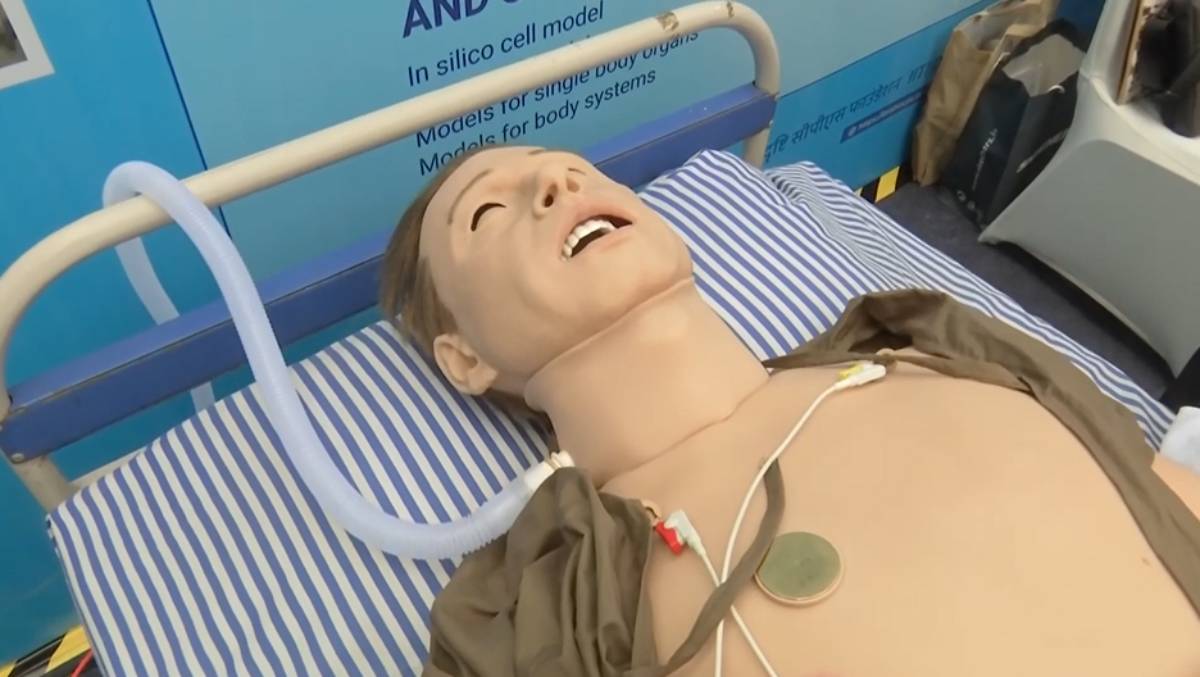
A major breakthrough emerged today as IIT Indore announced the development of a human-like AI-powered replica capable of detecting diseases with high precision. The innovation promises to transform healthcare diagnostics, enabling early detection, reducing clinician workload, and enhancing patient outcomes. This development signals a significant leap in AI integration in medical technology.
IIT Indore’s research team has engineered an AI replica designed to simulate human physiological responses for accurate disease detection. The system leverages advanced machine learning models, real-time data processing, and biometric simulations to identify medical anomalies.
The prototype has undergone initial testing in controlled environments, showing promising accuracy in detecting conditions ranging from infectious diseases to chronic disorders. The initiative is supported by academic and government stakeholders in India, aiming to deploy the technology across hospitals and diagnostic centers. Experts highlight that this marks a pivotal step toward AI-assisted healthcare that could alleviate pressures on medical infrastructure.
AI in healthcare has been gaining momentum globally, with applications spanning diagnostics, patient monitoring, and predictive analytics. The COVID-19 pandemic accelerated adoption, revealing the potential for AI to support overwhelmed medical systems.
In India, the integration of AI into healthcare aligns with national digital health initiatives, including the National Digital Health Mission, emphasizing accessibility, accuracy, and efficiency. IIT Indore’s human-like AI replica stands at the intersection of robotics, machine learning, and biomedical research, addressing both rural and urban healthcare challenges.
Historically, AI diagnostic tools have faced hurdles including data privacy, regulatory approvals, and clinician acceptance. The IIT Indore innovation is notable for combining real-time physiological simulation with disease detection algorithms, potentially setting a benchmark for next-generation AI diagnostic solutions in emerging markets.
Healthcare AI analysts describe IIT Indore’s development as a transformative step in precision diagnostics. “Human-like AI replicas can bridge gaps in early detection, especially in regions with limited access to specialized clinicians,” said an AI healthcare consultant.
Officials at IIT Indore emphasized that the AI replica is designed to complement, not replace, human practitioners, enhancing decision-making through advanced predictive capabilities. The team highlighted rigorous testing protocols and ongoing collaboration with hospitals to ensure reliability and safety.
Industry observers note that innovations like this could influence global standards for AI-powered diagnostics. Investors and healthcare providers may see opportunities in adopting AI-assisted systems that reduce diagnostic errors, streamline workflows, and improve patient outcomes, reinforcing India’s position in the global health-tech landscape.
For healthcare executives, the AI replica represents a strategic opportunity to modernize diagnostic operations and enhance patient care. Hospitals and diagnostic chains could leverage the technology to reduce human error, optimize resource allocation, and accelerate early disease detection.
Investors may view the development as a growth vector for AI-enabled medical devices and digital health solutions. Policy-wise, regulators will need to establish clear frameworks for AI safety, data privacy, and clinical validation, ensuring technology deployment aligns with ethical and legal standards. Early adoption by hospitals and clinics could position organizations as leaders in AI-driven healthcare innovation.
Looking ahead, IIT Indore plans expanded trials across diverse clinical settings, aiming to validate performance across populations and disease types. Decision-makers should monitor regulatory approvals, integration strategies, and user adoption rates. As AI-powered diagnostics gain traction, the balance between automation, clinical oversight, and patient safety will remain critical. The project is poised to influence both national health strategies and the broader global market for AI-driven medical solutions.
Source & Date
Source: Awaz The Voice
Date: January 16, 2026


