



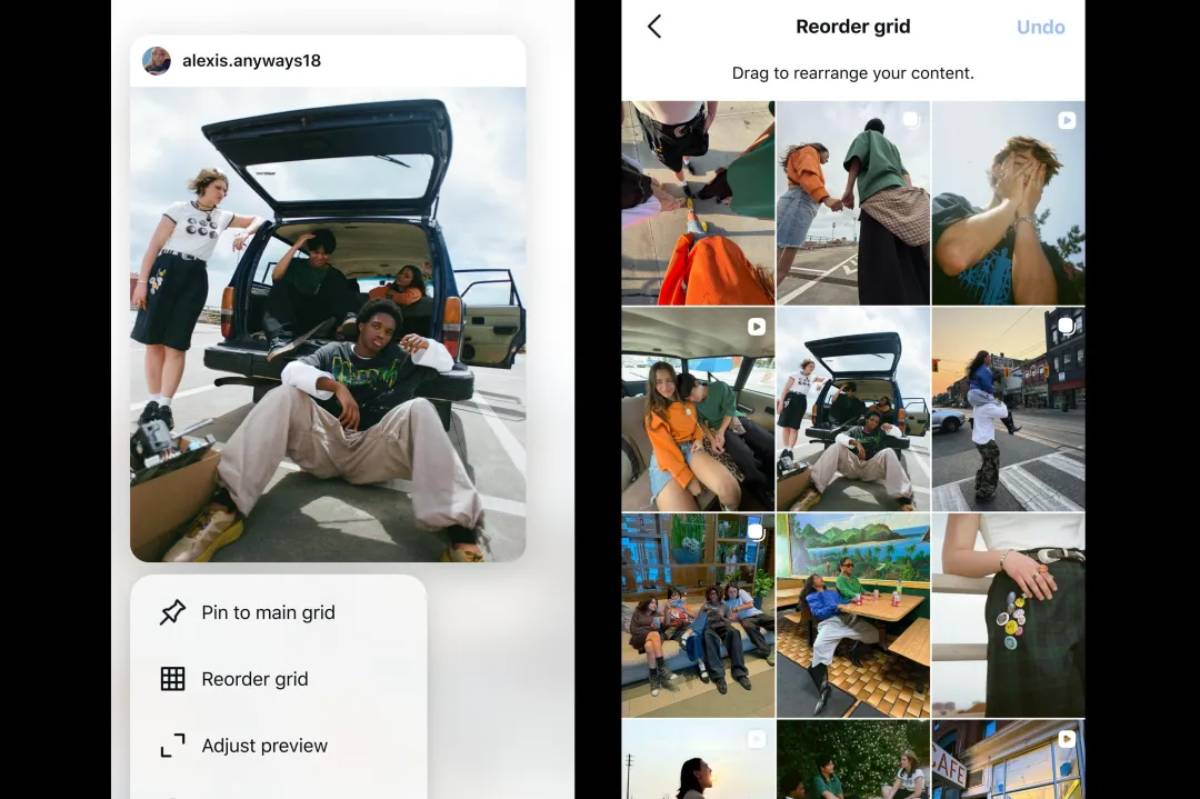
A major development unfolded in the global social media landscape as Instagram introduced a long-requested feature allowing users to reorganize their profile grid. The update marks a strategic shift toward greater user customization and creative control, with implications for digital identity management, influencer branding, and platform engagement dynamics across Meta’s ecosystem.
Instagram’s new feature enables users to manually rearrange the order of posts displayed on their profile grid, moving away from the traditional chronological layout. The rollout is designed to give users more flexibility in curating their public-facing digital identity.
The feature will be made available globally, allowing both casual users and professional creators to highlight selected posts, prioritize content visibility, and refine aesthetic presentation. This includes influencers, brands, and businesses that rely heavily on visual storytelling for audience engagement.
The update is part of a broader set of platform enhancements focused on improving user control over content presentation and personalization. It reflects Meta’s ongoing efforts to strengthen Instagram’s position as a leading visual-first social platform in an increasingly competitive social media environment.
The development aligns with a broader industry trend where social media platforms are shifting from rigid chronological feeds toward highly customizable, algorithm-driven, and user-curated experiences. Over the past several years, platforms such as Instagram, TikTok, and Snapchat have continuously evolved their interfaces to increase engagement and content discovery efficiency.
Historically, Instagram profiles have served as static grids that reflect posting history rather than intentional curation. This limitation has increasingly been seen as outdated in an era where digital identity and personal branding play a critical role in both social and professional contexts.
The rise of influencer marketing and creator economies has further amplified demand for greater control over profile aesthetics. Users now treat social media profiles as portfolio-like spaces, where presentation directly impacts engagement, monetization opportunities, and audience perception.
This shift also reflects broader competitive pressures within the social media industry, where platforms are competing not only for user attention but also for creator loyalty and advertising revenue.
Industry analysts suggest that Instagram’s move is aimed at strengthening creator retention by giving users more control over how their content is perceived. Enhanced customization tools are widely seen as a key factor in maintaining engagement in mature social media markets.
Digital marketing experts note that profile grid customization could significantly impact influencer branding strategies, allowing creators to strategically highlight high-performing or brand-aligned content.
Platform analysts also highlight that this feature may increase time spent on profile management and content optimization, indirectly boosting engagement metrics across the platform.
However, some experts caution that increased curation could reduce the authenticity of content representation, potentially shifting user behavior toward overly polished or performance-oriented profiles.
Meta has not indicated whether the feature will be expanded further into advanced design tools or integrated with monetization features in future updates. For businesses, the update provides new opportunities to optimize brand storytelling on Instagram by enabling more strategic content placement and visual merchandising within profile grids.
For investors, the feature signals continued investment in user engagement tools that support Meta’s long-term advertising ecosystem. Improved creator tools may enhance platform stickiness and increase monetizable content output.
For policymakers, the development raises ongoing questions about digital identity manipulation and the increasing curation of online personas. While not a regulatory concern on its own, it contributes to broader debates around transparency in digital content presentation.
Analysts suggest that enhanced customization tools may further blur the line between organic and curated content in social media ecosystems. Instagram is expected to continue expanding customization and creator-focused features as competition in the social media landscape intensifies. Decision-makers should watch for additional profile-level tools, monetization integrations, and AI-assisted content curation features.
While the rollout enhances user control, its long-term impact on engagement behavior and content authenticity remains to be seen. The next phase will determine how far platforms move toward fully customizable social identities.
Source: The Verge
Date: June 2026


