



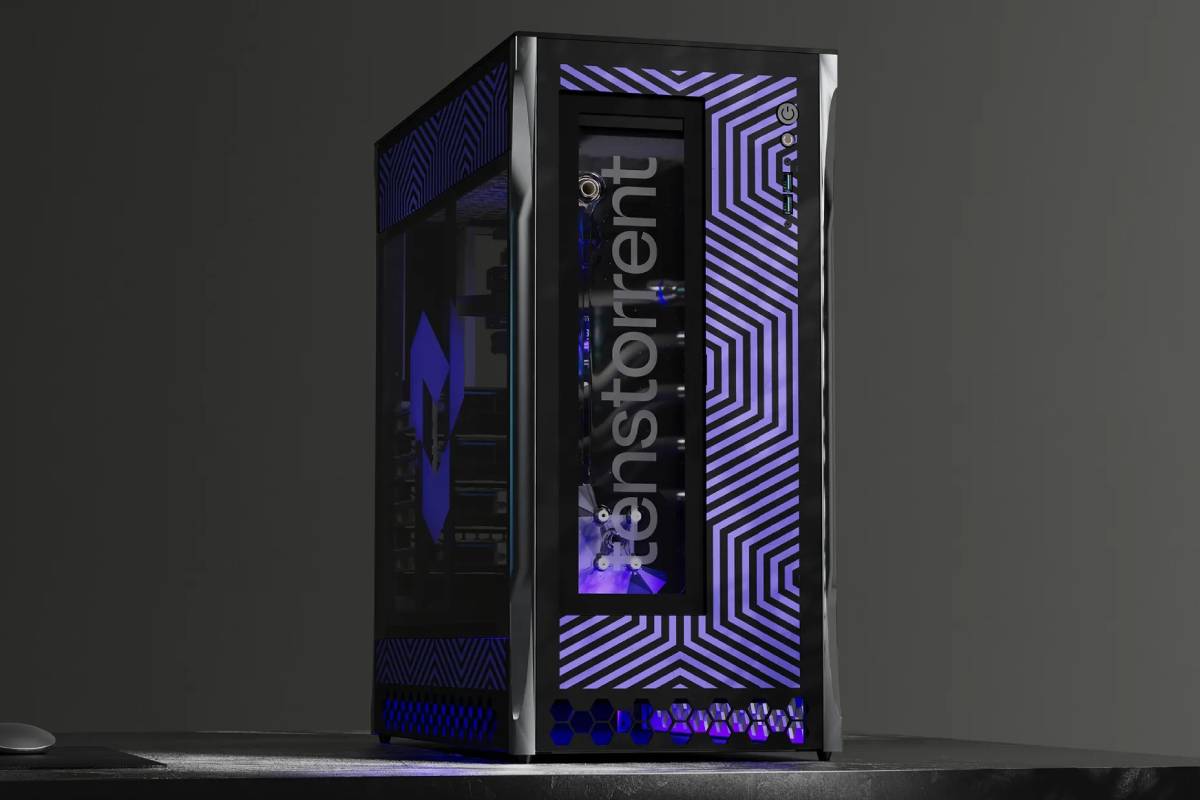
Competition for artificial intelligence infrastructure assets is escalating after AI chip startup Tenstorrent reportedly attracted takeover interest from semiconductor giants Intel and Qualcomm. The development underscores the intensifying global race to secure next-generation AI computing capabilities amid surging enterprise and cloud demand.
According to reports, Tenstorrent has emerged as a potential acquisition target for Intel and Qualcomm as major chipmakers seek stronger positioning in the rapidly expanding AI semiconductor market. The startup, known for developing AI-focused processors and computing architectures, has attracted attention amid increasing demand for high-performance AI infrastructure.
The reported interest reflects broader industry competition to challenge dominant AI hardware providers, particularly as enterprises and cloud operators accelerate generative AI deployment. Semiconductor companies are aggressively pursuing acquisitions, partnerships, and internal development strategies to strengthen their AI portfolios.
The development also highlights the strategic value of specialized AI chip startups in an increasingly geopolitically sensitive semiconductor landscape. The global semiconductor industry has entered a new phase of consolidation and strategic competition driven by artificial intelligence. As generative AI adoption expands across cloud computing, enterprise software, robotics, and consumer devices, demand for advanced AI accelerators and high-efficiency processors has surged dramatically.
Tenstorrent has gained recognition within the AI hardware sector for its alternative chip architectures and its focus on scalable AI computing systems. The company operates in a highly competitive market dominated by players such as NVIDIA, which currently leads the AI accelerator industry.
Meanwhile, Intel and Qualcomm are both seeking to strengthen their AI positions as global demand for AI infrastructure reshapes semiconductor priorities. Governments worldwide are also treating semiconductor production and AI hardware supply chains as matters of economic competitiveness and national security.
Industry analysts view the reported acquisition interest as evidence that AI hardware has become one of the most strategically important sectors in global technology markets. Experts argue that access to advanced AI chip design capabilities is increasingly essential for maintaining competitiveness across cloud services, edge computing, and enterprise AI ecosystems.
Semiconductor specialists note that startups such as Tenstorrent offer established companies faster pathways into emerging AI architectures without relying solely on lengthy internal development cycles. Analysts also suggest that acquisition activity may intensify as companies seek alternatives to dominant GPU suppliers amid supply constraints and pricing pressures.
Market observers further emphasize that AI chip competition now extends beyond commercial opportunity into geopolitical influence, with governments and corporations closely monitoring semiconductor independence, manufacturing resilience, and long-term technological leadership.
For businesses, the development signals continued acceleration in AI infrastructure investment and intensifying competition across cloud and semiconductor ecosystems. Enterprises adopting AI at scale may benefit from broader hardware innovation and increased supplier competition in coming years.
For investors, the reported interest reinforces expectations that AI semiconductor firms will remain among the most strategically valuable assets in technology markets. Startup valuations and merger activity across the AI hardware sector could continue rising sharply.
For policymakers, the situation highlights ongoing concerns surrounding semiconductor supply chains, technological sovereignty, and AI competitiveness. Governments may increasingly support domestic chip ecosystems to reduce reliance on concentrated global suppliers.
Looking ahead, acquisition activity and strategic partnerships across the AI semiconductor industry are expected to accelerate as demand for computing power continues expanding. Decision-makers will closely monitor whether companies such as Intel and Qualcomm can narrow the competitive gap with dominant AI hardware providers. The broader challenge for the industry will be balancing innovation speed, manufacturing scalability, and geopolitical pressures in an increasingly AI-driven global economy.
Source: Bloomberg Report
Date: May 18, 2026


