
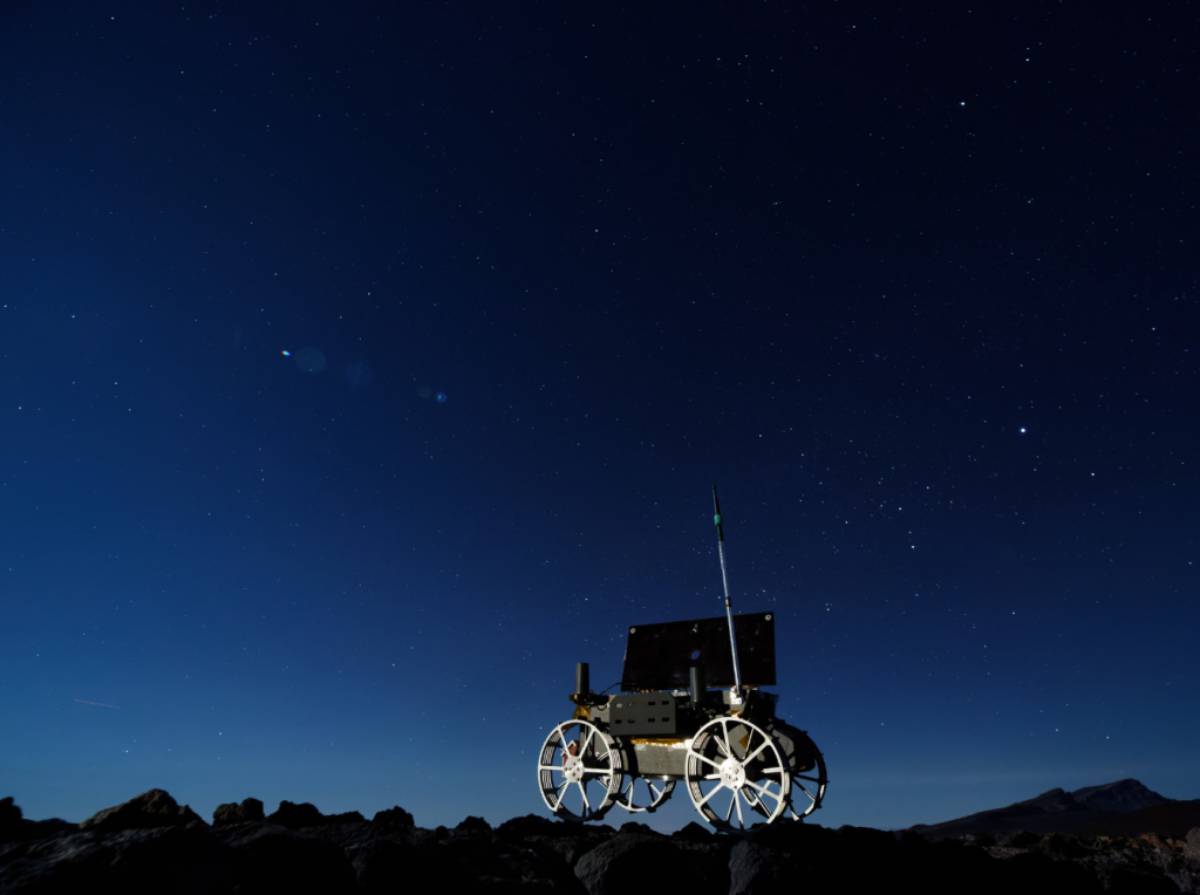
ispace EUROPE Targets Moon’s South Pole

The MAGPIE mission positions ispace EUROPE at the forefront of commercial lunar exploration by targeting the Moon's south pole—one of the most strategically important regions for future space missions.

July 29, 2026
|

A major advancement in Europe's commercial space ambitions is underway as ispace EUROPE launches the MAGPIE mission to explore the Moon's south pole. The initiative strengthens Luxembourg's role in the global space economy while supporting lunar exploration, resource discovery, and next-generation space infrastructure with implications for governments, investors, and the private sector.

The MAGPIE mission positions ispace EUROPE at the forefront of commercial lunar exploration by targeting the Moon's south pole one of the most strategically important regions for future space missions. The area is believed to contain valuable water ice and other resources that could support sustained human and robotic operations.

The mission reflects growing collaboration between commercial space companies, research institutions, and public agencies seeking to expand Europe's presence in lunar exploration. It also reinforces Luxembourg's strategy of developing a globally competitive space ecosystem focused on innovation, advanced technologies, and commercial space services. Successful execution could strengthen Europe's participation in future international lunar initiatives.

The global space economy is entering a new phase driven by increased private-sector participation and renewed government investment in lunar exploration. Countries including the United States, China, Japan, and members of the European Space Agency are accelerating missions focused on the Moon as part of long-term plans for scientific research, resource utilization, and eventual human settlement.

The Moon's south pole has emerged as a priority because permanently shadowed regions may contain water ice, a resource that can support life support systems, fuel production, and long-duration missions. Luxembourg has invested heavily in becoming a leading European space innovation hub through supportive policies, research initiatives, and partnerships with commercial space companies. The MAGPIE mission aligns with broader international efforts to establish a sustainable lunar economy while strengthening Europe's technological competitiveness in the expanding global space sector.

Space industry analysts view commercial lunar exploration as one of the fastest-growing segments of the global aerospace industry. Missions targeting lunar resources are increasingly regarded as foundational investments for future space infrastructure, enabling logistics, scientific discovery, and commercial activity beyond Earth's orbit.

Experts note that companies capable of demonstrating reliable lunar technologies may secure long-term partnerships with national space agencies and multinational research programmes. Industry observers also emphasize that missions such as MAGPIE generate technological advances in robotics, autonomous navigation, communications, and precision engineering that often create commercial applications on Earth.

Official stakeholders are expected to position the mission as another milestone in Europe's ambition to develop a competitive commercial space ecosystem supported by innovation, international collaboration, and private investment.

For aerospace companies, the mission creates opportunities across spacecraft engineering, robotics, communications, navigation, and resource exploration technologies. Investors may see increased momentum in Europe's commercial space sector as lunar exploration transitions from government-led programmes to public-private partnerships.

For policymakers, the mission reinforces the importance of sustained investment in space innovation, international cooperation, and regulatory frameworks supporting commercial exploration. Luxembourg's continued support for space entrepreneurship strengthens its position within Europe's growing space economy while encouraging high-value technology development and attracting global aerospace companies seeking strategic partnerships.

The success of the MAGPIE mission will be closely watched by governments, investors, and the global aerospace industry. Future milestones will include technology validation, scientific discoveries, and the mission's contribution to broader lunar exploration programmes. As international competition for lunar leadership accelerates, commercial missions like MAGPIE are expected to play an increasingly central role in shaping the future space economy and Europe's strategic position within it.

Source: Silicon Luxembourg
Date:
July 2026

  • Featured tools
Copy Ai
Free

Copy AI is one of the most popular AI writing tools designed to help professionals create high-quality content quickly. Whether you are a product manager drafting feature descriptions or a marketer creating ad copy, Copy AI can save hours of work while maintaining creativity and tone.

#
Copywriting
Learn more
Outplay AI
Free

Outplay AI is a dynamic sales engagement platform combining AI-powered outreach, multi-channel automation, and performance tracking to help teams optimize conversion and pipeline generation.

#
Sales
Learn more

Learn more about future of AI

Join 80,000+ Ai enthusiast getting weekly updates on exciting AI tools.
Thank you! Your submission has been received!
Oops! Something went wrong while submitting the form.

ispace EUROPE Targets Moon’s South Pole

July 29, 2026

The MAGPIE mission positions ispace EUROPE at the forefront of commercial lunar exploration by targeting the Moon's south pole—one of the most strategically important regions for future space missions.

A major advancement in Europe's commercial space ambitions is underway as ispace EUROPE launches the MAGPIE mission to explore the Moon's south pole. The initiative strengthens Luxembourg's role in the global space economy while supporting lunar exploration, resource discovery, and next-generation space infrastructure with implications for governments, investors, and the private sector.

The MAGPIE mission positions ispace EUROPE at the forefront of commercial lunar exploration by targeting the Moon's south pole one of the most strategically important regions for future space missions. The area is believed to contain valuable water ice and other resources that could support sustained human and robotic operations.

The mission reflects growing collaboration between commercial space companies, research institutions, and public agencies seeking to expand Europe's presence in lunar exploration. It also reinforces Luxembourg's strategy of developing a globally competitive space ecosystem focused on innovation, advanced technologies, and commercial space services. Successful execution could strengthen Europe's participation in future international lunar initiatives.

The global space economy is entering a new phase driven by increased private-sector participation and renewed government investment in lunar exploration. Countries including the United States, China, Japan, and members of the European Space Agency are accelerating missions focused on the Moon as part of long-term plans for scientific research, resource utilization, and eventual human settlement.

The Moon's south pole has emerged as a priority because permanently shadowed regions may contain water ice, a resource that can support life support systems, fuel production, and long-duration missions. Luxembourg has invested heavily in becoming a leading European space innovation hub through supportive policies, research initiatives, and partnerships with commercial space companies. The MAGPIE mission aligns with broader international efforts to establish a sustainable lunar economy while strengthening Europe's technological competitiveness in the expanding global space sector.

Space industry analysts view commercial lunar exploration as one of the fastest-growing segments of the global aerospace industry. Missions targeting lunar resources are increasingly regarded as foundational investments for future space infrastructure, enabling logistics, scientific discovery, and commercial activity beyond Earth's orbit.

Experts note that companies capable of demonstrating reliable lunar technologies may secure long-term partnerships with national space agencies and multinational research programmes. Industry observers also emphasize that missions such as MAGPIE generate technological advances in robotics, autonomous navigation, communications, and precision engineering that often create commercial applications on Earth.

Official stakeholders are expected to position the mission as another milestone in Europe's ambition to develop a competitive commercial space ecosystem supported by innovation, international collaboration, and private investment.

For aerospace companies, the mission creates opportunities across spacecraft engineering, robotics, communications, navigation, and resource exploration technologies. Investors may see increased momentum in Europe's commercial space sector as lunar exploration transitions from government-led programmes to public-private partnerships.

For policymakers, the mission reinforces the importance of sustained investment in space innovation, international cooperation, and regulatory frameworks supporting commercial exploration. Luxembourg's continued support for space entrepreneurship strengthens its position within Europe's growing space economy while encouraging high-value technology development and attracting global aerospace companies seeking strategic partnerships.

The success of the MAGPIE mission will be closely watched by governments, investors, and the global aerospace industry. Future milestones will include technology validation, scientific discoveries, and the mission's contribution to broader lunar exploration programmes. As international competition for lunar leadership accelerates, commercial missions like MAGPIE are expected to play an increasingly central role in shaping the future space economy and Europe's strategic position within it.

Source: Silicon Luxembourg
Date:
July 2026

Promote Your Tool

Copy Embed Code

Similar Blogs

July 31, 2026
|

Dodo MIDI Enhances Music Production Workflows

Dodo MIDI is part of the music technology ecosystem, focusing on MIDI-based tools that help users create, control, and manage digital musical compositions.
Read more
July 31, 2026
|

Polar Cloud Advances Secure Data Management

Polar Cloud is positioned within the cloud computing ecosystem, offering users technology solutions focused on managing and accessing digital resources through cloud-based environments.
Read more
July 31, 2026
|

Metastream Enhances Shared Digital Entertainment

Metastream is a digital platform designed to enable synchronized media playback, allowing multiple users to watch online content together from different locations.
Read more
July 31, 2026
|

Deep Realms Advances Immersive Digital Experiences

Deep Realms is positioned within the category of immersive digital experiences, offering users a platform focused on exploration, creativity, and interactive engagement.
Read more
July 31, 2026
|

Starbackpage Evolves Digital Marketplace Platforms

Starbackpage is part of the online classified marketplace category, where users can create listings, discover services, and interact through digital platforms.
Read more
July 31, 2026
|

Calyx VPN Strengthens Digital Privacy Security

Calyx VPN is a privacy-focused virtual private network solution designed to provide users with secure internet connections and enhanced online privacy.
Read more