



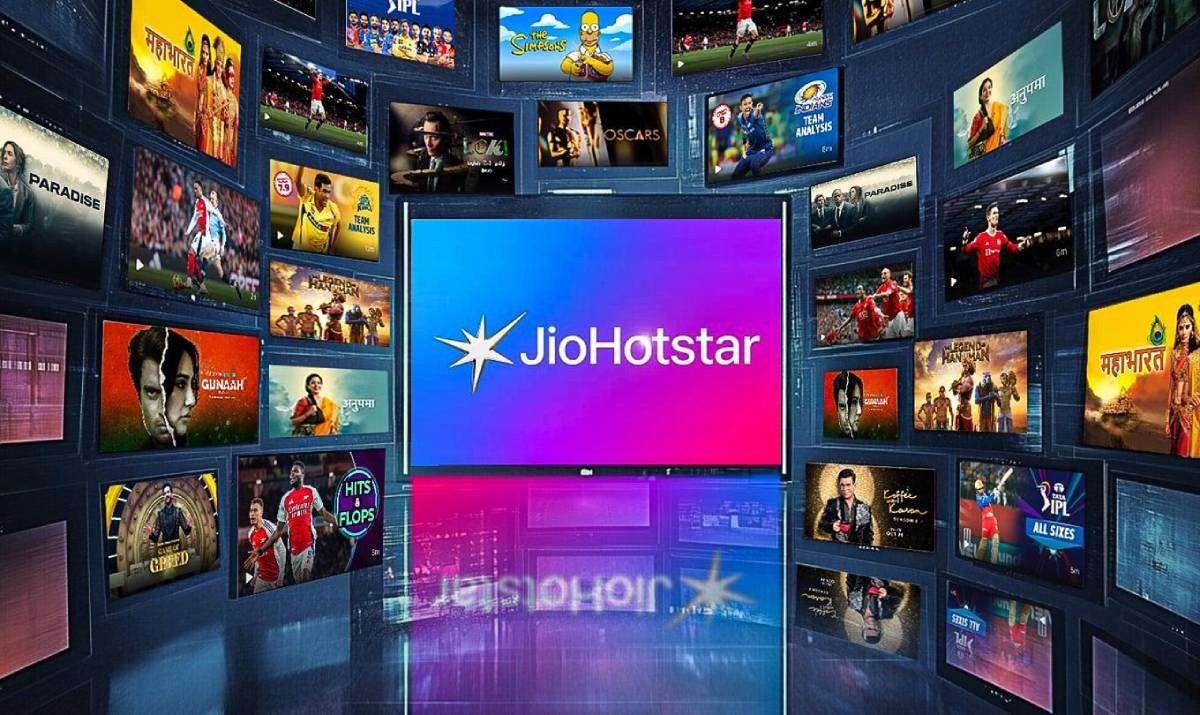
A significant strategic expansion is underway at JioHotstar as the streaming major accelerates hiring across artificial intelligence and generative media roles. The initiative underscores a shift toward building a fully integrated, homegrown AI-powered entertainment stack, reshaping how content is produced, localized, and distributed in India’s fast-evolving digital media landscape.
JioHotstar is expanding its AI workforce with a focus on machine learning engineers, generative AI researchers, and data infrastructure specialists. The hiring wave is aimed at developing proprietary systems for content recommendation, automated dubbing, and AI-assisted video generation.
The move follows the integration of large-scale streaming operations under a unified platform strategy, positioning the company to compete more aggressively in India’s crowded OTT market. Industry sources suggest the expansion is already underway and will continue through 2026, with an emphasis on building in-house capabilities rather than relying on external AI vendors.
The aggressive AI talent push by JioHotstar reflects a broader structural shift in global media, where streaming platforms are transitioning from content distributors to technology-driven entertainment ecosystems. Artificial intelligence is now central to scaling personalization, reducing localization costs, and accelerating production timelines.
In India, the OTT sector is undergoing rapid consolidation and platform unification, driven by telecom-backed ecosystems seeking to bundle connectivity, content, and digital services. This mirrors global trends where companies are investing heavily in AI to optimize viewer engagement and advertising efficiency.
At the same time, generative AI is becoming increasingly viable for real-world media applications such as script assistance, synthetic voiceovers, and automated subtitle generation across multiple Indian languages. For a linguistically diverse market like India, this capability is particularly strategic, enabling platforms to scale regional content more efficiently than traditional production pipelines allow.
Industry analysts view the hiring expansion as a signal that JioHotstar is moving toward a vertically integrated AI entertainment model. Experts argue that companies embedding generative AI into core workflows could significantly lower content production and localization costs while increasing output velocity.
Media technology consultants note that the shift represents a broader “AI-first streaming” phase, where recommendation engines and generative tools become as important as content libraries. However, they also highlight execution risks, particularly around data governance, intellectual property rights, and regulatory scrutiny of synthetic media.
While the company has not publicly detailed specific hiring numbers or project timelines, internal industry chatter suggests a sustained multi-quarter expansion of AI teams. Analysts also caution that competition for AI talent in India remains intense, with global tech firms and startups competing for the same pool of specialists.
For businesses, the strategy signals a transition toward AI-native media operations, where competitive advantage depends on proprietary algorithms and automation infrastructure rather than content licensing alone. Investors may increasingly evaluate streaming companies based on AI capability maturity and operational efficiency metrics.
Consumers could benefit from more personalized recommendations, faster localization, and potentially AI-generated or AI-assisted content formats tailored to regional preferences. However, concerns around transparency, content authenticity, and algorithmic influence may grow in parallel.
From a policy standpoint, regulators may need to address emerging questions around synthetic media disclosure, copyright ownership of AI-generated content, and data usage in training entertainment models. This could accelerate the development of AI governance frameworks in India’s digital and creative industries.
The next phase will depend on how effectively JioHotstar converts AI hiring momentum into scalable production systems. Key milestones to watch include deployment of generative video tools, multilingual automation at scale, and improved personalization engines. Execution speed, regulatory clarity, and sustained talent acquisition will determine whether this initiative redefines India’s streaming ecosystem or remains an evolving strategic transition.
Source: Variety — “JioHotstar Goes on AI Hiring Spree as India’s Largest Streamer Bets on Homegrown Tech (EXCLUSIVE)”
Date: June 3, 2026


