
Korea AI Chip Boom Pressures Bonds

The rapid expansion of South Korea’s AI-linked semiconductor sector has increased government spending commitments tied to infrastructure, subsidies, and industrial support programs.

June 8, 2026
|
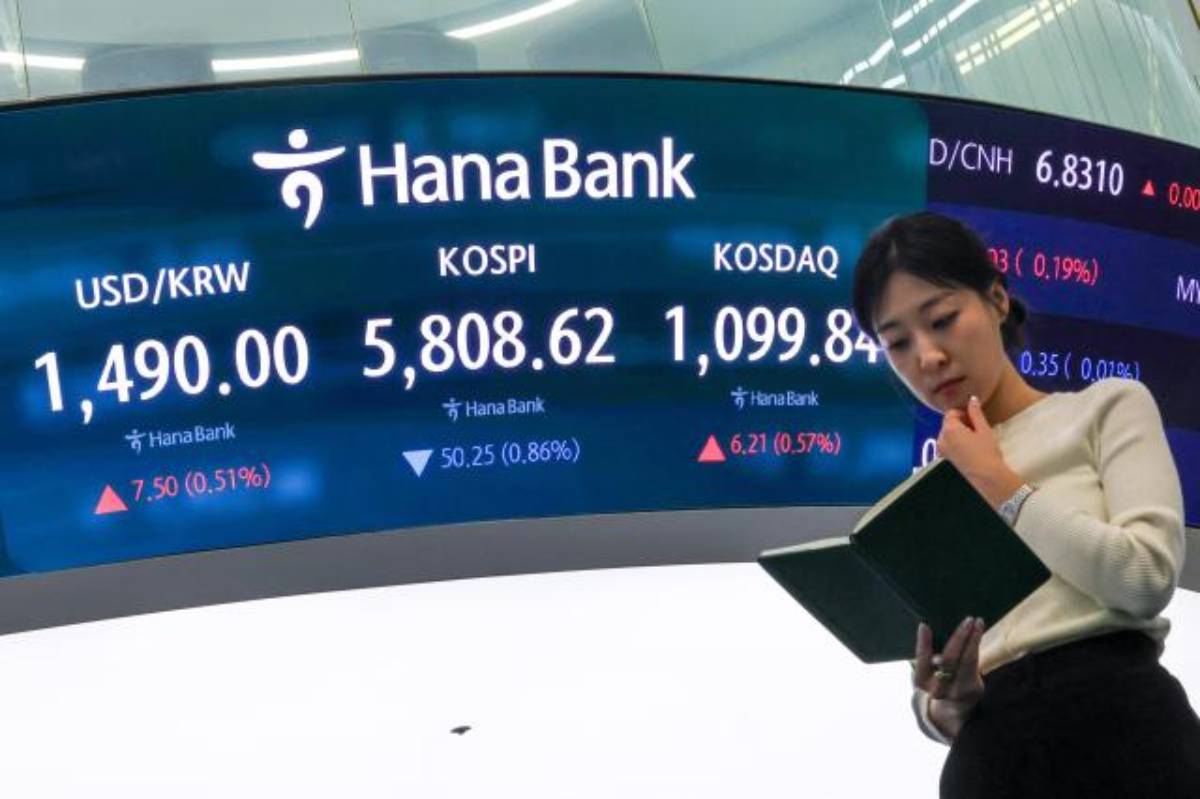
Image Soure: Bloomberg

South Korea’s accelerating AI and semiconductor expansion is beginning to ripple into its sovereign debt markets, with rising fiscal pressure and shifting investor expectations. The surge in chip-related investment and public support measures is reshaping bond dynamics, raising concerns over long-term funding costs and macroeconomic stability in Asia’s fourth-largest economy.

The rapid expansion of South Korea’s AI-linked semiconductor sector has increased government spending commitments tied to infrastructure, subsidies, and industrial support programs. This has coincided with visible movement in government bond yields, suggesting tightening market conditions.

Investors are reassessing fiscal trajectories as AI-driven industrial policy accelerates capital deployment across strategic sectors. Market participants report growing sensitivity to issuance volumes, particularly as global rates remain elevated.

While the chip boom is strengthening export competitiveness, it is simultaneously placing upward pressure on sovereign borrowing requirements, with analysts closely monitoring debt servicing costs and long-term fiscal sustainability.

South Korea has positioned its semiconductor industry as a core pillar of national economic strategy, with AI emerging as a key accelerant for next-generation chip demand. Global competition in advanced semiconductors particularly between the US, China, and Korea has led to increased state involvement in industrial scaling.

Historically, export-driven economies have leveraged industrial policy to maintain technological leadership, often relying on public investment during strategic growth cycles. However, the current AI-driven cycle is more capital intensive, requiring sustained fiscal support for R&D, fabrication capacity, and supply chain resilience.

As AI workloads expand globally, demand for high-performance chips is expected to remain structurally elevated. This has reinforced Korea’s strategic importance in the semiconductor value chain, while simultaneously increasing pressure on government balance sheets and debt markets.

Economists suggest that the bond market reaction reflects a recalibration of sovereign risk pricing rather than immediate fiscal distress. Some analysts note that investors are increasingly differentiating between AI-led growth potential and the cost of sustaining that growth through public expenditure.

Fixed-income strategists highlight that rising issuance expectations linked to industrial policy can gradually influence yield curves, particularly in mid- to long-term maturities. Others argue that strong export earnings from semiconductors may partially offset fiscal concerns.

Policy observers emphasize that Korea’s challenge lies in balancing aggressive industrial expansion with disciplined debt management. While AI-driven growth is seen as structurally positive, markets are becoming more sensitive to the financing mechanisms underpinning that expansion.

For businesses, particularly semiconductor and AI infrastructure firms, continued government backing provides long-term demand visibility but may come with tighter policy scrutiny on spending efficiency. Export-oriented firms may benefit from sustained strategic investment.

For investors, rising bond market sensitivity signals potential volatility in Korean sovereign debt instruments, particularly if fiscal expansion accelerates faster than revenue growth.

For policymakers, the situation underscores the need to balance industrial ambition with fiscal sustainability. Maintaining investor confidence in sovereign debt markets will be critical as Korea continues to scale its AI and semiconductor ecosystem in a highly competitive global environment.

Going forward, bond market direction will likely depend on the pace of AI-related fiscal expansion versus export-driven revenue growth. If semiconductor exports continue to outperform, fiscal concerns may stabilize. However, sustained industrial subsidies and infrastructure spending could maintain upward pressure on yields. The key variable will be whether AI-led growth translates into sufficient tax base expansion to offset rising public investment demands.

Source: Bloomberg
Date: 2026-06-08

  • Featured tools
Wonder AI
Free

Wonder AI is a versatile AI-powered creative platform that generates text, images, and audio with minimal input, designed for fast storytelling, visual creation, and audio content generation

#
Art Generator
Learn more
Writesonic AI
Free

Writesonic AI is a versatile AI writing platform designed for marketers, entrepreneurs, and content creators. It helps users create blog posts, ad copies, product descriptions, social media posts, and more with ease. With advanced AI models and user-friendly tools, Writesonic streamlines content production and saves time for busy professionals.

#
Copywriting
Learn more

Learn more about future of AI

Join 80,000+ Ai enthusiast getting weekly updates on exciting AI tools.
Thank you! Your submission has been received!
Oops! Something went wrong while submitting the form.

Korea AI Chip Boom Pressures Bonds

June 8, 2026

The rapid expansion of South Korea’s AI-linked semiconductor sector has increased government spending commitments tied to infrastructure, subsidies, and industrial support programs.

Image Soure: Bloomberg

South Korea’s accelerating AI and semiconductor expansion is beginning to ripple into its sovereign debt markets, with rising fiscal pressure and shifting investor expectations. The surge in chip-related investment and public support measures is reshaping bond dynamics, raising concerns over long-term funding costs and macroeconomic stability in Asia’s fourth-largest economy.

The rapid expansion of South Korea’s AI-linked semiconductor sector has increased government spending commitments tied to infrastructure, subsidies, and industrial support programs. This has coincided with visible movement in government bond yields, suggesting tightening market conditions.

Investors are reassessing fiscal trajectories as AI-driven industrial policy accelerates capital deployment across strategic sectors. Market participants report growing sensitivity to issuance volumes, particularly as global rates remain elevated.

While the chip boom is strengthening export competitiveness, it is simultaneously placing upward pressure on sovereign borrowing requirements, with analysts closely monitoring debt servicing costs and long-term fiscal sustainability.

South Korea has positioned its semiconductor industry as a core pillar of national economic strategy, with AI emerging as a key accelerant for next-generation chip demand. Global competition in advanced semiconductors particularly between the US, China, and Korea has led to increased state involvement in industrial scaling.

Historically, export-driven economies have leveraged industrial policy to maintain technological leadership, often relying on public investment during strategic growth cycles. However, the current AI-driven cycle is more capital intensive, requiring sustained fiscal support for R&D, fabrication capacity, and supply chain resilience.

As AI workloads expand globally, demand for high-performance chips is expected to remain structurally elevated. This has reinforced Korea’s strategic importance in the semiconductor value chain, while simultaneously increasing pressure on government balance sheets and debt markets.

Economists suggest that the bond market reaction reflects a recalibration of sovereign risk pricing rather than immediate fiscal distress. Some analysts note that investors are increasingly differentiating between AI-led growth potential and the cost of sustaining that growth through public expenditure.

Fixed-income strategists highlight that rising issuance expectations linked to industrial policy can gradually influence yield curves, particularly in mid- to long-term maturities. Others argue that strong export earnings from semiconductors may partially offset fiscal concerns.

Policy observers emphasize that Korea’s challenge lies in balancing aggressive industrial expansion with disciplined debt management. While AI-driven growth is seen as structurally positive, markets are becoming more sensitive to the financing mechanisms underpinning that expansion.

For businesses, particularly semiconductor and AI infrastructure firms, continued government backing provides long-term demand visibility but may come with tighter policy scrutiny on spending efficiency. Export-oriented firms may benefit from sustained strategic investment.

For investors, rising bond market sensitivity signals potential volatility in Korean sovereign debt instruments, particularly if fiscal expansion accelerates faster than revenue growth.

For policymakers, the situation underscores the need to balance industrial ambition with fiscal sustainability. Maintaining investor confidence in sovereign debt markets will be critical as Korea continues to scale its AI and semiconductor ecosystem in a highly competitive global environment.

Going forward, bond market direction will likely depend on the pace of AI-related fiscal expansion versus export-driven revenue growth. If semiconductor exports continue to outperform, fiscal concerns may stabilize. However, sustained industrial subsidies and infrastructure spending could maintain upward pressure on yields. The key variable will be whether AI-led growth translates into sufficient tax base expansion to offset rising public investment demands.

Source: Bloomberg
Date: 2026-06-08

Promote Your Tool

Copy Embed Code

Similar Blogs

June 8, 2026
|

Legora Tech Chief Slams Tokenmaxxing AI Debate Intensifies

The chief technology officer of Legora publicly criticized the emerging practice known as “tokenmaxxing,” describing it as an inefficient and misguided approach to encouraging artificial intelligence usage.
Read more
June 8, 2026
|

JPMorgan Boosts AI Strategy Leadership Hire

JPMorgan Chase has reportedly hired Nomura’s international AI strategy chief to strengthen its global artificial intelligence roadmap.
Read more
June 8, 2026
|

Chrome AI Strategy Sparks Privacy Debate

Reports indicate that Google Chrome may have downloaded a substantial AI model estimated at several gigabytes onto user systems without explicit user awareness.
Read more
June 8, 2026
|

Altman Trump Meeting Raises AI Stakes

Sam Altman reportedly met with Donald Trump following discussion around a recent U.S. executive order on artificial intelligence that, according to reports, imposes limited direct requirements on industry players.
Read more
June 8, 2026
|

Apple AI Settlement Opens User Claims Window

Apple has agreed to a $250 million settlement addressing claims tied to AI-driven iPhone functionalities and user impact concerns. Eligible users may now file claims within a defined submission window.
Read more
June 8, 2026
|

Microsoft AI Expansion Sparks Backlash Energy Impact

During a recent event where Microsoft showcased its latest AI advancements, protesters gathered outside opposing the expansion of large-scale AI data centers.
Read more