



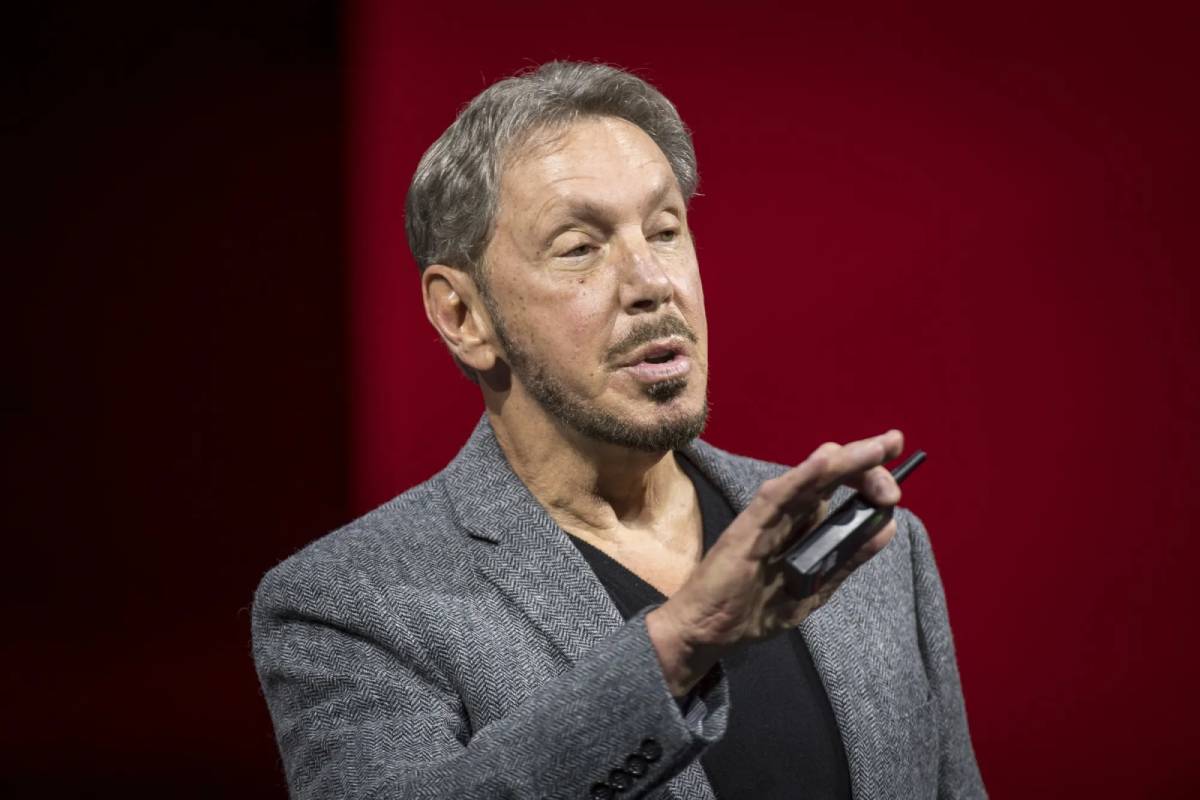
A major development unfolded as Oracle co-founder Larry Ellison issued a stark warning about the fundamental limitations of today’s artificial intelligence models, including ChatGPT, Gemini, Grok, and Llama. His remarks spotlight critical structural weaknesses in AI systems, raising urgent questions for enterprises, policymakers, and investors navigating the rapidly evolving generative AI landscape.
Ellison highlighted that despite impressive breakthroughs, modern AI systems remain constrained by fundamental data and reasoning limitations. He argued that current models largely operate as advanced pattern-recognition engines rather than systems capable of deep understanding or real-world reasoning. According to Ellison, the reliance on historical data sets introduces inherent biases, inaccuracies, and blind spots that restrict adaptability. He also flagged concerns around data provenance, hallucination risks, and overdependence on probabilistic outputs. These challenges, he warned, could slow enterprise adoption, complicate regulatory compliance, and expose businesses to reputational and operational risks, particularly in sensitive sectors such as healthcare, finance, and public services.
Ellison’s remarks come amid unprecedented investment in generative AI, with hyperscalers, startups, and governments racing to build larger, faster, and more capable models. While AI adoption has surged across industries from software development and customer service to financial analytics concerns around reliability, safety, and accountability have intensified. High-profile incidents involving hallucinated outputs, deepfakes, and data leaks have triggered regulatory scrutiny globally. Governments in the US, EU, and Asia are now tightening oversight frameworks, while enterprises are reassessing risk management strategies. Against this backdrop, Ellison’s critique underscores a growing realization: scaling model size alone may not deliver sustainable intelligence. Instead, foundational changes in architecture, training methodologies, and governance will be required to unlock AI’s next phase of growth.
Technology analysts largely echoed Ellison’s concerns, emphasizing that today’s models excel at prediction, not comprehension. Industry experts note that while large language models simulate reasoning, they lack true contextual awareness and causal inference. AI safety researchers argue this gap is at the heart of hallucination and bias challenges. Corporate leaders across finance and healthcare sectors have also called for stricter validation layers before deploying AI at scale. Some executives see Ellison’s comments as a strategic positioning move, aligning Oracle with enterprise-grade AI built on AI governance, security, and trust. Policy analysts meanwhile highlight that his remarks strengthen the case for global standards around training data transparency, auditability, and algorithmic accountability.
For enterprises, Ellison’s warning signals the need to temper AI optimism with rigorous governance frameworks. Companies deploying generative AI must invest in data validation, human oversight, and compliance systems to mitigate legal and reputational risks. Investors may increasingly favor firms offering secure, explainable, and auditable AI solutions rather than pure model-scale plays. Policymakers, meanwhile, are likely to accelerate regulatory frameworks addressing data sourcing, accountability, and AI safety. This shift could reshape procurement strategies, favoring vendors with robust enterprise-grade architectures and compliance-ready platforms, redefining competitive dynamics across the AI ecosystem.
Looking ahead, the AI industry is expected to pivot toward hybrid architectures combining symbolic reasoning, real-world data integration, and domain-specific intelligence. Decision-makers should watch for breakthroughs in explainable AI, model governance, and secure data pipelines. As scrutiny intensifies, trust, reliability, and regulatory alignment not raw performance will increasingly define winners in the next phase of the global AI race.
Source & Date
Source: The Times of India
Date: January 2026


