
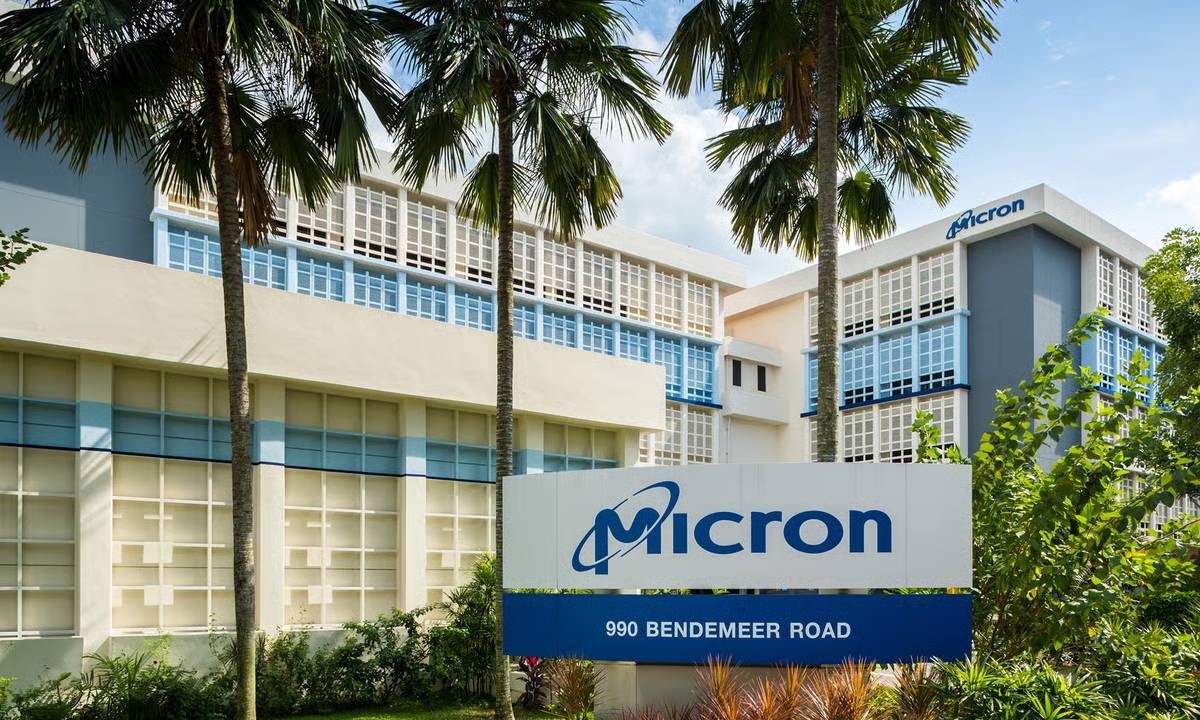
Micron and Sandisk Face 2026 AI Memory Stock Battle

Micron Technology has reported strong demand for DRAM and high-bandwidth memory, driven by AI server deployments and enterprise computing expansion.

February 26, 2026
|

A major development unfolded today as investors and analysts assess the AI growth potential of memory chip leaders Micron Technology and Sandisk. With surging demand for AI workloads, data centers, and high-performance computing, these companies are positioned at the forefront of the semiconductor market, influencing technology supply chains, investor strategies, and global AI infrastructure expansion.

Micron Technology has reported strong demand for DRAM and high-bandwidth memory, driven by AI server deployments and enterprise computing expansion. Sandisk, a key player in NAND flash storage, is experiencing growth from cloud storage and AI-enabled edge devices. Analysts highlight performance metrics such as revenue growth, gross margins, and R&D investment in AI-optimized memory products.

Investors are evaluating both companies’ exposure to global supply chain risks, including geopolitical tensions in semiconductor production regions. The market is closely watching strategic partnerships with AI cloud providers and new product launches that could redefine memory performance standards and capture share in the fast-growing AI infrastructure sector.

The development aligns with a broader trend where AI adoption is driving exponential memory demand across enterprise, cloud, and consumer devices. Semiconductor memory DRAM and NAND flash is critical for powering AI models, large-scale data analytics, and generative AI platforms.

Micron and Sandisk have historically been key players in their respective niches: DRAM for Micron and NAND storage for Sandisk, providing complementary but overlapping exposure to the AI hardware boom. Global supply chains, including fabrication in Taiwan, South Korea, and the U.S., create both opportunities and geopolitical risk, influencing investment sentiment.

The competitive landscape is further shaped by innovation cycles, price volatility, and partnerships with hyperscalers like cloud service providers, which dictate AI data center deployment scales. Understanding these dynamics is essential for executives and investors assessing growth trajectories, capital allocation, and long-term market positioning in AI-driven semiconductor segments.

Industry analysts suggest that Micron’s investment in high-bandwidth memory and AI-optimized DRAM positions it as a critical enabler for next-generation AI workloads. Sandisk’s focus on scalable NAND solutions for cloud and edge AI applications provides diversified exposure to storage-intensive AI deployments.

Semiconductor strategists note that both companies are benefiting from multi-year AI adoption trends, but face challenges such as global supply chain disruptions, competition from emerging memory startups, and pricing pressures. Investor sentiment reflects cautious optimism, with portfolio managers emphasizing the need to weigh short-term earnings volatility against long-term AI market growth.

Corporate spokespeople highlight ongoing R&D initiatives, strategic collaborations with AI platform providers, and product innovations aimed at improving throughput, latency, and energy efficiency in AI workloads. Analysts recommend monitoring quarterly performance, partnerships, and technological advancements to gauge sustained leadership in AI memory markets.

For global executives, the AI memory boom could redefine operational and capital investment strategies across semiconductor manufacturing, cloud computing, and AI services. Investors must assess risk-adjusted returns, considering both revenue growth from AI adoption and exposure to global supply chain disruptions. Market participants may recalibrate portfolios toward companies with demonstrable AI-oriented product roadmaps and strategic partnerships.

Government policymakers may consider incentives, export controls, and domestic manufacturing support to secure AI-critical supply chains. Companies that successfully align technology innovation, production resilience, and strategic alliances could dominate AI memory markets, shaping competitive dynamics and influencing AI infrastructure development worldwide.

Decision-makers should watch upcoming earnings reports, product launches, and AI partnership announcements for insights into market leadership. Geopolitical developments and supply chain resilience remain key uncertainties affecting stock performance.

The next 12–18 months will be critical for establishing DRAM and NAND memory standards for AI applications, determining which companies capture long-term growth in the high-demand AI infrastructure market.

Source: The Motley Fool
Date: February 25, 2026

  • Featured tools
WellSaid Ai
Free

WellSaid AI is an advanced text-to-speech platform that transforms written text into lifelike, human-quality voiceovers.

#
Text to Speech
Learn more
Tome AI
Free

Tome AI is an AI-powered storytelling and presentation tool designed to help users create compelling narratives and presentations quickly and efficiently. It leverages advanced AI technologies to generate content, images, and animations based on user input.

#
Presentation
#
Startup Tools
Learn more

Learn more about future of AI

Join 80,000+ Ai enthusiast getting weekly updates on exciting AI tools.
Thank you! Your submission has been received!
Oops! Something went wrong while submitting the form.

Micron and Sandisk Face 2026 AI Memory Stock Battle

February 26, 2026

Micron Technology has reported strong demand for DRAM and high-bandwidth memory, driven by AI server deployments and enterprise computing expansion.

A major development unfolded today as investors and analysts assess the AI growth potential of memory chip leaders Micron Technology and Sandisk. With surging demand for AI workloads, data centers, and high-performance computing, these companies are positioned at the forefront of the semiconductor market, influencing technology supply chains, investor strategies, and global AI infrastructure expansion.

Micron Technology has reported strong demand for DRAM and high-bandwidth memory, driven by AI server deployments and enterprise computing expansion. Sandisk, a key player in NAND flash storage, is experiencing growth from cloud storage and AI-enabled edge devices. Analysts highlight performance metrics such as revenue growth, gross margins, and R&D investment in AI-optimized memory products.

Investors are evaluating both companies’ exposure to global supply chain risks, including geopolitical tensions in semiconductor production regions. The market is closely watching strategic partnerships with AI cloud providers and new product launches that could redefine memory performance standards and capture share in the fast-growing AI infrastructure sector.

The development aligns with a broader trend where AI adoption is driving exponential memory demand across enterprise, cloud, and consumer devices. Semiconductor memory DRAM and NAND flash is critical for powering AI models, large-scale data analytics, and generative AI platforms.

Micron and Sandisk have historically been key players in their respective niches: DRAM for Micron and NAND storage for Sandisk, providing complementary but overlapping exposure to the AI hardware boom. Global supply chains, including fabrication in Taiwan, South Korea, and the U.S., create both opportunities and geopolitical risk, influencing investment sentiment.

The competitive landscape is further shaped by innovation cycles, price volatility, and partnerships with hyperscalers like cloud service providers, which dictate AI data center deployment scales. Understanding these dynamics is essential for executives and investors assessing growth trajectories, capital allocation, and long-term market positioning in AI-driven semiconductor segments.

Industry analysts suggest that Micron’s investment in high-bandwidth memory and AI-optimized DRAM positions it as a critical enabler for next-generation AI workloads. Sandisk’s focus on scalable NAND solutions for cloud and edge AI applications provides diversified exposure to storage-intensive AI deployments.

Semiconductor strategists note that both companies are benefiting from multi-year AI adoption trends, but face challenges such as global supply chain disruptions, competition from emerging memory startups, and pricing pressures. Investor sentiment reflects cautious optimism, with portfolio managers emphasizing the need to weigh short-term earnings volatility against long-term AI market growth.

Corporate spokespeople highlight ongoing R&D initiatives, strategic collaborations with AI platform providers, and product innovations aimed at improving throughput, latency, and energy efficiency in AI workloads. Analysts recommend monitoring quarterly performance, partnerships, and technological advancements to gauge sustained leadership in AI memory markets.

For global executives, the AI memory boom could redefine operational and capital investment strategies across semiconductor manufacturing, cloud computing, and AI services. Investors must assess risk-adjusted returns, considering both revenue growth from AI adoption and exposure to global supply chain disruptions. Market participants may recalibrate portfolios toward companies with demonstrable AI-oriented product roadmaps and strategic partnerships.

Government policymakers may consider incentives, export controls, and domestic manufacturing support to secure AI-critical supply chains. Companies that successfully align technology innovation, production resilience, and strategic alliances could dominate AI memory markets, shaping competitive dynamics and influencing AI infrastructure development worldwide.

Decision-makers should watch upcoming earnings reports, product launches, and AI partnership announcements for insights into market leadership. Geopolitical developments and supply chain resilience remain key uncertainties affecting stock performance.

The next 12–18 months will be critical for establishing DRAM and NAND memory standards for AI applications, determining which companies capture long-term growth in the high-demand AI infrastructure market.

Source: The Motley Fool
Date: February 25, 2026

Promote Your Tool

Copy Embed Code

Similar Blogs

February 26, 2026
|

Google, Samsung Outpace Apple with Advanced AI Features

Google introduced Gemini-powered AI features on its Pixel series, offering real-time language translation, personalized task management, and proactive suggestions based on user habits.
Read more
February 26, 2026
|

Perplexity Enters Autonomous AI Market, Challenges OpenClaw Agent

Perplexity officially introduced its managed AI agent platform this week, aiming to automate complex computer tasks and streamline enterprise workflows.
Read more
February 26, 2026
|

Micron and Sandisk Face 2026 AI Memory Stock Battle

Micron Technology has reported strong demand for DRAM and high-bandwidth memory, driven by AI server deployments and enterprise computing expansion.
Read more
February 26, 2026
|

AI Music Startups Seek Industry Acceptance After Early Backlash

Several AI music startups are shifting strategies from independent disruption to collaboration with record labels, music publishers, and streaming platforms.
Read more
February 26, 2026
|

Jamie Dimon Calls for Action on AI Job Disruption

During a keynote address, Dimon emphasized that businesses, governments, and educational institutions need proactive strategies to mitigate workforce disruption caused by AI automation.
Read more
February 26, 2026
|

OpenAI Poaches Meta Executive in Escalating AI Talent War

OpenAI recruited a prominent AI models executive who had most recently worked at Meta and earlier headed Apple’s models team. The executive played a significant role in large-scale model development and applied AI systems.
Read more