



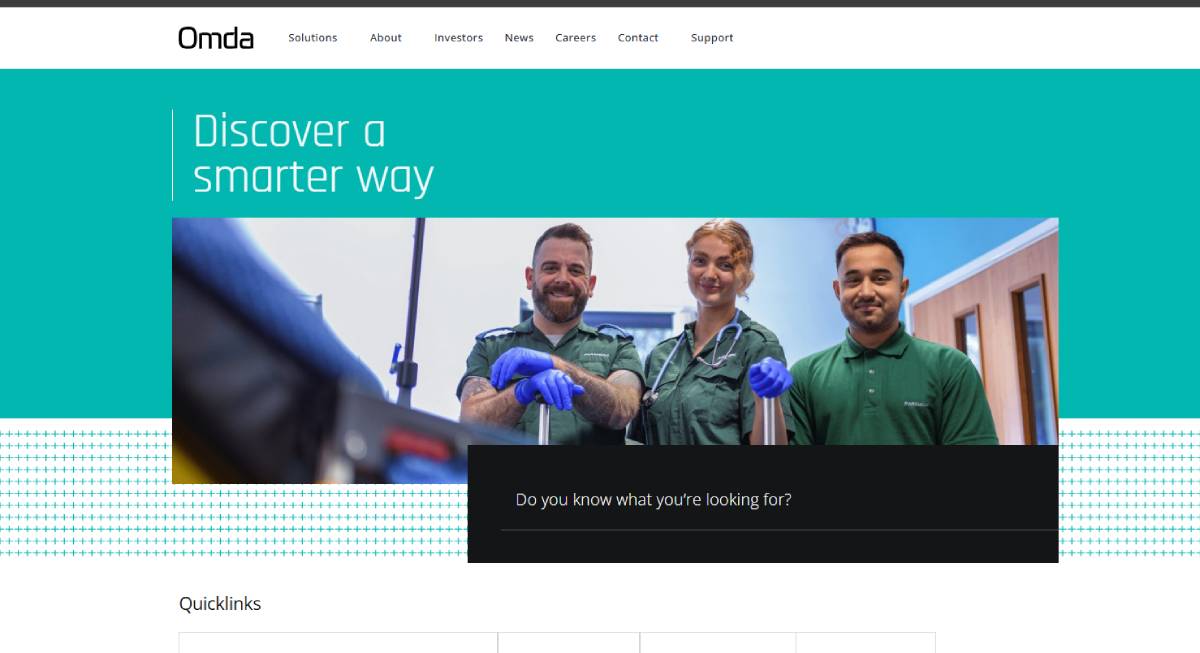
Swedish health-tech and public safety software company Omda has acquired a little-known emergency response software unit from Saab, signaling continued consolidation in Europe’s mission-critical public safety technology sector. The deal reflects rising demand for integrated digital systems in emergency response and healthcare coordination across national infrastructure networks.
Omda has acquired a public safety and emergency software division from Saab, a unit focused on critical incident management and emergency response systems. The transaction was not positioned as a major strategic divestment by Saab but represents a targeted portfolio adjustment. Omda, which specializes in healthcare data systems and public safety platforms, will integrate the acquired unit into its broader emergency response ecosystem.
The financial terms of the deal were not disclosed, but the acquisition strengthens Omda’s position in interoperable crisis management software used by public authorities and healthcare institutions across Europe.
Europe’s public safety and emergency management systems are undergoing rapid digital transformation, driven by the need for real-time coordination between healthcare providers, emergency responders, and government agencies.
Historically, emergency response systems have been fragmented, relying on legacy infrastructure with limited interoperability. This has created strong demand for unified software platforms that can streamline communication during crises ranging from natural disasters to large-scale public emergencies.
Defense and industrial groups like Saab have increasingly refined their portfolios, focusing on core aerospace and defense operations while divesting niche software assets. At the same time, specialized software companies like Omda are consolidating fragmented digital infrastructure in public safety.
This shift reflects a broader trend in Europe toward software-driven governance infrastructure, where digital platforms are becoming as critical as physical emergency response capabilities.
Industry analysts suggest that public safety technology is entering a consolidation phase similar to earlier waves seen in healthcare IT and defense communications. The focus is shifting toward interoperability, cloud integration, and real-time data exchange across agencies.
Experts in emergency management systems note that fragmented legacy platforms remain a major operational risk during large-scale crises, increasing demand for unified software ecosystems.
While neither company has framed the transaction as transformational, sector observers view it as part of a gradual restructuring of Europe’s critical infrastructure software market.
Public sector technology consultants also highlight that procurement agencies are increasingly favoring vendors capable of end-to-end crisis management solutions rather than point-specific systems, further accelerating consolidation among specialized software providers.
For investors, the deal reinforces public safety software as a stable, long-term infrastructure segment with recurring government-driven demand. Consolidation may improve scalability for vendors operating in regulated procurement environments.
For governments and public institutions, the acquisition supports the shift toward integrated emergency response platforms, potentially improving coordination efficiency during crises. However, it also raises dependency concerns on fewer specialized providers.
For enterprise software markets, the transaction signals continued blending of healthcare IT, defense systems, and civic infrastructure software into unified digital ecosystems. Overall, the development highlights the increasing strategic importance of software infrastructure in national resilience frameworks. Omda is expected to focus on integrating the acquired system into its broader healthcare and emergency platform, with potential expansion into additional European markets. Future consolidation in public safety software appears likely as governments push for interoperability standards. The key uncertainty remains how quickly fragmented legacy systems can be replaced without disrupting critical public service operations.
Source: Nordictech news
Date: July 2, 2026


