



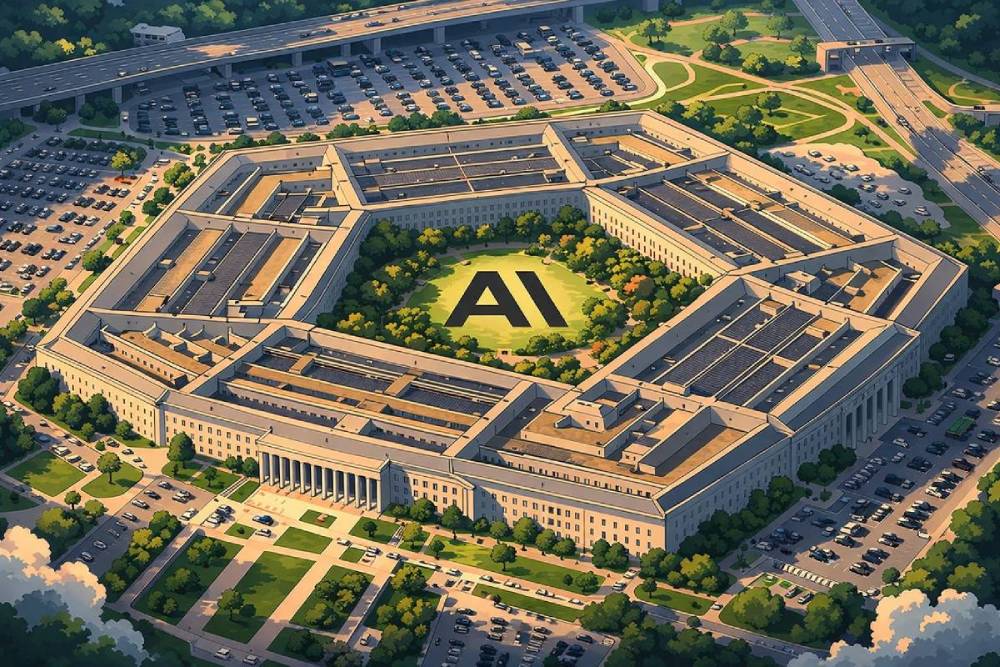
A former architect of the Pentagon’s AI modernization efforts is cautioning corporate America that many businesses are repeating the same organizational and strategic mistakes the U.S. defense establishment nearly made during its early AI transformation initiatives. The warning arrives as companies worldwide accelerate AI adoption amid rising geopolitical competition, operational disruption, and pressure to deliver measurable returns on technology investments.
Drew Cukor, a former leader behind the Pentagon’s Project Maven initiative, argued that many corporations are approaching AI deployment with fragmented strategies, unrealistic expectations, and insufficient organizational alignment. His comments come as enterprises across finance, manufacturing, healthcare, and technology sectors intensify investments in generative AI and automation systems.
Cukor emphasized that successful AI transformation requires cultural adaptation, leadership commitment, workforce integration, and clear operational objectives rather than isolated experimentation. He also highlighted growing geopolitical pressure, particularly competition with China, as a factor accelerating AI adoption across both government and private sectors.
The discussion reflects broader concerns that businesses rushing into AI implementation may underestimate governance, cybersecurity, infrastructure, and talent challenges tied to enterprise-scale deployment.
The Pentagon’s Project Maven emerged as one of the U.S. government’s earliest large-scale AI initiatives, aimed at integrating machine learning into military intelligence analysis and operational decision-making. The project became a landmark example of both the opportunities and ethical controversies surrounding AI adoption, particularly after employee protests at Google over defense-related AI work.
Since then, governments and corporations alike have accelerated AI investment as generative AI tools reshaped expectations around productivity, automation, and competitive advantage. Companies including Microsoft, OpenAI, and Amazon have driven a global race to commercialize AI infrastructure and enterprise applications.
However, analysts increasingly warn that many organizations remain unprepared for the operational complexity of large-scale AI integration. Common challenges include fragmented data systems, weak governance structures, workforce resistance, cybersecurity vulnerabilities, and uncertainty around regulation.
The debate also unfolds against intensifying geopolitical competition between the United States and China, where AI leadership is viewed as a critical determinant of economic strength, military capability, and technological influence.
Technology strategists and enterprise consultants largely agree that AI transformation requires more than deploying new software tools. Experts argue that organizations often fail when they treat AI as a standalone technology initiative rather than a company-wide operational shift.
Cukor’s observations align with broader industry concerns that businesses are overestimating short-term AI gains while underestimating implementation complexity. Analysts note that many firms continue experimenting with generative AI pilots without establishing clear governance, accountability structures, or long-term workforce strategies.
Industry experts also emphasize that successful AI adoption depends heavily on data quality, leadership coordination, and employee trust. Without strong internal alignment, AI programs risk creating fragmented workflows and operational inefficiencies rather than productivity gains.
Cybersecurity specialists further warn that poorly integrated AI systems could increase exposure to data breaches, misinformation risks, and compliance failures. Meanwhile, geopolitical analysts argue that competition with China is intensifying pressure on Western corporations to accelerate innovation cycles even when governance frameworks remain immature.
Business leaders increasingly recognize that AI transformation is becoming comparable to earlier enterprise shifts involving cloud computing, cybersecurity modernization, and digital infrastructure redesign large-scale transitions requiring years of sustained investment and organizational adaptation.
For corporate executives, the warning reinforces the importance of treating AI adoption as a long-term strategic transformation rather than a rapid technology upgrade. Companies may need to invest more heavily in workforce training, internal governance systems, cybersecurity resilience, and enterprise-wide operational coordination.
Investors are likely to place greater scrutiny on whether businesses can translate AI spending into measurable productivity improvements and durable revenue growth. Firms lacking coherent AI strategies may face increasing competitive disadvantages as automation reshapes industries.
Governments and regulators could also intensify oversight around enterprise AI deployment, particularly in sectors involving critical infrastructure, finance, healthcare, and national security. Policymakers are expected to push for clearer standards covering AI accountability, transparency, workforce displacement, and cybersecurity safeguards.
For global businesses, the broader challenge will be balancing innovation speed with operational discipline in an increasingly competitive and geopolitically sensitive AI landscape.
Attention will now shift toward how effectively corporations move from experimental AI adoption to scalable operational integration. Executives are expected to face growing pressure to demonstrate practical returns from AI investments while maintaining governance and workforce stability.
Industry observers will also monitor how geopolitical competition, especially between the United States and China, shapes enterprise AI priorities in the coming years. The wider uncertainty remains whether organizations can avoid fragmented deployment strategies while adapting to one of the most significant technological transitions in decades.
Source: Fortune
Date: May 12, 2026


