
SculptGL Empowers Digital 3D Creators

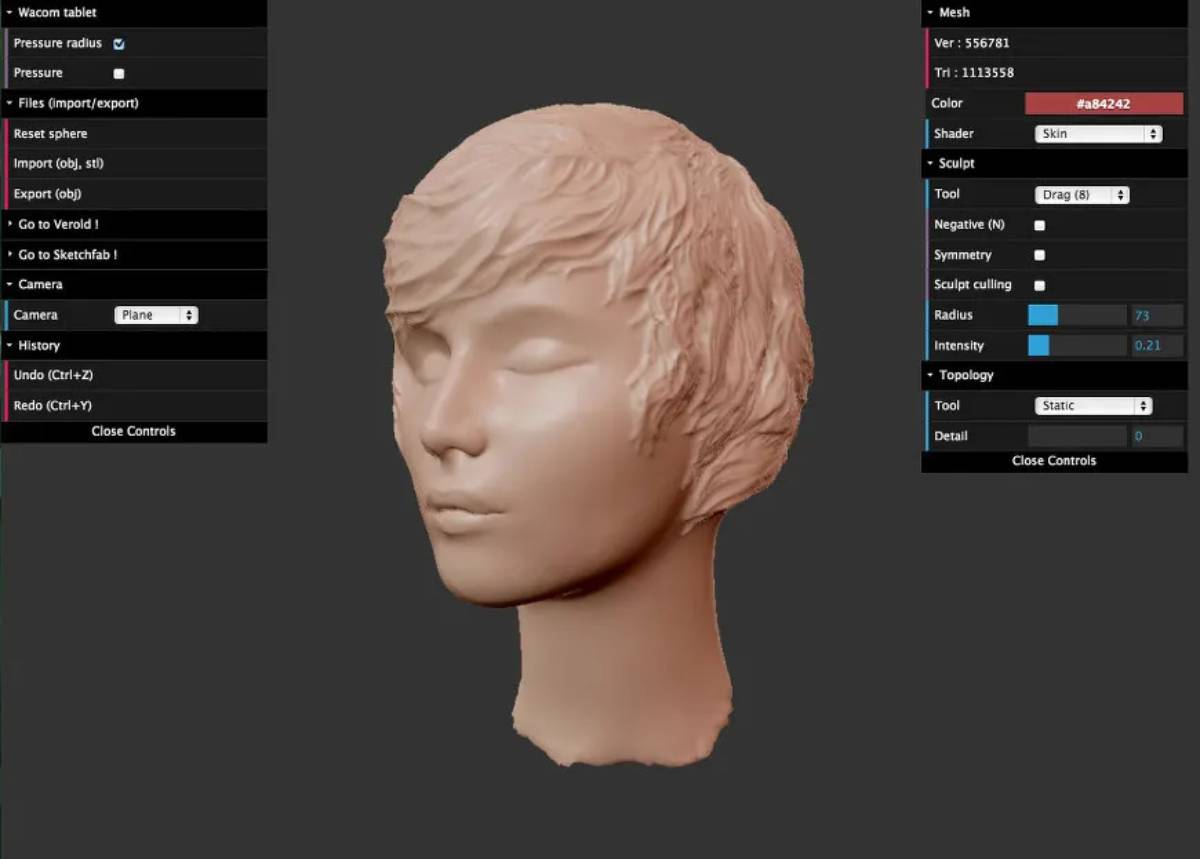
SculptGL provides an open-source, WebGL-powered digital sculpting application that runs directly within modern web browsers.

July 22, 2026
|

SculptGL continues to strengthen its role as an accessible browser-based 3D sculpting platform, enabling artists, students, and designers to create digital models without requiring complex software installations. The platform reflects a broader shift toward cloud-enabled creative tools that reduce barriers to professional-grade digital content creation worldwide.

SculptGL provides an open-source, WebGL-powered digital sculpting application that runs directly within modern web browsers. Users can create, edit, and refine three-dimensional models using professional sculpting brushes, dynamic topology, symmetry tools, remeshing capabilities, texture painting, and multiple export formats compatible with established 3D production pipelines.

Its browser-based architecture removes installation requirements, allowing users to begin modeling almost instantly across multiple operating systems. The platform serves students, independent artists, educators, game developers, animation professionals, and hobbyists seeking lightweight yet capable sculpting software. As an open-source project, SculptGL continues to benefit from community contributions that improve functionality, performance, and accessibility.

The global market for 3D content creation has expanded significantly as gaming, film production, virtual reality, augmented reality, industrial design, architecture, and digital manufacturing continue embracing advanced visualization technologies. Organizations increasingly seek creative software that enables rapid collaboration while minimizing deployment complexity.

SculptGL aligns with this industry evolution by demonstrating how browser-native applications can deliver sophisticated modeling capabilities previously reserved for desktop software. The rise of WebGL technologies has accelerated development of cloud-accessible creative platforms capable of supporting increasingly demanding visual workflows.

The growing creator economy, combined with expanding demand for digital assets across entertainment, e-commerce, education, and engineering, has increased interest in accessible modeling tools. Rather than competing directly with comprehensive enterprise 3D suites, SculptGL complements broader production ecosystems by lowering entry barriers for education, rapid prototyping, and early-stage concept development.

Industry analysts increasingly highlight browser-based creative applications as an important evolution in software delivery, enabling organizations to simplify onboarding while improving collaboration across distributed teams. Platforms such as SculptGL illustrate how web technologies are becoming capable of supporting increasingly sophisticated graphical workloads.

Digital artists frequently emphasize that fast access to creative tools encourages experimentation during concept development and educational training. Browser-based sculpting solutions also provide institutions with affordable resources for teaching three-dimensional modeling without extensive hardware or software deployment requirements.

Although SculptGL is maintained as an open-source project rather than a commercial enterprise, experts recognize its contribution to expanding access to professional digital sculpting techniques. Market observers suggest that continued improvements in browser graphics performance will further strengthen the role of lightweight, cloud-accessible creative applications across industries.

For creative agencies, educational institutions, gaming studios, and product development teams, SculptGL demonstrates the growing commercial value of browser-native design tools. Reduced deployment costs, platform independence, and simplified accessibility can improve workforce productivity while lowering software management complexity.

Technology investors may interpret sustained adoption of open-source browser applications as evidence of expanding demand for cloud-enabled creative infrastructure. Meanwhile, policymakers promoting digital education and workforce development may increasingly encourage accessible creative technologies that help students and professionals build advanced digital skills without significant financial barriers.

The platform also reflects broader trends supporting open-source innovation and cross-platform interoperability. Looking ahead, SculptGL is well positioned to benefit from continued advances in browser graphics technologies, cloud computing, and demand for digital content creation. Decision-makers should monitor developments in WebGPU, AI-assisted modeling, collaborative design environments, and educational adoption. As web-based creative platforms mature, browser-native 3D applications are expected to become an increasingly important component of professional digital production workflows.

Source: AlternativeTo
Date: July 22, 2026

  • Featured tools
Upscayl AI
Free

Upscayl AI is a free, open-source AI-powered tool that enhances and upscales images to higher resolutions. It transforms blurry or low-quality visuals into sharp, detailed versions with ease.

#
Productivity
Learn more
Hostinger Website Builder
Paid

Hostinger Website Builder is a drag-and-drop website creator bundled with hosting and AI-powered tools, designed for businesses, blogs and small shops with minimal technical effort.It makes launching a site fast and affordable, with templates, responsive design and built-in hosting all in one.

#
Productivity
#
Startup Tools
#
Ecommerce
Learn more

Learn more about future of AI

Join 80,000+ Ai enthusiast getting weekly updates on exciting AI tools.
Thank you! Your submission has been received!
Oops! Something went wrong while submitting the form.

SculptGL Empowers Digital 3D Creators

July 22, 2026

SculptGL provides an open-source, WebGL-powered digital sculpting application that runs directly within modern web browsers.

SculptGL continues to strengthen its role as an accessible browser-based 3D sculpting platform, enabling artists, students, and designers to create digital models without requiring complex software installations. The platform reflects a broader shift toward cloud-enabled creative tools that reduce barriers to professional-grade digital content creation worldwide.

SculptGL provides an open-source, WebGL-powered digital sculpting application that runs directly within modern web browsers. Users can create, edit, and refine three-dimensional models using professional sculpting brushes, dynamic topology, symmetry tools, remeshing capabilities, texture painting, and multiple export formats compatible with established 3D production pipelines.

Its browser-based architecture removes installation requirements, allowing users to begin modeling almost instantly across multiple operating systems. The platform serves students, independent artists, educators, game developers, animation professionals, and hobbyists seeking lightweight yet capable sculpting software. As an open-source project, SculptGL continues to benefit from community contributions that improve functionality, performance, and accessibility.

The global market for 3D content creation has expanded significantly as gaming, film production, virtual reality, augmented reality, industrial design, architecture, and digital manufacturing continue embracing advanced visualization technologies. Organizations increasingly seek creative software that enables rapid collaboration while minimizing deployment complexity.

SculptGL aligns with this industry evolution by demonstrating how browser-native applications can deliver sophisticated modeling capabilities previously reserved for desktop software. The rise of WebGL technologies has accelerated development of cloud-accessible creative platforms capable of supporting increasingly demanding visual workflows.

The growing creator economy, combined with expanding demand for digital assets across entertainment, e-commerce, education, and engineering, has increased interest in accessible modeling tools. Rather than competing directly with comprehensive enterprise 3D suites, SculptGL complements broader production ecosystems by lowering entry barriers for education, rapid prototyping, and early-stage concept development.

Industry analysts increasingly highlight browser-based creative applications as an important evolution in software delivery, enabling organizations to simplify onboarding while improving collaboration across distributed teams. Platforms such as SculptGL illustrate how web technologies are becoming capable of supporting increasingly sophisticated graphical workloads.

Digital artists frequently emphasize that fast access to creative tools encourages experimentation during concept development and educational training. Browser-based sculpting solutions also provide institutions with affordable resources for teaching three-dimensional modeling without extensive hardware or software deployment requirements.

Although SculptGL is maintained as an open-source project rather than a commercial enterprise, experts recognize its contribution to expanding access to professional digital sculpting techniques. Market observers suggest that continued improvements in browser graphics performance will further strengthen the role of lightweight, cloud-accessible creative applications across industries.

For creative agencies, educational institutions, gaming studios, and product development teams, SculptGL demonstrates the growing commercial value of browser-native design tools. Reduced deployment costs, platform independence, and simplified accessibility can improve workforce productivity while lowering software management complexity.

Technology investors may interpret sustained adoption of open-source browser applications as evidence of expanding demand for cloud-enabled creative infrastructure. Meanwhile, policymakers promoting digital education and workforce development may increasingly encourage accessible creative technologies that help students and professionals build advanced digital skills without significant financial barriers.

The platform also reflects broader trends supporting open-source innovation and cross-platform interoperability. Looking ahead, SculptGL is well positioned to benefit from continued advances in browser graphics technologies, cloud computing, and demand for digital content creation. Decision-makers should monitor developments in WebGPU, AI-assisted modeling, collaborative design environments, and educational adoption. As web-based creative platforms mature, browser-native 3D applications are expected to become an increasingly important component of professional digital production workflows.

Source: AlternativeTo
Date: July 22, 2026

Promote Your Tool

Copy Embed Code

Similar Blogs

July 22, 2026
|

Flixpress Powers Digital Video Production

Flixpress is an online video creation platform designed to help users produce professional-style videos using customizable templates, automated editing features, and browser-based workflows.
Read more
July 22, 2026
|

Fdown Powers Modern Content Management

Fdown is a digital tool associated with online media management workflows, helping users process and handle digital content through a simplified interface.
Read more
July 22, 2026
|

Browser.lol Simplifies Cloud-Based Browsing

Browser.lol provides a browser-based environment that allows users to run and access web sessions remotely through cloud infrastructure.
Read more
July 22, 2026
|

TubeRipper Powers Modern Media Workflows

TubeRipper is a software application designed for managing online video content by enabling users to process and organize media files through a dedicated desktop workflow.
Read more
July 22, 2026
|

Writebox Supports Focused Online Writing

Writebox is a lightweight writing application designed to provide users with a clean, distraction-free environment for creating and editing text.
Read more
July 22, 2026
|

iPiccy Powers Modern Visual Creation

iPiccy offers an online photo editing platform featuring tools for image enhancement, filters, retouching, collage creation, and basic graphic design.
Read more