



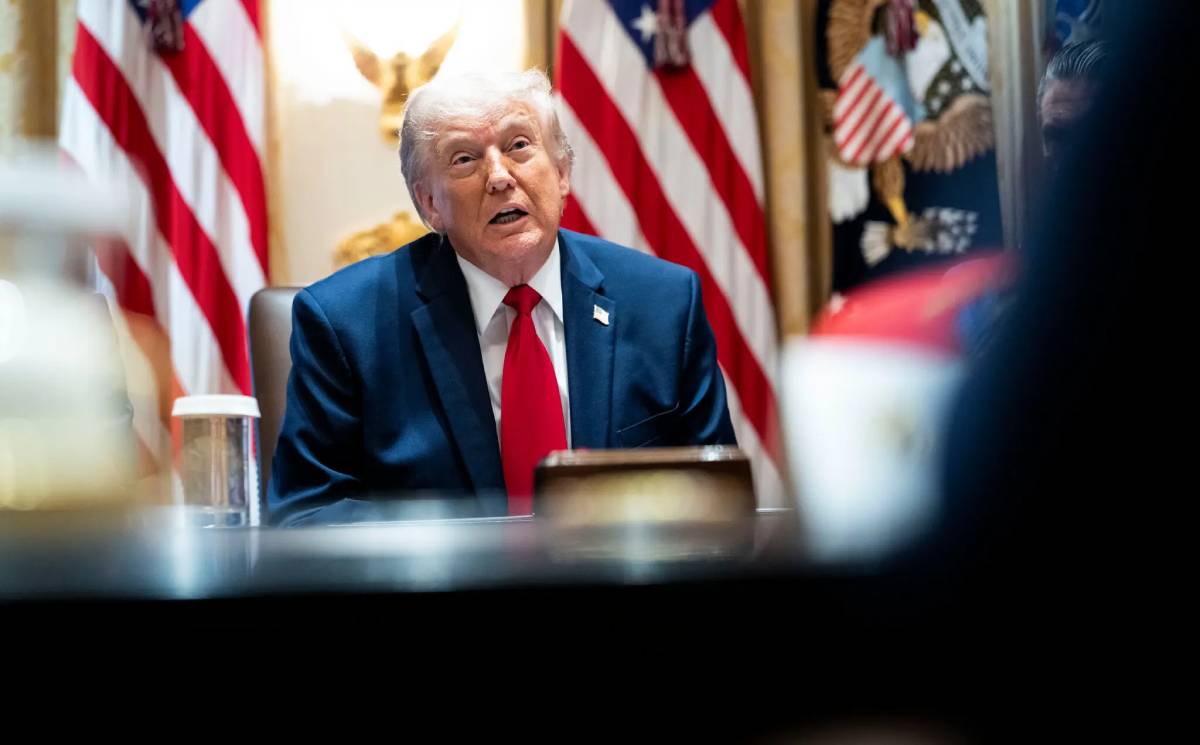
A major policy development unfolded in Washington as President Donald Trump signed an executive order aimed at increasing federal oversight of advanced artificial intelligence models. The move signals a significant evolution in U.S. AI governance, balancing the administration’s pro-innovation agenda with growing concerns surrounding national security, public safety, and the rapid deployment of increasingly powerful AI systems.
The executive order establishes a framework for enhanced federal monitoring of frontier AI models developed by leading technology companies. The initiative seeks greater visibility into the capabilities, risks, and deployment practices associated with advanced generative AI systems.
Federal agencies are expected to coordinate on evaluating AI safety, security, and potential misuse risks, particularly in areas involving critical infrastructure, cybersecurity, and national defense. The order reportedly focuses on transparency measures and information-sharing requirements for developers of highly capable AI models.
Key stakeholders include major AI companies, federal regulators, national security agencies, cloud infrastructure providers, and enterprise technology users. The directive arrives amid accelerating global competition in artificial intelligence and increasing pressure on governments to establish governance mechanisms for emerging technologies.
The policy also reflects growing recognition that AI systems are becoming strategically important assets with implications extending beyond commercial markets into geopolitics and national competitiveness.
The development aligns with a broader trend across global markets where governments are attempting to establish oversight frameworks for increasingly powerful AI technologies. As generative AI systems become embedded across industries, policymakers face mounting pressure to balance innovation with risk management.
The United States has been navigating a complex policy environment in which regulators seek to maintain technological leadership while addressing concerns related to misinformation, cybersecurity, intellectual property, labor disruption, and national security.
Globally, governments have adopted varying approaches to AI regulation. The European Union has pursued comprehensive legislative frameworks, while several Asian economies have emphasized innovation-friendly governance structures. The U.S. approach has historically relied more heavily on executive actions, agency guidance, and industry collaboration.
The emergence of frontier AI models has intensified debates around oversight. These systems increasingly demonstrate capabilities that can influence software development, scientific research, business operations, and information ecosystems at unprecedented scale.
Historically, transformative technologies such as nuclear energy, aviation, and telecommunications eventually required dedicated governance structures. Many policymakers now view advanced AI as entering a similar phase of strategic importance.
Policy analysts describe the executive order as an attempt to create a middle ground between aggressive regulation and unrestricted innovation. Experts argue that governments are seeking mechanisms that improve visibility into frontier model development without slowing technological progress.
National security specialists have increasingly emphasized the need for oversight as AI capabilities expand into areas such as autonomous decision-making, cyber operations, and critical infrastructure management. They contend that transparency and risk assessment processes are becoming essential components of national preparedness.
Technology industry observers note that major AI companies have generally supported some degree of coordinated governance, particularly around frontier systems whose capabilities may have broad societal implications. However, concerns remain regarding compliance burdens, confidentiality requirements, and potential impacts on competitiveness.
Market analysts suggest that investors are likely to interpret the executive order as a signal that AI regulation in the United States is maturing rather than fundamentally restricting innovation. Many expect regulatory clarity to ultimately support enterprise adoption by reducing uncertainty around future compliance obligations.
The order also reinforces Washington's increasing focus on maintaining U.S. leadership in the global AI race while addressing strategic risks associated with rapid technological advancement.
For businesses, the executive order may introduce new reporting, risk assessment, and governance requirements for organizations developing or deploying advanced AI systems. Companies operating in highly regulated sectors may face heightened scrutiny regarding AI implementation practices.
For investors, greater regulatory clarity could reduce uncertainty surrounding AI commercialization, although compliance costs may rise for frontier model developers. Technology firms with robust governance frameworks may gain a competitive advantage.
For policymakers, the directive represents another step toward a more formal AI oversight regime that could eventually evolve into broader legislation. Internationally, the move may influence how allied nations approach AI governance and cross-border regulatory coordination.
For enterprise leaders, the policy underscores the importance of integrating AI risk management into corporate strategy, cybersecurity planning, and operational governance frameworks.
Attention will now turn to how federal agencies implement the executive order and whether Congress pursues complementary legislation. Businesses should closely monitor forthcoming guidance, reporting requirements, and interagency coordination efforts.
As AI capabilities continue advancing, the central challenge for policymakers will be balancing innovation leadership with effective risk management. The executive order marks a significant milestone in that process and may help define the next phase of U.S. AI governance.
Source: The New York Times
Date: June 2, 2026


