
US China Frictions Rise Over Iran, AI Talks

Diplomatic friction between Washington and Beijing has intensified as disagreements deepen over Iran-related policy coordination and global AI leadership.

April 29, 2026
|
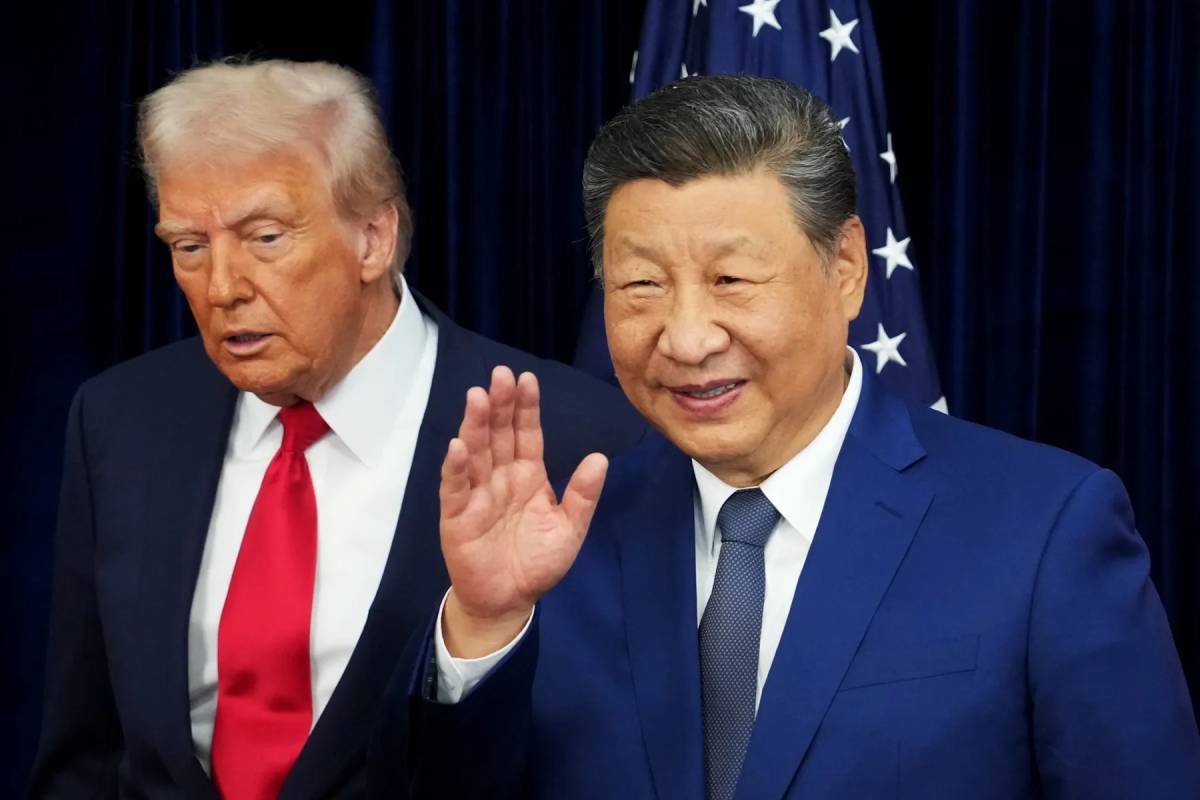
Image Source: Bloomberg

Geopolitical tensions between the United States and China are escalating ahead of anticipated talks between Donald Trump and Xi Jinping, driven by disputes over Iran policy and artificial intelligence leadership. The developments signal heightened strategic rivalry with implications for global markets, technology governance, and energy security frameworks.

Diplomatic friction between Washington and Beijing has intensified as disagreements deepen over Iran-related policy coordination and global AI leadership. The timing is significant, coming just before a planned meeting between Donald Trump and Chinese President Xi Jinping.

The two sides are also increasingly at odds over technological competition, particularly in artificial intelligence development, semiconductor access, and regulatory frameworks governing advanced computing systems.

The overlapping tensions in geopolitics and emerging technology underscore broader strategic competition, with both nations seeking to shape global standards in energy security, AI governance, and digital infrastructure control.

The development aligns with a broader trend across global markets where geopolitical rivalry between the US and China increasingly intersects with advanced technology and energy policy. Artificial intelligence has emerged as a central strategic domain, alongside semiconductors and critical infrastructure.

Historically, US–China relations have oscillated between cooperation and competition, but recent years have marked a structural shift toward strategic decoupling in key technological sectors. Parallel tensions over Middle East policy, particularly regarding Iran, add an additional layer of diplomatic complexity.

Global institutions and multinational corporations are closely watching these developments, as regulatory fragmentation could reshape supply chains, investment flows, and technology governance standards. The convergence of AI competition and energy geopolitics reflects a more multipolar global order in formation.

Analysts suggest that the dual pressure points of artificial intelligence and Iran policy represent a broader struggle for strategic influence rather than isolated disputes. Experts highlight that AI leadership is increasingly viewed as a determinant of long-term economic and military competitiveness.

Geopolitical strategists note that both Washington and Beijing are attempting to secure technological sovereignty while maintaining leverage in critical energy corridors. This has led to a more complex negotiation environment ahead of high-level leadership talks.

Policy observers also emphasize that while diplomatic engagement continues, structural competition between the two powers is unlikely to ease in the near term. Some analysts warn that escalating friction could spill over into trade restrictions and tighter controls on technology exports.

For businesses, rising geopolitical tensions could increase supply chain uncertainty, particularly in technology manufacturing and energy markets. Firms operating across both jurisdictions may face heightened regulatory fragmentation.

For investors, volatility in AI and semiconductor sectors may intensify as policy risks become more prominent in valuation models. Governments may also accelerate efforts to localize critical technology ecosystems.

For global executives, the situation underscores the importance of geopolitical risk management in strategic planning, particularly in AI development, cloud infrastructure, and advanced manufacturing sectors.

Looking ahead, market attention will focus on the outcome of the Trump–Xi meeting and whether it leads to any de-escalation in technology and energy-related disputes. However, structural competition between the US and China is expected to persist.

Decision-makers should monitor policy signals around AI governance, export controls, and Iran-related diplomatic coordination. These factors will shape global risk sentiment and investment flows in the coming months.

Source: Bloomberg
Date: April 2026

  • Featured tools
Neuron AI
Free

Neuron AI is an AI-driven content optimization platform that helps creators produce SEO-friendly content by combining semantic SEO, competitor analysis, and AI-assisted writing workflows.

#
SEO
Learn more
Hostinger Website Builder
Paid

Hostinger Website Builder is a drag-and-drop website creator bundled with hosting and AI-powered tools, designed for businesses, blogs and small shops with minimal technical effort.It makes launching a site fast and affordable, with templates, responsive design and built-in hosting all in one.

#
Productivity
#
Startup Tools
#
Ecommerce
Learn more

Learn more about future of AI

Join 80,000+ Ai enthusiast getting weekly updates on exciting AI tools.
Thank you! Your submission has been received!
Oops! Something went wrong while submitting the form.

US China Frictions Rise Over Iran, AI Talks

April 29, 2026

Diplomatic friction between Washington and Beijing has intensified as disagreements deepen over Iran-related policy coordination and global AI leadership.

Image Source: Bloomberg

Geopolitical tensions between the United States and China are escalating ahead of anticipated talks between Donald Trump and Xi Jinping, driven by disputes over Iran policy and artificial intelligence leadership. The developments signal heightened strategic rivalry with implications for global markets, technology governance, and energy security frameworks.

Diplomatic friction between Washington and Beijing has intensified as disagreements deepen over Iran-related policy coordination and global AI leadership. The timing is significant, coming just before a planned meeting between Donald Trump and Chinese President Xi Jinping.

The two sides are also increasingly at odds over technological competition, particularly in artificial intelligence development, semiconductor access, and regulatory frameworks governing advanced computing systems.

The overlapping tensions in geopolitics and emerging technology underscore broader strategic competition, with both nations seeking to shape global standards in energy security, AI governance, and digital infrastructure control.

The development aligns with a broader trend across global markets where geopolitical rivalry between the US and China increasingly intersects with advanced technology and energy policy. Artificial intelligence has emerged as a central strategic domain, alongside semiconductors and critical infrastructure.

Historically, US–China relations have oscillated between cooperation and competition, but recent years have marked a structural shift toward strategic decoupling in key technological sectors. Parallel tensions over Middle East policy, particularly regarding Iran, add an additional layer of diplomatic complexity.

Global institutions and multinational corporations are closely watching these developments, as regulatory fragmentation could reshape supply chains, investment flows, and technology governance standards. The convergence of AI competition and energy geopolitics reflects a more multipolar global order in formation.

Analysts suggest that the dual pressure points of artificial intelligence and Iran policy represent a broader struggle for strategic influence rather than isolated disputes. Experts highlight that AI leadership is increasingly viewed as a determinant of long-term economic and military competitiveness.

Geopolitical strategists note that both Washington and Beijing are attempting to secure technological sovereignty while maintaining leverage in critical energy corridors. This has led to a more complex negotiation environment ahead of high-level leadership talks.

Policy observers also emphasize that while diplomatic engagement continues, structural competition between the two powers is unlikely to ease in the near term. Some analysts warn that escalating friction could spill over into trade restrictions and tighter controls on technology exports.

For businesses, rising geopolitical tensions could increase supply chain uncertainty, particularly in technology manufacturing and energy markets. Firms operating across both jurisdictions may face heightened regulatory fragmentation.

For investors, volatility in AI and semiconductor sectors may intensify as policy risks become more prominent in valuation models. Governments may also accelerate efforts to localize critical technology ecosystems.

For global executives, the situation underscores the importance of geopolitical risk management in strategic planning, particularly in AI development, cloud infrastructure, and advanced manufacturing sectors.

Looking ahead, market attention will focus on the outcome of the Trump–Xi meeting and whether it leads to any de-escalation in technology and energy-related disputes. However, structural competition between the US and China is expected to persist.

Decision-makers should monitor policy signals around AI governance, export controls, and Iran-related diplomatic coordination. These factors will shape global risk sentiment and investment flows in the coming months.

Source: Bloomberg
Date: April 2026

Promote Your Tool

Copy Embed Code

Similar Blogs

April 29, 2026
|

Amazon Expands Agentic AI for Enterprise Engagement

Amazon announced a significant upgrade to Amazon Connect, positioning it as a comprehensive AI platform powered by agentic capabilities. The expansion introduces AI agents that can autonomously handle customer queries, automate workflows, and integrate across enterprise systems.
Read more
April 29, 2026
|

Amazon Scales Agentic AI for Workforce Expansion

Amazon is investing in agentic AI systems designed to assist employees in performing complex tasks, rather than replacing them outright. The company plans to expand hiring alongside deploying these tools, positioning AI as a workforce enabler.
Read more
April 29, 2026
|

Google Secures Pentagon AI Contract Expansion

The agreement expands collaboration between Google and the U.S. Department of Defense, focusing on deploying advanced AI capabilities across defense applications.
Read more
April 29, 2026
|

AI Becomes Core Cybersecurity Defense Pillar

Cybersecurity professionals are increasingly integrating AI-driven systems into threat detection, response automation, and vulnerability assessment workflows.
Read more
April 29, 2026
|

Healthcare Adopts AI for Early Risk Detection

The AI tool analyzes clinical and behavioral data patterns to flag individuals potentially at risk of intimate partner violence, enabling earlier intervention by healthcare professionals.
Read more
April 29, 2026
|

Pentagon Expands Multi-Model AI Strategy with Google

A senior Pentagon AI official confirmed that the Department of Defense is deepening its use of Google systems while explicitly rejecting reliance on a single foundational model provider.
Read more