
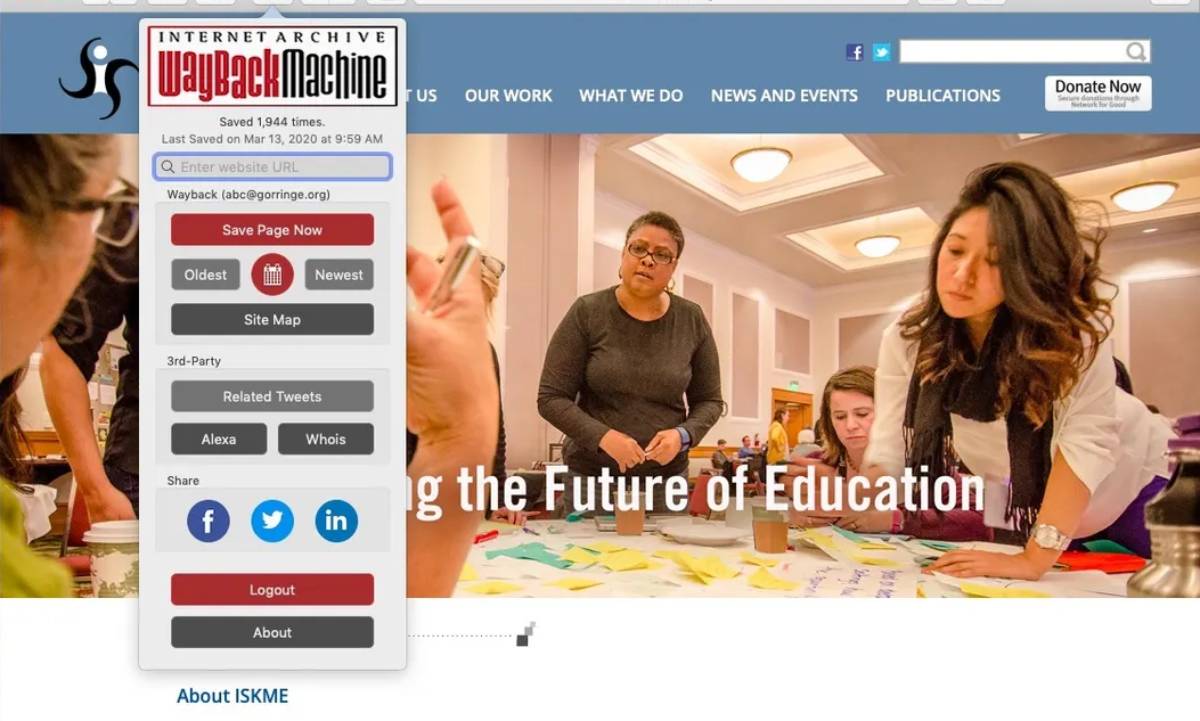
Wayback Machine Expands Web Archives

Wayback Machine serves as one of the world's most recognized web archiving platforms, allowing users to access historical versions of websites and online content that may have changed or disappeared over time.

July 29, 2026
|

Wayback Machine continues to underscore the growing importance of digital preservation as governments, businesses, researchers, and media organizations seek reliable access to historical web content. The platform reflects broader trends in internet archiving, digital transparency, and long-term information preservation, supporting accountability and research across the global digital economy.

Wayback Machine serves as one of the world's most recognized web archiving platforms, allowing users to access historical versions of websites and online content that may have changed or disappeared over time. The service supports researchers, journalists, educators, legal professionals, and businesses by preserving snapshots of publicly accessible webpages.

Its continued relevance reflects increasing recognition of digital preservation as an essential component of internet infrastructure. As online information evolves rapidly, web archives provide valuable historical records for academic research, policy analysis, compliance investigations, competitive intelligence, and documentation of digital history across industries.

The rapid expansion of the internet has created unprecedented volumes of digital information, much of which is vulnerable to deletion, modification, or permanent loss. Web archiving initiatives have become increasingly important in preserving historical records that support research, journalism, public accountability, and cultural heritage.

Governments, universities, libraries, nonprofit organizations, and technology institutions are investing in digital preservation strategies to ensure long-term accessibility of online information. These initiatives complement broader efforts to modernize archives, improve public access to knowledge, and strengthen transparency across digital ecosystems.

As organizations increasingly rely on online communication, archived web content has also become valuable for legal proceedings, regulatory compliance, corporate research, and historical documentation. The demand for trustworthy digital archives continues growing alongside the expanding digital economy.

Digital preservation experts consider web archiving an essential public resource that supports historical research, fact verification, and institutional accountability. Analysts note that archived web content provides important context when evaluating policy decisions, corporate communications, and evolving public information.

Information governance specialists emphasize that reliable digital archives strengthen organizational transparency while supporting legal discovery, academic scholarship, and compliance investigations. Advances in cloud infrastructure and large-scale data storage continue improving the efficiency and accessibility of web preservation technologies.

Although no official corporate statements accompany the platform's listing, industry observers broadly agree that digital archiving will become increasingly significant as governments and enterprises prioritize information resilience, digital heritage preservation, and long-term accessibility of publicly available online content.

For businesses, Wayback Machine demonstrates the strategic value of preserving digital records for compliance, competitive intelligence, brand monitoring, and historical reference. Organizations may increasingly integrate archival practices into broader information governance and risk management strategies.

Investors continue recognizing digital infrastructure and data preservation technologies as important components of the expanding knowledge economy. For policymakers, growing dependence on digital archives reinforces the importance of supporting internet preservation, open access initiatives, cybersecurity, data integrity, and legal frameworks that balance transparency with privacy and intellectual property protections.

Demand for digital preservation is expected to increase as web content continues expanding across governments, businesses, and public institutions. Decision-makers should monitor developments in cloud storage, AI-assisted archiving, cybersecurity, and digital governance. As online information becomes increasingly central to economic and social activity, platforms like Wayback Machine will remain critical infrastructure supporting historical accountability and long-term digital preservation

Source: AlternativeTo
Date: July 23, 2026

  • Featured tools
Copy Ai
Free

Copy AI is one of the most popular AI writing tools designed to help professionals create high-quality content quickly. Whether you are a product manager drafting feature descriptions or a marketer creating ad copy, Copy AI can save hours of work while maintaining creativity and tone.

#
Copywriting
Learn more
WellSaid Ai
Free

WellSaid AI is an advanced text-to-speech platform that transforms written text into lifelike, human-quality voiceovers.

#
Text to Speech
Learn more

Learn more about future of AI

Join 80,000+ Ai enthusiast getting weekly updates on exciting AI tools.
Thank you! Your submission has been received!
Oops! Something went wrong while submitting the form.

Wayback Machine Expands Web Archives

July 29, 2026

Wayback Machine serves as one of the world's most recognized web archiving platforms, allowing users to access historical versions of websites and online content that may have changed or disappeared over time.

Wayback Machine continues to underscore the growing importance of digital preservation as governments, businesses, researchers, and media organizations seek reliable access to historical web content. The platform reflects broader trends in internet archiving, digital transparency, and long-term information preservation, supporting accountability and research across the global digital economy.

Wayback Machine serves as one of the world's most recognized web archiving platforms, allowing users to access historical versions of websites and online content that may have changed or disappeared over time. The service supports researchers, journalists, educators, legal professionals, and businesses by preserving snapshots of publicly accessible webpages.

Its continued relevance reflects increasing recognition of digital preservation as an essential component of internet infrastructure. As online information evolves rapidly, web archives provide valuable historical records for academic research, policy analysis, compliance investigations, competitive intelligence, and documentation of digital history across industries.

The rapid expansion of the internet has created unprecedented volumes of digital information, much of which is vulnerable to deletion, modification, or permanent loss. Web archiving initiatives have become increasingly important in preserving historical records that support research, journalism, public accountability, and cultural heritage.

Governments, universities, libraries, nonprofit organizations, and technology institutions are investing in digital preservation strategies to ensure long-term accessibility of online information. These initiatives complement broader efforts to modernize archives, improve public access to knowledge, and strengthen transparency across digital ecosystems.

As organizations increasingly rely on online communication, archived web content has also become valuable for legal proceedings, regulatory compliance, corporate research, and historical documentation. The demand for trustworthy digital archives continues growing alongside the expanding digital economy.

Digital preservation experts consider web archiving an essential public resource that supports historical research, fact verification, and institutional accountability. Analysts note that archived web content provides important context when evaluating policy decisions, corporate communications, and evolving public information.

Information governance specialists emphasize that reliable digital archives strengthen organizational transparency while supporting legal discovery, academic scholarship, and compliance investigations. Advances in cloud infrastructure and large-scale data storage continue improving the efficiency and accessibility of web preservation technologies.

Although no official corporate statements accompany the platform's listing, industry observers broadly agree that digital archiving will become increasingly significant as governments and enterprises prioritize information resilience, digital heritage preservation, and long-term accessibility of publicly available online content.

For businesses, Wayback Machine demonstrates the strategic value of preserving digital records for compliance, competitive intelligence, brand monitoring, and historical reference. Organizations may increasingly integrate archival practices into broader information governance and risk management strategies.

Investors continue recognizing digital infrastructure and data preservation technologies as important components of the expanding knowledge economy. For policymakers, growing dependence on digital archives reinforces the importance of supporting internet preservation, open access initiatives, cybersecurity, data integrity, and legal frameworks that balance transparency with privacy and intellectual property protections.

Demand for digital preservation is expected to increase as web content continues expanding across governments, businesses, and public institutions. Decision-makers should monitor developments in cloud storage, AI-assisted archiving, cybersecurity, and digital governance. As online information becomes increasingly central to economic and social activity, platforms like Wayback Machine will remain critical infrastructure supporting historical accountability and long-term digital preservation

Source: AlternativeTo
Date: July 23, 2026

Promote Your Tool

Copy Embed Code

Similar Blogs

July 31, 2026
|

Dodo MIDI Enhances Music Production Workflows

Dodo MIDI is part of the music technology ecosystem, focusing on MIDI-based tools that help users create, control, and manage digital musical compositions.
Read more
July 31, 2026
|

Polar Cloud Advances Secure Data Management

Polar Cloud is positioned within the cloud computing ecosystem, offering users technology solutions focused on managing and accessing digital resources through cloud-based environments.
Read more
July 31, 2026
|

Metastream Enhances Shared Digital Entertainment

Metastream is a digital platform designed to enable synchronized media playback, allowing multiple users to watch online content together from different locations.
Read more
July 31, 2026
|

Deep Realms Advances Immersive Digital Experiences

Deep Realms is positioned within the category of immersive digital experiences, offering users a platform focused on exploration, creativity, and interactive engagement.
Read more
July 31, 2026
|

Starbackpage Evolves Digital Marketplace Platforms

Starbackpage is part of the online classified marketplace category, where users can create listings, discover services, and interact through digital platforms.
Read more
July 31, 2026
|

Calyx VPN Strengthens Digital Privacy Security

Calyx VPN is a privacy-focused virtual private network solution designed to provide users with secure internet connections and enhanced online privacy.
Read more