
Winston AI Drives Demand for Content Authenticity

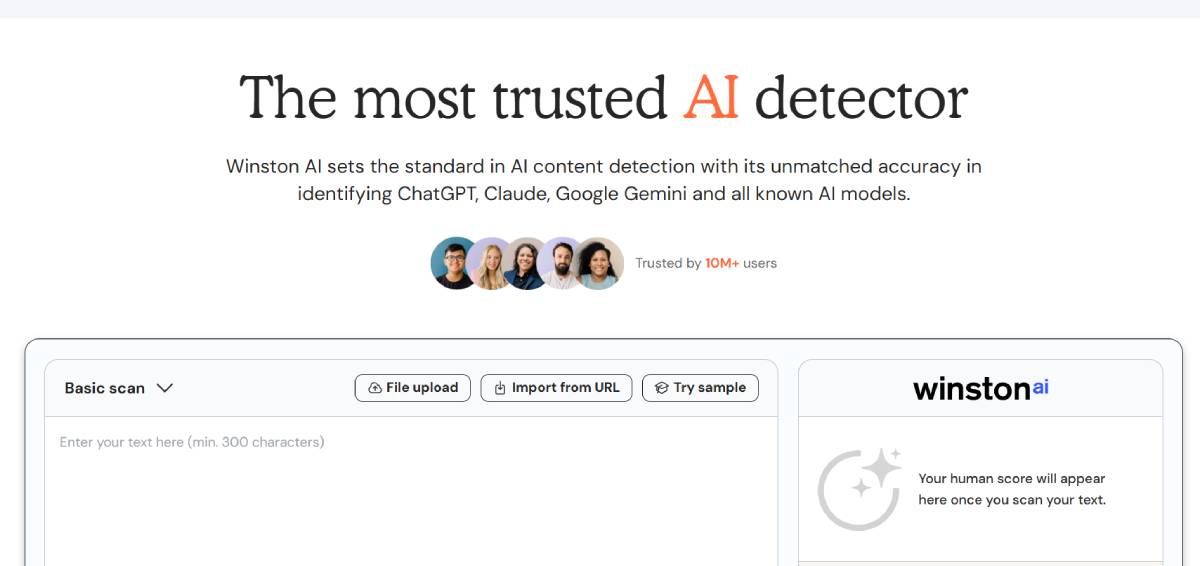
Winston AI has positioned itself as a leading AI content detection platform, offering tools to identify text generated by models such as ChatGPT and other large language systems.

April 7, 2026
|

A major development unfolded as AI detection platforms like Winston AI gain prominence amid rising concerns over synthetic content. As generative AI adoption accelerates, businesses, educators, and regulators are turning to detection tools to safeguard authenticity signaling a new layer of infrastructure in the global AI economy.

Winston AI has positioned itself as a leading AI content detection platform, offering tools to identify text generated by models such as ChatGPT and other large language systems. The platform targets sectors including education, publishing, and enterprise compliance, where verifying content originality is critical.

The tool uses machine learning algorithms to assess linguistic patterns and probability scores indicating AI generation. It also provides plagiarism checks and integration capabilities for workflows requiring content validation.

As generative AI becomes mainstream, demand for such tools is rising rapidly, with organizations seeking safeguards against misinformation, academic dishonesty, and reputational risks tied to AI-generated outputs.

The development aligns with a broader trend across global markets where the proliferation of generative AI has created parallel demand for verification technologies. As AI-generated text, images, and videos become increasingly indistinguishable from human-created content, trust has emerged as a central challenge.

Historically, digital ecosystems have relied on detection tools such as spam filters and plagiarism checkers to maintain integrity. AI detection represents the next evolution of this paradigm, albeit with greater complexity due to the sophistication of modern models.

At the same time, the effectiveness of AI detectors remains debated. Advances in generative models are making detection more difficult, leading to an ongoing “arms race” between content generation and verification technologies. Governments and institutions are also exploring regulatory frameworks to address AI transparency, further driving demand for reliable detection solutions.

Industry experts suggest that AI detection tools will become essential components of enterprise risk management strategies. Organizations are increasingly concerned about the legal, ethical, and reputational implications of unverified AI-generated content.

However, analysts caution that no detection system is foolproof. False positives and negatives remain a challenge, particularly as AI models evolve rapidly. This has led to calls for multi-layered verification approaches combining detection tools with human oversight.

Educators and publishers have expressed both optimism and skepticism welcoming tools that promote integrity while questioning their reliability in high-stakes scenarios.

From a corporate standpoint, companies like Winston AI emphasize continuous model updates and training to improve accuracy. Still, experts agree that detection technology must evolve in tandem with generative AI to remain effective.

For global executives, the rise of AI detection tools highlights the growing importance of trust infrastructure in digital ecosystems. Businesses may need to integrate verification systems into content workflows to ensure compliance and credibility. Investors could view this segment as an emerging market within the broader AI landscape, with potential growth driven by regulatory requirements and enterprise adoption.

From a policy perspective, governments may mandate disclosure or detection mechanisms for AI-generated content, particularly in sectors like media, education, and finance. For organizations, the challenge lies in balancing efficiency gains from AI with the need for transparency, accountability, and risk mitigation.

Looking ahead, AI detection technologies are expected to evolve alongside generative models, creating a continuous cycle of innovation and countermeasures. Decision-makers should monitor accuracy improvements, regulatory developments, and adoption trends.

Uncertainty remains around long-term effectiveness, but one trend is clear: as AI-generated content scales, the demand for tools that verify authenticity will become a defining feature of the digital economy.

Source: Winston AI
Date: April 2026

  • Featured tools
Alli AI
Free

Alli AI is an all-in-one, AI-powered SEO automation platform that streamlines on-page optimization, site auditing, speed improvements, schema generation, internal linking, and ranking insights.

#
SEO
Learn more
Neuron AI
Free

Neuron AI is an AI-driven content optimization platform that helps creators produce SEO-friendly content by combining semantic SEO, competitor analysis, and AI-assisted writing workflows.

#
SEO
Learn more

Learn more about future of AI

Join 80,000+ Ai enthusiast getting weekly updates on exciting AI tools.
Thank you! Your submission has been received!
Oops! Something went wrong while submitting the form.

Winston AI Drives Demand for Content Authenticity

April 7, 2026

Winston AI has positioned itself as a leading AI content detection platform, offering tools to identify text generated by models such as ChatGPT and other large language systems.

A major development unfolded as AI detection platforms like Winston AI gain prominence amid rising concerns over synthetic content. As generative AI adoption accelerates, businesses, educators, and regulators are turning to detection tools to safeguard authenticity signaling a new layer of infrastructure in the global AI economy.

Winston AI has positioned itself as a leading AI content detection platform, offering tools to identify text generated by models such as ChatGPT and other large language systems. The platform targets sectors including education, publishing, and enterprise compliance, where verifying content originality is critical.

The tool uses machine learning algorithms to assess linguistic patterns and probability scores indicating AI generation. It also provides plagiarism checks and integration capabilities for workflows requiring content validation.

As generative AI becomes mainstream, demand for such tools is rising rapidly, with organizations seeking safeguards against misinformation, academic dishonesty, and reputational risks tied to AI-generated outputs.

The development aligns with a broader trend across global markets where the proliferation of generative AI has created parallel demand for verification technologies. As AI-generated text, images, and videos become increasingly indistinguishable from human-created content, trust has emerged as a central challenge.

Historically, digital ecosystems have relied on detection tools such as spam filters and plagiarism checkers to maintain integrity. AI detection represents the next evolution of this paradigm, albeit with greater complexity due to the sophistication of modern models.

At the same time, the effectiveness of AI detectors remains debated. Advances in generative models are making detection more difficult, leading to an ongoing “arms race” between content generation and verification technologies. Governments and institutions are also exploring regulatory frameworks to address AI transparency, further driving demand for reliable detection solutions.

Industry experts suggest that AI detection tools will become essential components of enterprise risk management strategies. Organizations are increasingly concerned about the legal, ethical, and reputational implications of unverified AI-generated content.

However, analysts caution that no detection system is foolproof. False positives and negatives remain a challenge, particularly as AI models evolve rapidly. This has led to calls for multi-layered verification approaches combining detection tools with human oversight.

Educators and publishers have expressed both optimism and skepticism welcoming tools that promote integrity while questioning their reliability in high-stakes scenarios.

From a corporate standpoint, companies like Winston AI emphasize continuous model updates and training to improve accuracy. Still, experts agree that detection technology must evolve in tandem with generative AI to remain effective.

For global executives, the rise of AI detection tools highlights the growing importance of trust infrastructure in digital ecosystems. Businesses may need to integrate verification systems into content workflows to ensure compliance and credibility. Investors could view this segment as an emerging market within the broader AI landscape, with potential growth driven by regulatory requirements and enterprise adoption.

From a policy perspective, governments may mandate disclosure or detection mechanisms for AI-generated content, particularly in sectors like media, education, and finance. For organizations, the challenge lies in balancing efficiency gains from AI with the need for transparency, accountability, and risk mitigation.

Looking ahead, AI detection technologies are expected to evolve alongside generative models, creating a continuous cycle of innovation and countermeasures. Decision-makers should monitor accuracy improvements, regulatory developments, and adoption trends.

Uncertainty remains around long-term effectiveness, but one trend is clear: as AI-generated content scales, the demand for tools that verify authenticity will become a defining feature of the digital economy.

Source: Winston AI
Date: April 2026

Promote Your Tool

Copy Embed Code

Similar Blogs

April 7, 2026
|

AI Coding Tools Drive App Store Growth

Apple’s reporting indicates that productivity, education, and AI-driven utilities dominate the surge, highlighting changing user demand patterns.
Read more
April 7, 2026
|

Hypergrowth AI Stocks Emerge Amid Sell-Off

Market analysts describe the current sell-off as a “healthy recalibration” for AI equities. Morgan Stanley strategists noted that while valuations had outpaced fundamentals.
Read more
April 7, 2026
|

Meta Considers Open AI Model Release

Meta is reportedly preparing to make its newest AI models publicly accessible, reversing its previous strategy of proprietary development.
Read more
April 7, 2026
|

GitHub Targeted in AI Supply Chain Attack

Cybersecurity researchers detected AI-generated malicious code injected into open-source projects hosted on GitHub. The attack exploited automated coding suggestions to insert vulnerabilities unnoticed by conventional security checks.
Read more
April 7, 2026
|

AI Software Access Questions Follow Nvidia Deal

Nvidia’s purchase of SchedMD, the developer of Slurm workload manager, has sparked industry debate over software availability for AI research and enterprise applications.
Read more
April 7, 2026
|

AI Generated Ads Raise Medvi Compliance Concerns

Medvi has reportedly run ad campaigns promoting weight-loss consultations using AI-generated profiles of medical professionals. Investigations suggest that some advertised doctors could be fictitious.
Read more