



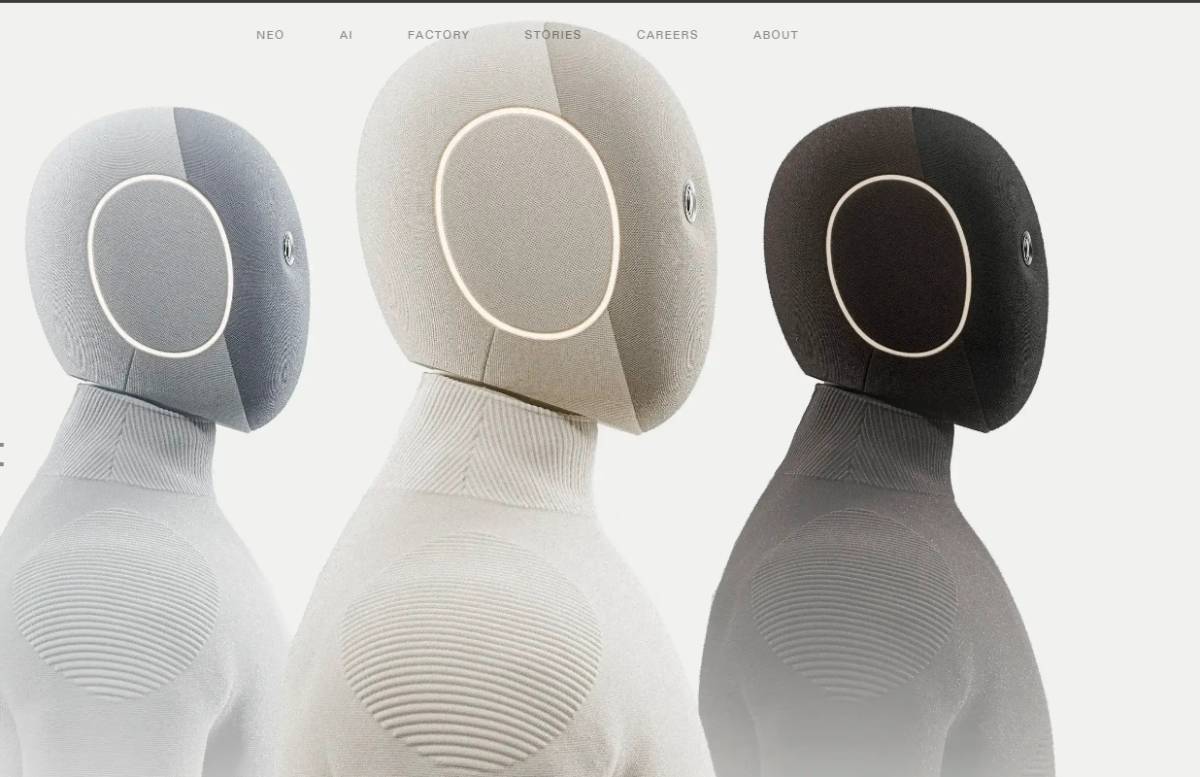
A major development unfolded in the global robotics industry as 1X opened its first robot manufacturing facility and quickly sold out its initial production capacity. The milestone highlights accelerating demand for humanoid robots and signals a strategic shift toward AI-powered physical automation across homes, businesses, and industrial environments.
Norwegian robotics company 1X has launched its first dedicated robot factory to scale production of its humanoid robot technology. The company’s initial batch reportedly sold out within five days, demonstrating strong market interest in next-generation AI robotics.
The factory represents a major step in moving humanoid robots from research environments into commercial deployment. 1X is focusing on developing robots capable of assisting with everyday tasks, workplace operations, and human-centric environments.
The expansion comes as technology companies globally increase investments in AI-powered robotics, competing to define the future of automation. The development aligns with a broader global trend where artificial intelligence is moving beyond software applications into the physical world. Companies across the United States, Europe, and Asia are investing heavily in humanoid robotics, driven by labour shortages, rising operational costs, and demand for automation.
Historically, industrial robots have been limited to structured manufacturing environments. However, advances in generative AI, computer vision, and machine learning are enabling robots to understand complex environments and interact more naturally with humans.
1X’s factory launch reflects a wider transition from experimental robotics toward scalable commercial products. As companies compete in the emerging humanoid robot market, manufacturing capability, AI performance, safety standards, and real-world usability are becoming critical competitive factors.
Industry analysts view humanoid robotics as one of the next major technology frontiers, comparable to the early growth stages of personal computing and mobile devices. Experts suggest that companies able to successfully combine advanced AI models with reliable hardware could reshape multiple industries.
1X has positioned its technology around creating safe, adaptable robots designed to work alongside humans rather than replace them entirely. The company’s rapid sell-out indicates growing confidence among customers and investors in practical AI robotics applications.
However, specialists also highlight challenges, including production costs, regulatory frameworks, safety concerns, and public acceptance. The success of humanoid robots will depend not only on technological breakthroughs but also on their ability to deliver measurable value in real-world environments.
For global businesses, the rise of humanoid robots could redefine workforce strategies, operational efficiency, and service delivery models. Companies in logistics, healthcare, manufacturing, retail, and hospitality may explore robotics solutions to improve productivity and address labour challenges.
Investors are closely monitoring robotics startups as AI-driven automation becomes a major growth opportunity. Governments and policymakers will also need to consider regulations covering robot safety, employment impacts, and ethical AI deployment.
For executives, the emergence of companies like 1X signals the importance of preparing for a future where intelligent machines become increasingly integrated into daily operations.
The next phase for 1X and the wider robotics industry will focus on scaling production, improving robot intelligence, and expanding real-world applications. Decision-makers should watch adoption rates, regulatory developments, and competition from major technology players entering humanoid robotics. As AI continues merging with physical systems, the companies that successfully bridge innovation and commercial deployment could shape the next generation of automation.
Source: Nordic Tech News
Date: April 30, 2026


