



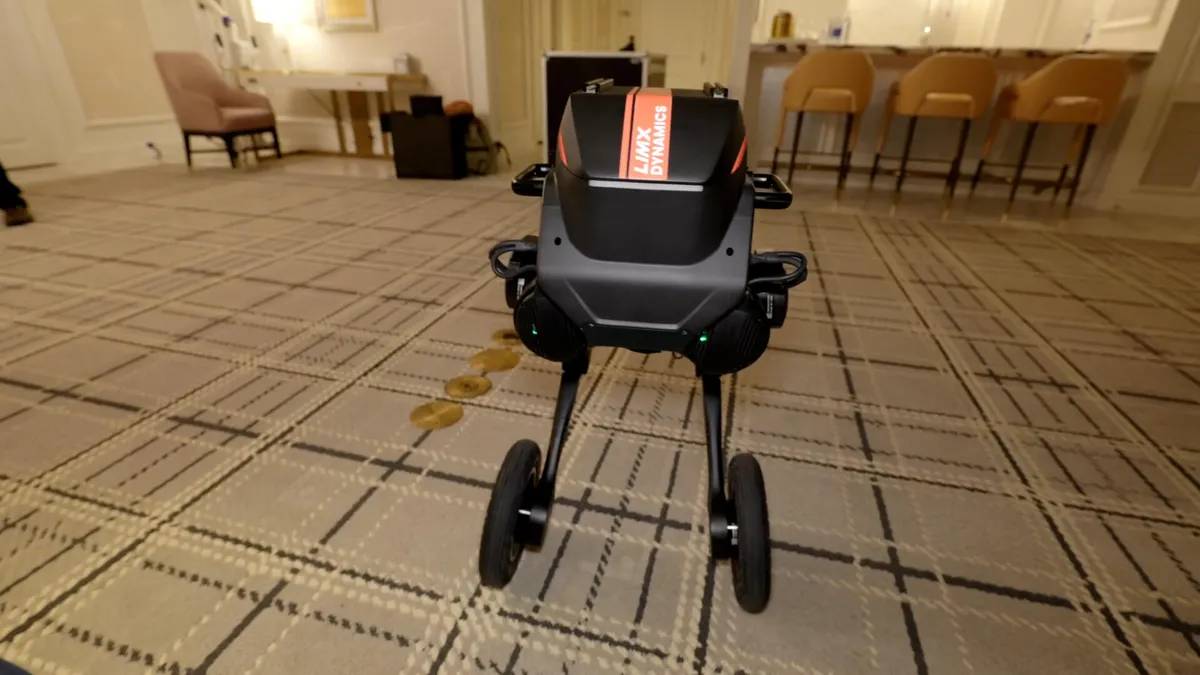
A new wave of consumer robotics is gaining momentum as a $25,000 humanoid robot draws global attention for its sci-fi inspired design and advanced automation capabilities. The development highlights accelerating convergence between artificial intelligence, robotics, and consumer hardware, signalling emerging opportunities—and risks—for industries ranging from home automation to industrial services.
The newly showcased humanoid robot, priced at approximately $25,000, is designed to perform a range of interactive and functional tasks while featuring a futuristic, Star Wars-inspired aesthetic. The product targets both early adopters and enterprise applications seeking advanced automation tools.
Developed by a robotics-focused technology firm, the machine integrates AI-driven motion systems, environmental sensing, and conversational capabilities. The launch reflects growing commercial interest in affordable humanoid robotics beyond industrial environments.
Industry watchers note that the pricing positions it as one of the more accessible advanced humanoid systems in the emerging consumer robotics market, which is still largely experimental and niche-driven.
The introduction of a mid-priced humanoid robot comes at a time when robotics and artificial intelligence are rapidly converging. Over the past decade, robotics has largely been confined to industrial automation, logistics, and specialized research environments. However, advancements in AI models, sensors, and actuator design have enabled more adaptive and interactive machines.
Consumer robotics is now evolving from novelty products into functional assistants capable of performing structured tasks in home and business environments. This shift is driven by declining hardware costs, improvements in machine learning, and increased demand for automation in aging societies and labor-constrained industries.
The design emphasis on sci-fi aesthetics also reflects a broader market strategy: making robotics more approachable and appealing to consumers. As competition intensifies, companies are increasingly blending entertainment value with functional utility to differentiate their products in an emerging but highly competitive sector.
Industry analysts suggest that the $25,000 price point represents a strategic attempt to bridge the gap between high-end industrial robots and consumer-grade smart devices. While still expensive for mass-market adoption, it is significantly lower than traditional humanoid robotics systems used in research and manufacturing.
Robotics experts highlight that the integration of AI-driven perception systems and motion control is a critical step toward practical household and service-oriented robots. However, they caution that real-world usability, safety, and reliability remain key challenges.
Market observers also note that aesthetic design plays an increasingly important role in adoption, as consumers are more likely to engage with robots that feel familiar or culturally resonant. The Star Wars-like appearance is seen as part of a broader trend of “emotional design” in robotics, aimed at reducing psychological barriers to human-machine interaction.
For businesses, the emergence of affordable humanoid robots could open new markets in hospitality, retail, healthcare support, and domestic services. Companies may begin evaluating robotic integration as a cost-saving and efficiency-enhancing strategy in labor-intensive sectors.
For investors, the development signals early-stage growth potential in consumer robotics, though commercialization timelines remain uncertain. Market adoption will depend heavily on performance reliability and regulatory clarity.
From a policy perspective, governments may need to address safety standards, liability frameworks, and data privacy concerns associated with AI-enabled physical systems operating in public and private spaces.
The consumer robotics sector is expected to accelerate as AI capabilities improve and hardware costs decline. Future iterations are likely to focus on greater autonomy, enhanced dexterity, and improved human-robot interaction. However, widespread adoption will depend on proving real-world utility beyond demonstrations. Industry stakeholders will closely watch whether early products can transition from experimental platforms into scalable commercial solutions.
Source: CNET
Date: May 2026


