
AI Drive Thrus Transform Global Service Industry

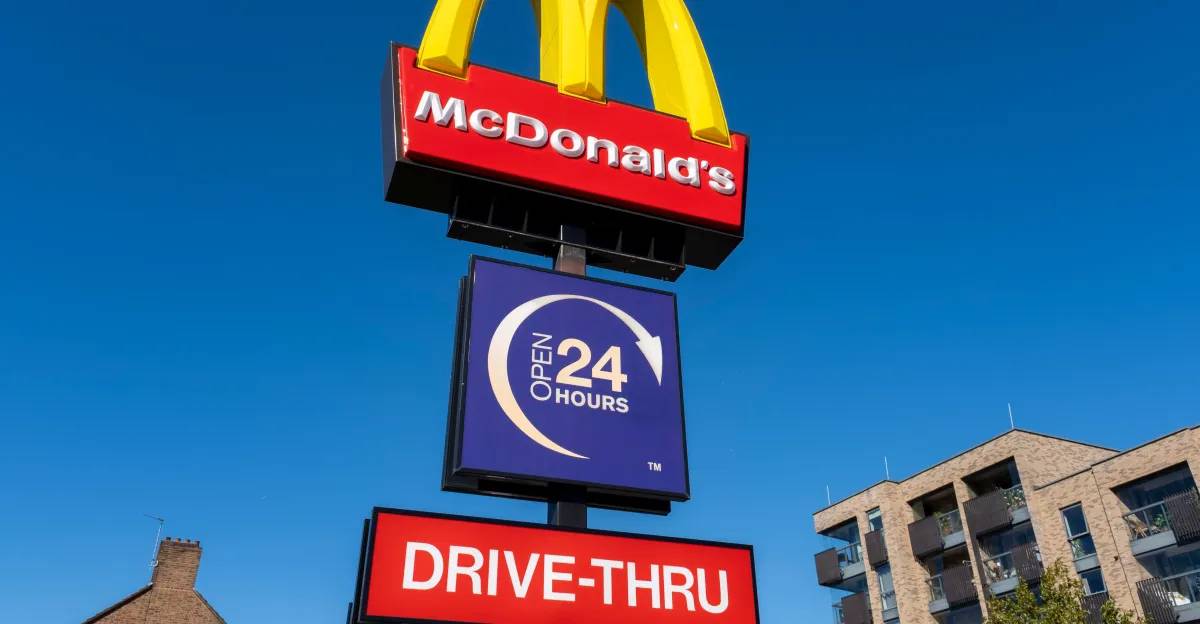
Major restaurant chains including McDonald's and Wendy's are increasingly experimenting with AI-driven chatbot systems for drive-thru ordering and customer interaction.

May 18, 2026
|
Image Source: The Verge

A significant shift in consumer-facing automation is unfolding as AI-powered chatbots increasingly take over drive-thru operations at major fast-food chains, signaling a broader transformation in retail and service industries. The trend reflects accelerating adoption of conversational AI in frontline customer interactions, with implications for labor markets, operational efficiency, and the future of low-cost service economies.

Major restaurant chains including McDonald's and Wendy's are increasingly experimenting with AI-driven chatbot systems for drive-thru ordering and customer interaction. The systems are designed to automate food ordering processes, improve operational efficiency, reduce wait times, and lower labor dependency in high-volume restaurant environments. AI-powered voice ordering technologies can process natural language requests, upsell menu items, and integrate directly with restaurant management systems.

While some deployments have faced criticism over ordering errors and inconsistent performance, the technology is rapidly improving as companies refine speech recognition, multilingual capabilities, and contextual understanding. Industry analysts view drive-thru automation as only the first stage of a much broader AI expansion across customer service ecosystems, logistics operations, and retail workflows.

The trend comes amid ongoing labor shortages, rising wage pressures, and increased demand for digital-first consumer experiences across the hospitality sector. The development aligns with a broader transformation across the global service economy, where businesses are rapidly integrating artificial intelligence into operational workflows to improve efficiency and reduce costs.

Fast-food chains have long relied on automation technologies such as self-service kiosks, mobile ordering apps, and digital payment systems. However, recent advances in generative AI and conversational interfaces are enabling companies to automate more complex customer interactions traditionally handled by human employees.

The restaurant industry has become a key testing ground for AI adoption due to its large labor force, repetitive workflows, and thin operating margins. Rising labor costs and post-pandemic staffing challenges have accelerated interest in technologies capable of streamlining service operations.

The trend also reflects broader developments in the global AI economy, where conversational systems are increasingly being integrated into banking, healthcare, retail, transportation, and customer support industries. Companies are competing to build scalable AI systems capable of replacing or augmenting large categories of frontline service work.

Historically, automation waves primarily affected manufacturing and industrial sectors. However, AI-driven language systems are now extending automation into service-oriented professions, creating new economic and social debates around workforce displacement and digital transformation.

Technology analysts argue that AI-powered drive-thru systems represent a major milestone in the commercialization of conversational AI. Experts note that voice interfaces are becoming increasingly viable due to improvements in speech recognition, natural language processing, and cloud-based AI infrastructure.

Labor economists suggest the expansion of AI across service industries could significantly reshape entry-level employment patterns over the next decade. Roles involving repetitive customer interactions may become increasingly automated, forcing businesses and policymakers to rethink workforce transition strategies.

Industry observers also point out that companies adopting AI automation are pursuing more than labor savings. Analysts believe AI systems can improve operational consistency, collect valuable customer data, and enhance upselling opportunities through personalized interactions.

At the same time, experts caution that public acceptance remains uncertain. Poor customer experiences, algorithmic bias in speech recognition, and concerns about job displacement could generate resistance if AI systems fail to meet consumer expectations. Some analysts believe hybrid human-AI service models may emerge as a more sustainable long-term approach.

For businesses, AI-powered customer service systems could significantly reduce operational costs while improving scalability and efficiency across high-volume service environments. Companies that successfully integrate conversational AI may gain competitive advantages through faster service delivery and improved data-driven decision-making.

Investors are likely to view AI automation in service industries as a major long-term growth opportunity spanning retail, hospitality, logistics, and customer support sectors. Firms involved in conversational AI, cloud infrastructure, and enterprise automation platforms could benefit from expanding commercial demand.

For policymakers, the trend raises important questions around labor displacement, worker retraining, and AI accountability in consumer-facing environments. Governments may face increasing pressure to develop frameworks addressing workforce transitions, transparency standards, and consumer protection in AI-driven service ecosystems.

AI-driven automation is expected to expand well beyond restaurant drive-thrus as companies seek scalable solutions for customer interaction and operational efficiency. Decision-makers will closely watch whether consumers embrace AI-managed service experiences or continue demanding human engagement in key interactions. The next phase of the service economy may be defined by how effectively businesses balance automation, customer trust, and workforce adaptation.

Source: The Verge
Date: May 2026

  • Featured tools
Upscayl AI
Free

Upscayl AI is a free, open-source AI-powered tool that enhances and upscales images to higher resolutions. It transforms blurry or low-quality visuals into sharp, detailed versions with ease.

#
Productivity
Learn more
Murf Ai
Free

Murf AI Review – Advanced AI Voice Generator for Realistic Voiceovers

#
Text to Speech
Learn more

Learn more about future of AI

Join 80,000+ Ai enthusiast getting weekly updates on exciting AI tools.
Thank you! Your submission has been received!
Oops! Something went wrong while submitting the form.

AI Drive Thrus Transform Global Service Industry

May 18, 2026

Major restaurant chains including McDonald's and Wendy's are increasingly experimenting with AI-driven chatbot systems for drive-thru ordering and customer interaction.

Image Source: The Verge

A significant shift in consumer-facing automation is unfolding as AI-powered chatbots increasingly take over drive-thru operations at major fast-food chains, signaling a broader transformation in retail and service industries. The trend reflects accelerating adoption of conversational AI in frontline customer interactions, with implications for labor markets, operational efficiency, and the future of low-cost service economies.

Major restaurant chains including McDonald's and Wendy's are increasingly experimenting with AI-driven chatbot systems for drive-thru ordering and customer interaction. The systems are designed to automate food ordering processes, improve operational efficiency, reduce wait times, and lower labor dependency in high-volume restaurant environments. AI-powered voice ordering technologies can process natural language requests, upsell menu items, and integrate directly with restaurant management systems.

While some deployments have faced criticism over ordering errors and inconsistent performance, the technology is rapidly improving as companies refine speech recognition, multilingual capabilities, and contextual understanding. Industry analysts view drive-thru automation as only the first stage of a much broader AI expansion across customer service ecosystems, logistics operations, and retail workflows.

The trend comes amid ongoing labor shortages, rising wage pressures, and increased demand for digital-first consumer experiences across the hospitality sector. The development aligns with a broader transformation across the global service economy, where businesses are rapidly integrating artificial intelligence into operational workflows to improve efficiency and reduce costs.

Fast-food chains have long relied on automation technologies such as self-service kiosks, mobile ordering apps, and digital payment systems. However, recent advances in generative AI and conversational interfaces are enabling companies to automate more complex customer interactions traditionally handled by human employees.

The restaurant industry has become a key testing ground for AI adoption due to its large labor force, repetitive workflows, and thin operating margins. Rising labor costs and post-pandemic staffing challenges have accelerated interest in technologies capable of streamlining service operations.

The trend also reflects broader developments in the global AI economy, where conversational systems are increasingly being integrated into banking, healthcare, retail, transportation, and customer support industries. Companies are competing to build scalable AI systems capable of replacing or augmenting large categories of frontline service work.

Historically, automation waves primarily affected manufacturing and industrial sectors. However, AI-driven language systems are now extending automation into service-oriented professions, creating new economic and social debates around workforce displacement and digital transformation.

Technology analysts argue that AI-powered drive-thru systems represent a major milestone in the commercialization of conversational AI. Experts note that voice interfaces are becoming increasingly viable due to improvements in speech recognition, natural language processing, and cloud-based AI infrastructure.

Labor economists suggest the expansion of AI across service industries could significantly reshape entry-level employment patterns over the next decade. Roles involving repetitive customer interactions may become increasingly automated, forcing businesses and policymakers to rethink workforce transition strategies.

Industry observers also point out that companies adopting AI automation are pursuing more than labor savings. Analysts believe AI systems can improve operational consistency, collect valuable customer data, and enhance upselling opportunities through personalized interactions.

At the same time, experts caution that public acceptance remains uncertain. Poor customer experiences, algorithmic bias in speech recognition, and concerns about job displacement could generate resistance if AI systems fail to meet consumer expectations. Some analysts believe hybrid human-AI service models may emerge as a more sustainable long-term approach.

For businesses, AI-powered customer service systems could significantly reduce operational costs while improving scalability and efficiency across high-volume service environments. Companies that successfully integrate conversational AI may gain competitive advantages through faster service delivery and improved data-driven decision-making.

Investors are likely to view AI automation in service industries as a major long-term growth opportunity spanning retail, hospitality, logistics, and customer support sectors. Firms involved in conversational AI, cloud infrastructure, and enterprise automation platforms could benefit from expanding commercial demand.

For policymakers, the trend raises important questions around labor displacement, worker retraining, and AI accountability in consumer-facing environments. Governments may face increasing pressure to develop frameworks addressing workforce transitions, transparency standards, and consumer protection in AI-driven service ecosystems.

AI-driven automation is expected to expand well beyond restaurant drive-thrus as companies seek scalable solutions for customer interaction and operational efficiency. Decision-makers will closely watch whether consumers embrace AI-managed service experiences or continue demanding human engagement in key interactions. The next phase of the service economy may be defined by how effectively businesses balance automation, customer trust, and workforce adaptation.

Source: The Verge
Date: May 2026

Promote Your Tool

Copy Embed Code

Similar Blogs

June 1, 2026
|

Amazon Faces AI Metric Scrutiny Reported

The controversy centers around concerns that AI performance metrics, particularly token usage benchmarks, may be optimized in ways that do not fully reflect real-world efficiency.
Read more
June 1, 2026
|

Smart Home AI Gains Traction

AI-enabled smart home features are increasingly being embedded across lighting systems, thermostats, security cameras, and voice assistants, offering users more adaptive and context-aware control over their living environments.
Read more
June 1, 2026
|

Acer Joins AI Smart Glasses Race

Acer has indicated its intent to develop smart glasses equipped with augmented reality features and integrated AI assistant capabilities, positioning the product as part of its broader expansion into AI-enabled hardware.
Read more
June 1, 2026
|

AI Consumer Gadget Sparks Crypto Debate

The reported concept centers around an AI-enabled vaping device designed to track user behavior and potentially reward usage patterns with cryptocurrency incentives such as Bitcoin.
Read more
June 1, 2026
|

SpaceX IPO Sparks Wealth Concentration Debate

Reports and market commentary suggest that SpaceX is moving closer toward a potential initial public offering, although no final timeline has been confirmed.
Read more
June 1, 2026
|

Gaming Market Competition Intensifies Launch Pricing

007 First Light has been made available at a reduced price shortly after its release announcement phase, with discounts observed on both console and PC digital storefronts, including PlayStation Store and Steam.
Read more