



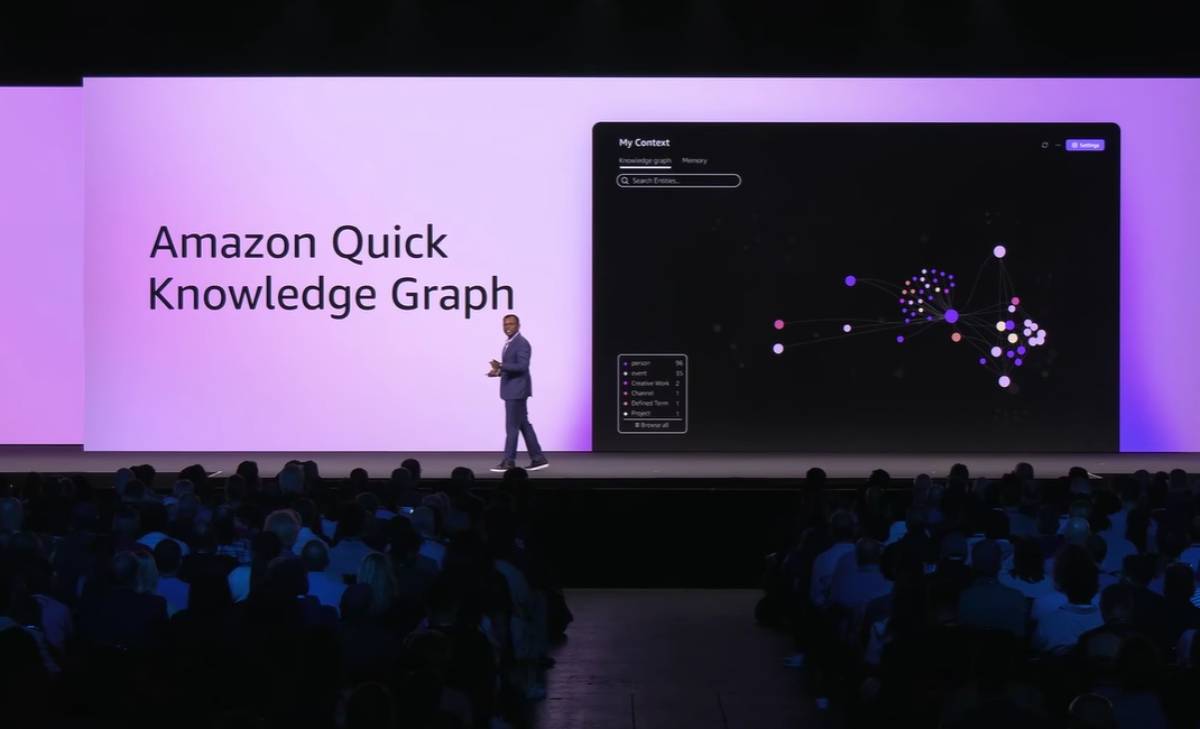
A significant development in enterprise artificial intelligence emerged as Amazon unveiled a new generation of AI agents designed to operate with greater autonomy while maintaining human oversight. The announcement highlights Amazon’s effort to address one of the most pressing challenges in AI adoption: balancing automation with accountability. The move carries implications for enterprises, regulators, and technology leaders worldwide as organizations increasingly deploy AI-powered agents to execute complex business tasks.
Amazon introduced new AI agent capabilities aimed at helping organizations automate workflows while ensuring human operators remain in control of critical decisions. The company emphasized a framework that allows AI systems to perform multi-step actions, access enterprise tools, and complete assigned objectives without operating entirely independently.
The announcement reflects Amazon’s broader strategy to strengthen its position in the rapidly growing AI infrastructure and enterprise software markets. By embedding governance mechanisms into agentic AI systems, Amazon is responding to growing concerns among businesses and policymakers about transparency, reliability, and risk management.
The development comes as major technology companies race to commercialize AI agents capable of acting on behalf of users across customer service, operations, software development, and knowledge work functions.
The unveiling arrives amid an industry-wide transition from generative AI chatbots to autonomous AI agents. While first-generation AI tools primarily generated content or answered questions, the next wave of systems is expected to take actions, execute workflows, and interact directly with digital environments.
The development aligns with a broader trend across global markets where organizations are seeking productivity gains from AI while simultaneously facing heightened scrutiny regarding governance and control. Regulators in the United States, Europe, and Asia have increasingly focused on issues such as algorithmic accountability, cybersecurity, privacy, and operational risk.
Amazon's latest initiative follows a series of AI agent announcements from competitors including Microsoft, Google, Salesforce, and OpenAI. As enterprises invest billions of dollars in AI transformation initiatives, vendors are under pressure to demonstrate that autonomous systems can operate safely within highly regulated business environments.
Historically, concerns around AI decision-making have slowed adoption in sectors such as finance, healthcare, government, and critical infrastructure. Human-in-the-loop frameworks are increasingly being viewed as a practical solution to bridge innovation with compliance requirements.
Industry analysts view Amazon’s approach as a strategic attempt to address one of the biggest barriers to enterprise AI deployment: trust. Experts have repeatedly argued that organizations are unlikely to grant unrestricted authority to AI systems without clear oversight mechanisms and audit trails.
Amazon executives have emphasized that AI agents should function as collaborative assistants rather than fully independent decision-makers. The company’s messaging suggests that future enterprise AI deployments will require varying levels of human supervision depending on the sensitivity and risk profile of specific tasks.
Technology leaders across industries have similarly advocated for a balanced approach. Many argue that fully autonomous AI may eventually become viable in certain contexts, but current enterprise requirements demand governance structures that ensure accountability and regulatory compliance.
Market observers note that Amazon’s announcement also reflects growing customer demand for AI systems capable of delivering measurable productivity improvements without creating unacceptable operational or legal risks. As a result, controlled autonomy is increasingly emerging as a preferred model for enterprise adoption.
For global executives, the shift could redefine operational strategies across customer support, software development, supply chain management, and administrative functions. Organizations may accelerate AI investments if governance features reduce perceived deployment risks.
Investors are likely to monitor how quickly enterprises adopt agent-based systems and whether these technologies generate meaningful productivity gains. The announcement may also intensify competition among cloud providers seeking to become the preferred platform for enterprise AI deployment.
From a policy perspective, Amazon’s emphasis on human oversight aligns with emerging regulatory priorities focused on transparency, accountability, and responsible AI use. Policymakers may view such frameworks as a model for balancing innovation with public trust and risk mitigation.
The next phase of the AI race will likely center on execution rather than experimentation. Decision-makers should watch adoption rates, governance standards, and the real-world performance of autonomous agents in enterprise environments. Questions remain regarding liability, security, and regulatory oversight, but the direction of travel is clear: AI agents are moving from concept to operational reality. The companies that successfully balance autonomy with control may define the next era of enterprise technology.
Source: GeekWire
Date: June 18, 2026


