
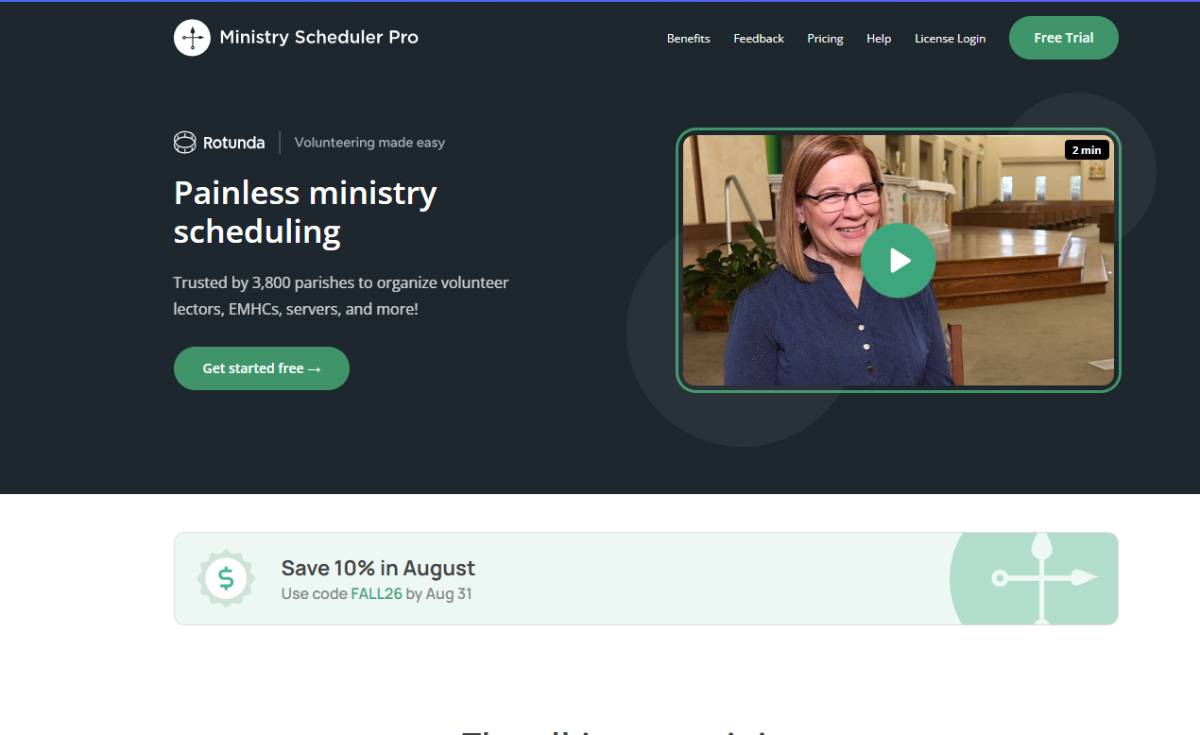
Ministry Scheduler Pro Advances Workforce Coordination

Ministry Scheduler Pro is designed to support organizations that coordinate volunteers, employees and recurring assignments across multiple activities and locations.

August 10, 2026
|

Ministry Scheduler Pro represents the growing shift toward specialized scheduling technology for organizations managing complex volunteer and staff operations. By bringing scheduling, communication, availability management and coordination into a centralized digital environment, the platform addresses a persistent operational challenge: ensuring the right people are assigned to the right responsibilities while reducing administrative workload.

Ministry Scheduler Pro is designed to support organizations that coordinate volunteers, employees and recurring assignments across multiple activities and locations. Its scheduling capabilities can help administrators manage availability, assignments, recurring events and personnel requirements from a centralized system.

The platform also emphasizes communication and coordination, enabling organizations to keep participants informed about schedules and responsibilities. Automated reminders and digital access can reduce dependence on manual calls, emails and spreadsheets.

Its relevance extends beyond religious organizations to other groups that depend heavily on volunteer coordination. As organizations seek greater operational efficiency, scheduling platforms are increasingly becoming part of broader workforce-management strategies, particularly where staffing requirements change frequently and participation depends on individual availability.

The growing demand for scheduling software reflects a broader transformation in workforce and volunteer management. Organizations across sectors are replacing paper-based rosters, spreadsheets and fragmented communication with centralized platforms capable of maintaining real-time information.

For ministries and community organizations, the challenge can be particularly complex. Volunteer participation may fluctuate, roles can require specific skills or qualifications, and recurring services or events often depend on coordinated staffing. Administrative teams therefore need visibility into availability, assignments and schedule changes without creating excessive overhead.

The trend also aligns with the wider rise of cloud-based collaboration tools. Digital scheduling can improve transparency by giving participants access to current information while allowing administrators to make changes more efficiently.

For executives and organizational leaders, the strategic value extends beyond scheduling. Better workforce coordination can improve resource utilization, reduce missed assignments and provide a more consistent operational experience.

Workforce-management specialists generally view scheduling automation as an important mechanism for reducing repetitive administrative tasks. The greatest potential value comes when organizations can combine scheduling, communication and availability information rather than managing each process independently.

For volunteer-driven organizations, this can be particularly significant. Administrative teams often operate with limited resources, making manual scheduling a disproportionate burden. Automated reminders and centralized schedules can allow coordinators to focus more attention on engagement, planning and organizational priorities.

From a management perspective, scheduling technology can also improve accountability. Clear assignments provide participants with greater visibility into their responsibilities, while administrators gain a more structured view of staffing coverage.

The broader software market is moving toward increasingly intelligent scheduling capabilities, including automated recommendations, mobile access and integration with communication systems. Organizations evaluating Ministry Scheduler Pro and comparable solutions will therefore need to consider not only current scheduling requirements

For organizations, digital scheduling can reduce administrative costs while improving workforce utilization and communication. Leaders can potentially gain better visibility into staffing gaps and recurring operational requirements.

For employees and volunteers, easier access to schedules and timely notifications can improve participation and reduce confusion surrounding assignments. The impact can be especially valuable for organizations managing large networks of part-time or volunteer participants.

From an investment perspective, the growing adoption of specialized scheduling platforms highlights continued demand for software that addresses specific operational challenges rather than attempting to serve every business function.

Policy and governance considerations also remain relevant. Organizations managing personnel information must ensure appropriate controls around access, privacy and data security. As scheduling systems become more integrated with broader organizational databases, responsible data management will become increasingly important.

Scheduling platforms are likely to evolve toward greater automation, mobile functionality, predictive staffing and artificial-intelligence-assisted coordination. Future systems may increasingly identify staffing gaps and recommend suitable replacements based on availability and role requirements. For organizational leaders, the priority will be selecting technology that improves coordination without adding complexity, while maintaining strong privacy, security and governance practices.

Source: Crozdesk
Date: August 10, 2026

  • Featured tools
Hostinger Website Builder
Paid

Hostinger Website Builder is a drag-and-drop website creator bundled with hosting and AI-powered tools, designed for businesses, blogs and small shops with minimal technical effort.It makes launching a site fast and affordable, with templates, responsive design and built-in hosting all in one.

#
Productivity
#
Startup Tools
#
Ecommerce
Learn more
Hostinger Horizons
Freemium

Hostinger Horizons is an AI-powered platform that allows users to build and deploy custom web applications without writing code. It packs hosting, domain management and backend integration into a unified tool for rapid app creation.

#
Startup Tools
#
Coding
#
Project Management
Learn more

Learn more about future of AI

Join 80,000+ Ai enthusiast getting weekly updates on exciting AI tools.
Thank you! Your submission has been received!
Oops! Something went wrong while submitting the form.

Ministry Scheduler Pro Advances Workforce Coordination

August 10, 2026

Ministry Scheduler Pro is designed to support organizations that coordinate volunteers, employees and recurring assignments across multiple activities and locations.

Ministry Scheduler Pro represents the growing shift toward specialized scheduling technology for organizations managing complex volunteer and staff operations. By bringing scheduling, communication, availability management and coordination into a centralized digital environment, the platform addresses a persistent operational challenge: ensuring the right people are assigned to the right responsibilities while reducing administrative workload.

Ministry Scheduler Pro is designed to support organizations that coordinate volunteers, employees and recurring assignments across multiple activities and locations. Its scheduling capabilities can help administrators manage availability, assignments, recurring events and personnel requirements from a centralized system.

The platform also emphasizes communication and coordination, enabling organizations to keep participants informed about schedules and responsibilities. Automated reminders and digital access can reduce dependence on manual calls, emails and spreadsheets.

Its relevance extends beyond religious organizations to other groups that depend heavily on volunteer coordination. As organizations seek greater operational efficiency, scheduling platforms are increasingly becoming part of broader workforce-management strategies, particularly where staffing requirements change frequently and participation depends on individual availability.

The growing demand for scheduling software reflects a broader transformation in workforce and volunteer management. Organizations across sectors are replacing paper-based rosters, spreadsheets and fragmented communication with centralized platforms capable of maintaining real-time information.

For ministries and community organizations, the challenge can be particularly complex. Volunteer participation may fluctuate, roles can require specific skills or qualifications, and recurring services or events often depend on coordinated staffing. Administrative teams therefore need visibility into availability, assignments and schedule changes without creating excessive overhead.

The trend also aligns with the wider rise of cloud-based collaboration tools. Digital scheduling can improve transparency by giving participants access to current information while allowing administrators to make changes more efficiently.

For executives and organizational leaders, the strategic value extends beyond scheduling. Better workforce coordination can improve resource utilization, reduce missed assignments and provide a more consistent operational experience.

Workforce-management specialists generally view scheduling automation as an important mechanism for reducing repetitive administrative tasks. The greatest potential value comes when organizations can combine scheduling, communication and availability information rather than managing each process independently.

For volunteer-driven organizations, this can be particularly significant. Administrative teams often operate with limited resources, making manual scheduling a disproportionate burden. Automated reminders and centralized schedules can allow coordinators to focus more attention on engagement, planning and organizational priorities.

From a management perspective, scheduling technology can also improve accountability. Clear assignments provide participants with greater visibility into their responsibilities, while administrators gain a more structured view of staffing coverage.

The broader software market is moving toward increasingly intelligent scheduling capabilities, including automated recommendations, mobile access and integration with communication systems. Organizations evaluating Ministry Scheduler Pro and comparable solutions will therefore need to consider not only current scheduling requirements

For organizations, digital scheduling can reduce administrative costs while improving workforce utilization and communication. Leaders can potentially gain better visibility into staffing gaps and recurring operational requirements.

For employees and volunteers, easier access to schedules and timely notifications can improve participation and reduce confusion surrounding assignments. The impact can be especially valuable for organizations managing large networks of part-time or volunteer participants.

From an investment perspective, the growing adoption of specialized scheduling platforms highlights continued demand for software that addresses specific operational challenges rather than attempting to serve every business function.

Policy and governance considerations also remain relevant. Organizations managing personnel information must ensure appropriate controls around access, privacy and data security. As scheduling systems become more integrated with broader organizational databases, responsible data management will become increasingly important.

Scheduling platforms are likely to evolve toward greater automation, mobile functionality, predictive staffing and artificial-intelligence-assisted coordination. Future systems may increasingly identify staffing gaps and recommend suitable replacements based on availability and role requirements. For organizational leaders, the priority will be selecting technology that improves coordination without adding complexity, while maintaining strong privacy, security and governance practices.

Source: Crozdesk
Date: August 10, 2026

Promote Your Tool

Copy Embed Code

Similar Blogs

August 10, 2026
|

Content Marketing Software Accelerates Enterprise Growth

The content marketing software category encompasses platforms designed to support multiple stages of the marketing lifecycle, including content planning, creation, collaboration, distribution, optimization and performance measurement.
Read more
August 10, 2026
|

3D Printing Software Drives Manufacturing Transformation

3D printing software encompasses a broad range of capabilities designed to support the additive manufacturing lifecycle. Platforms can assist with three-dimensional modeling, file preparation, slicing, print optimization.
Read more
August 10, 2026
|

ZenDMS Advances Enterprise Document Management

ZenDMS is positioned within the document management software segment, where businesses increasingly require centralized tools to store, organize and retrieve critical information.
Read more
August 10, 2026
|

SmartSimple Cloud Advances Grant Management Automation

SmartSimple Cloud is positioned as a configurable cloud platform designed to support grant management, corporate social responsibility, scholarship programs, awards and other complex funding workflows.
Read more
August 10, 2026
|

HaloPSA Accelerates Integrated Service Management

HaloPSA brings multiple professional services automation capabilities into a centralized environment, including service desk management, ticketing, contract management, asset tracking, project management.
Read more
August 10, 2026
|

Ministry Scheduler Pro Advances Workforce Coordination

Ministry Scheduler Pro is designed to support organizations that coordinate volunteers, employees and recurring assignments across multiple activities and locations.
Read more