



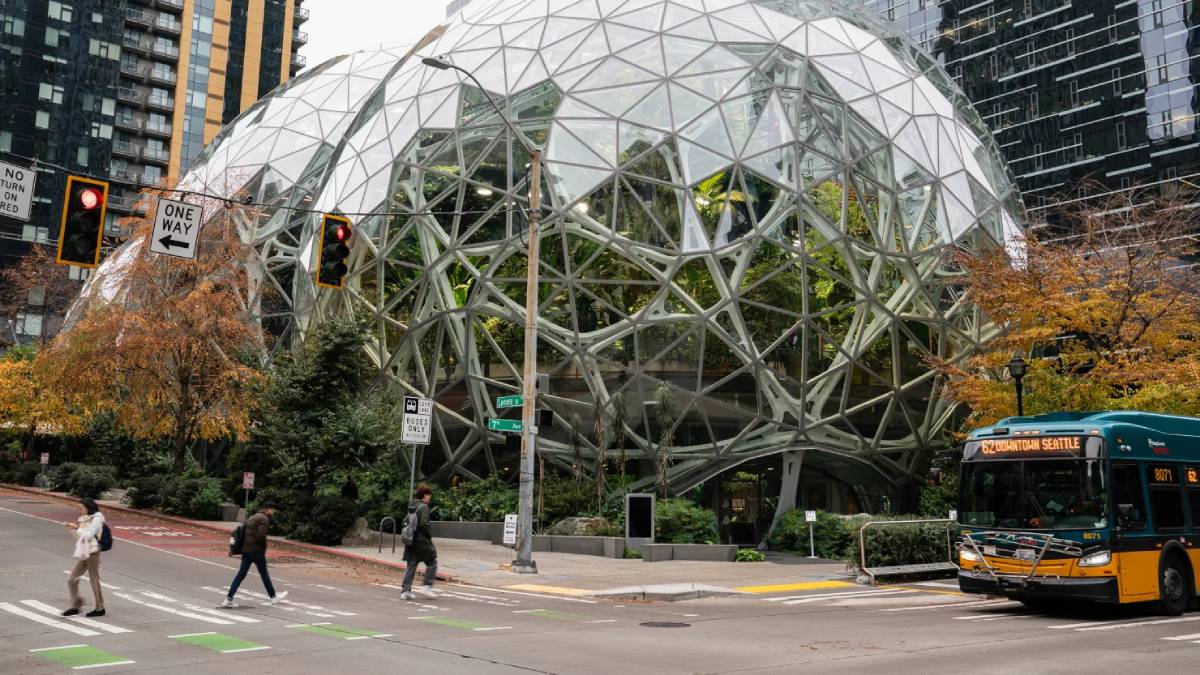
Tensions are emerging within Amazon as employees question the company’s aggressive investment in AI data centers while significant workforce reductions continue across parts of the organization. The debate highlights a broader challenge facing global corporations as they balance AI-driven transformation with workforce restructuring and operational efficiency goals.
Engineers in Seattle have reportedly criticized Amazon for prioritizing major investments in AI infrastructure while carrying out layoffs that have affected approximately 30,000 employees across various divisions.
The concerns center on the company’s expanding network of AI-focused data centers designed to support cloud computing services, machine learning workloads, and generative AI applications. Employees have questioned the allocation of resources toward large-scale infrastructure projects amid ongoing workforce reductions.
The situation reflects a growing trend among technology companies that are simultaneously increasing spending on AI capabilities while seeking cost efficiencies through organizational restructuring and workforce optimization.
The debate inside Amazon mirrors a wider transformation occurring across the global technology sector. As artificial intelligence becomes a central growth driver, companies are redirecting capital toward data centers, advanced chips, cloud infrastructure, and AI research.
At the same time, many technology firms have undertaken workforce reductions following years of rapid hiring during the pandemic-era digital expansion. Executives argue that leaner organizational structures are necessary to improve efficiency and fund long-term strategic priorities.
The AI boom has intensified this dynamic. Building and operating modern AI infrastructure requires billions of dollars in investment, particularly as demand grows for large language models and enterprise AI services. This has created a complex environment in which companies seek to reduce operating costs in some areas while dramatically increasing capital expenditures in others.
The trend is increasingly reshaping corporate labor strategies and investment priorities worldwide. Industry analysts suggest that the criticism directed at Amazon reflects a broader tension between technological transformation and workforce expectations. Experts note that AI infrastructure investments are increasingly viewed as essential for maintaining competitiveness in cloud computing and enterprise technology markets.
Labor economists argue that employees often perceive large infrastructure expenditures and workforce reductions as conflicting signals, particularly when both occur simultaneously. This can create challenges around morale, retention, and organizational culture.
Technology strategists emphasize that hyperscale cloud providers face mounting pressure to expand AI capacity to meet customer demand. As a result, capital allocation decisions are increasingly favoring infrastructure investments that can generate long-term revenue growth.
Industry observers also note that similar debates have surfaced across other major technology firms as AI becomes a primary destination for corporate investment. For businesses, the development underscores the difficult trade-offs associated with AI transformation. Companies may need to carefully balance investment in emerging technologies with workforce engagement and organizational stability.
For investors, Amazon’s strategy reflects confidence in long-term demand for AI services and cloud infrastructure. However, continued workforce tensions could influence public perception and talent retention in a highly competitive labor market.
From a policy perspective, the situation may intensify discussions around the future of work, workforce retraining, and the economic impact of AI adoption. Governments and regulators are increasingly examining how automation and AI investments affect employment patterns across critical sectors of the economy.
The focus now shifts to how Amazon manages employee concerns while continuing its AI expansion strategy. Key indicators include future infrastructure investments, workforce planning decisions, and demand for AI-powered cloud services. As AI becomes a defining corporate priority, companies across industries will face growing pressure to demonstrate that technological advancement and workforce sustainability can coexist within long-term business strategies.
Source: CNBC
Date: June 3, 2026


