
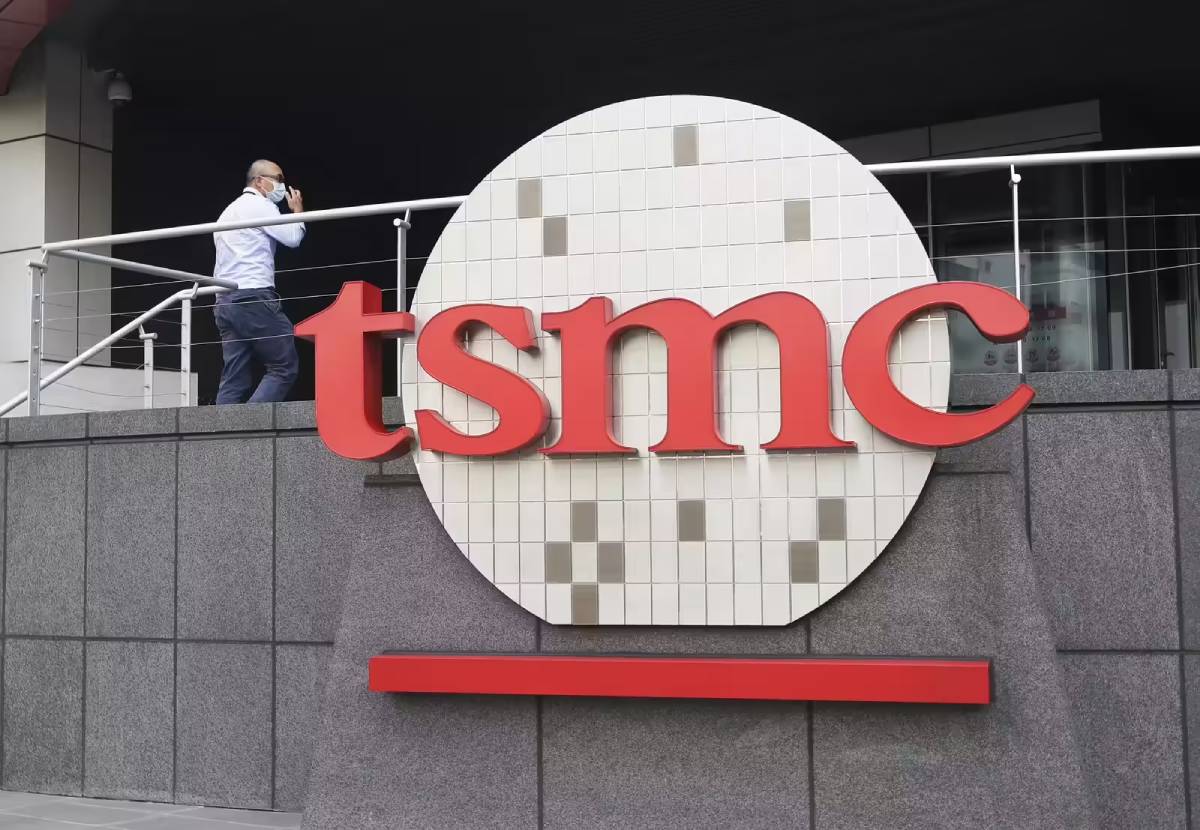
AI Boom Expands Beyond TSMC Stocks

Investor flows are increasingly rotating into semiconductor firms positioned across AI infrastructure rather than concentrating solely on leading foundry capacity.

May 22, 2026
|

Global semiconductor markets are witnessing a shift as investors diversify exposure beyond dominant chipmaker TSMC, seeking broader beneficiaries of the artificial intelligence supply chain. The move reflects growing conviction that AI-driven demand is no longer concentrated in a single node of production, but spreading across design, packaging, and equipment ecosystems.

Investor flows are increasingly rotating into semiconductor firms positioned across AI infrastructure rather than concentrating solely on leading foundry capacity. While TSMC remains central to advanced chip manufacturing, market participants are expanding exposure to equipment suppliers, advanced packaging players, and design ecosystem firms.

The shift comes amid strong demand projections for AI workloads, data-center expansion, and accelerated chip cycles. Portfolio managers are reportedly rebalancing holdings to capture upstream and downstream value creation. Analysts note that valuation gaps between core foundry leaders and secondary beneficiaries are narrowing as AI adoption broadens across industries.

The AI semiconductor cycle has historically been anchored by a small group of manufacturers capable of producing advanced nodes at scale, with TSMC serving as the primary global contract chipmaker. However, the current phase of AI expansion is structurally different from earlier cycles.

Instead of being limited to compute hardware production, AI demand now spans cloud infrastructure, model training systems, edge computing devices, and custom silicon development. This diversification is reshaping capital allocation in global equity markets.

Geopolitical factors also play a role, as governments push for supply chain resilience and localized semiconductor ecosystems. Combined with export controls and strategic subsidies, this is accelerating fragmentation of the semiconductor value chain. Investors are responding by spreading exposure across multiple segments rather than concentrating risk in a single manufacturer.

Market analysts suggest the rotation reflects a maturing AI trade rather than a weakening of core chip demand. According to industry strategists, the narrative is shifting from “who makes the chips” to “who captures margin across the ecosystem.”

Some analysts argue that TSMC remains structurally essential, but its relative share of AI-linked upside may normalize as other segments scale faster in percentage growth terms.

Equity researchers highlight increasing investor interest in semiconductor equipment firms, advanced packaging technologies, and memory suppliers as AI workloads intensify. Portfolio managers also point to rising competition in custom silicon development by hyperscalers, which redistributes value across the supply chain.

While optimism remains strong, experts caution that cyclical volatility in semiconductor demand could still create short-term mispricing across the sector. For global investors, the shift suggests a broader opportunity set across the semiconductor ecosystem rather than concentrated bets on leading foundries. Capital allocation strategies may increasingly emphasize diversification across chip design, fabrication, and tooling segments.

For corporations, especially AI infrastructure providers, the trend reinforces the importance of securing multi-vendor supply chains. Governments may also accelerate semiconductor industrial policy to ensure strategic independence in advanced computing capacity. Analysts warn that mispricing risks could rise as market enthusiasm spreads across secondary beneficiaries, potentially inflating valuations faster than underlying earnings growth.

The AI semiconductor cycle is expected to remain expansionary, but returns may become more distributed across the value chain. Investors will likely track demand sustainability in AI workloads, capital expenditure cycles of hyperscalers, and supply-side constraints in advanced manufacturing. The next phase will test whether ecosystem expansion can sustain current valuation premiums or trigger selective consolidation in overheated segments.

Source: Bloomberg
Date: May 21, 2026

  • Featured tools
WellSaid Ai
Free

WellSaid AI is an advanced text-to-speech platform that transforms written text into lifelike, human-quality voiceovers.

#
Text to Speech
Learn more
Neuron AI
Free

Neuron AI is an AI-driven content optimization platform that helps creators produce SEO-friendly content by combining semantic SEO, competitor analysis, and AI-assisted writing workflows.

#
SEO
Learn more

Learn more about future of AI

Join 80,000+ Ai enthusiast getting weekly updates on exciting AI tools.
Thank you! Your submission has been received!
Oops! Something went wrong while submitting the form.

AI Boom Expands Beyond TSMC Stocks

May 22, 2026

Investor flows are increasingly rotating into semiconductor firms positioned across AI infrastructure rather than concentrating solely on leading foundry capacity.

Global semiconductor markets are witnessing a shift as investors diversify exposure beyond dominant chipmaker TSMC, seeking broader beneficiaries of the artificial intelligence supply chain. The move reflects growing conviction that AI-driven demand is no longer concentrated in a single node of production, but spreading across design, packaging, and equipment ecosystems.

Investor flows are increasingly rotating into semiconductor firms positioned across AI infrastructure rather than concentrating solely on leading foundry capacity. While TSMC remains central to advanced chip manufacturing, market participants are expanding exposure to equipment suppliers, advanced packaging players, and design ecosystem firms.

The shift comes amid strong demand projections for AI workloads, data-center expansion, and accelerated chip cycles. Portfolio managers are reportedly rebalancing holdings to capture upstream and downstream value creation. Analysts note that valuation gaps between core foundry leaders and secondary beneficiaries are narrowing as AI adoption broadens across industries.

The AI semiconductor cycle has historically been anchored by a small group of manufacturers capable of producing advanced nodes at scale, with TSMC serving as the primary global contract chipmaker. However, the current phase of AI expansion is structurally different from earlier cycles.

Instead of being limited to compute hardware production, AI demand now spans cloud infrastructure, model training systems, edge computing devices, and custom silicon development. This diversification is reshaping capital allocation in global equity markets.

Geopolitical factors also play a role, as governments push for supply chain resilience and localized semiconductor ecosystems. Combined with export controls and strategic subsidies, this is accelerating fragmentation of the semiconductor value chain. Investors are responding by spreading exposure across multiple segments rather than concentrating risk in a single manufacturer.

Market analysts suggest the rotation reflects a maturing AI trade rather than a weakening of core chip demand. According to industry strategists, the narrative is shifting from “who makes the chips” to “who captures margin across the ecosystem.”

Some analysts argue that TSMC remains structurally essential, but its relative share of AI-linked upside may normalize as other segments scale faster in percentage growth terms.

Equity researchers highlight increasing investor interest in semiconductor equipment firms, advanced packaging technologies, and memory suppliers as AI workloads intensify. Portfolio managers also point to rising competition in custom silicon development by hyperscalers, which redistributes value across the supply chain.

While optimism remains strong, experts caution that cyclical volatility in semiconductor demand could still create short-term mispricing across the sector. For global investors, the shift suggests a broader opportunity set across the semiconductor ecosystem rather than concentrated bets on leading foundries. Capital allocation strategies may increasingly emphasize diversification across chip design, fabrication, and tooling segments.

For corporations, especially AI infrastructure providers, the trend reinforces the importance of securing multi-vendor supply chains. Governments may also accelerate semiconductor industrial policy to ensure strategic independence in advanced computing capacity. Analysts warn that mispricing risks could rise as market enthusiasm spreads across secondary beneficiaries, potentially inflating valuations faster than underlying earnings growth.

The AI semiconductor cycle is expected to remain expansionary, but returns may become more distributed across the value chain. Investors will likely track demand sustainability in AI workloads, capital expenditure cycles of hyperscalers, and supply-side constraints in advanced manufacturing. The next phase will test whether ecosystem expansion can sustain current valuation premiums or trigger selective consolidation in overheated segments.

Source: Bloomberg
Date: May 21, 2026

Promote Your Tool

Copy Embed Code

Similar Blogs

May 22, 2026
|

AI Boom Expands Beyond TSMC Stocks

Investor flows are increasingly rotating into semiconductor firms positioned across AI infrastructure rather than concentrating solely on leading foundry capacity.
Read more
May 22, 2026
|

Spotify Positions Taste Intelligence AI Edge

Spotify is leaning into user taste as a defining feature of its next-generation platform strategy, positioning personalization as a core competitive advantage in the AI era.
Read more
May 22, 2026
|

AI Search Platform Strain Big Tech Divide

The report highlights internal strategic and operational pressures at Meta as it continues to restructure its long-term positioning in an AI-driven digital economy.
Read more
May 22, 2026
|

Microsoft AI Priorities Raise GitHub Questions

The report suggests that as Microsoft accelerates integration of AI capabilities across core products including development tools and productivity software GitHub’s strategic differentiation may be under pressure.
Read more
May 22, 2026
|

Google Expands Gemini Into Android Auto

Google showcased a demonstration of its Gemini-powered in-car assistant performing a range of tasks, including adjusting vehicle settings such as sunroof controls, providing travel guidance.
Read more
May 22, 2026
|

Google Simplifies AI Consumer Strategy Push

Google’s latest product updates and AI capabilities are being reframed in simpler, more user-friendly terms to improve public understanding and adoption.
Read more