
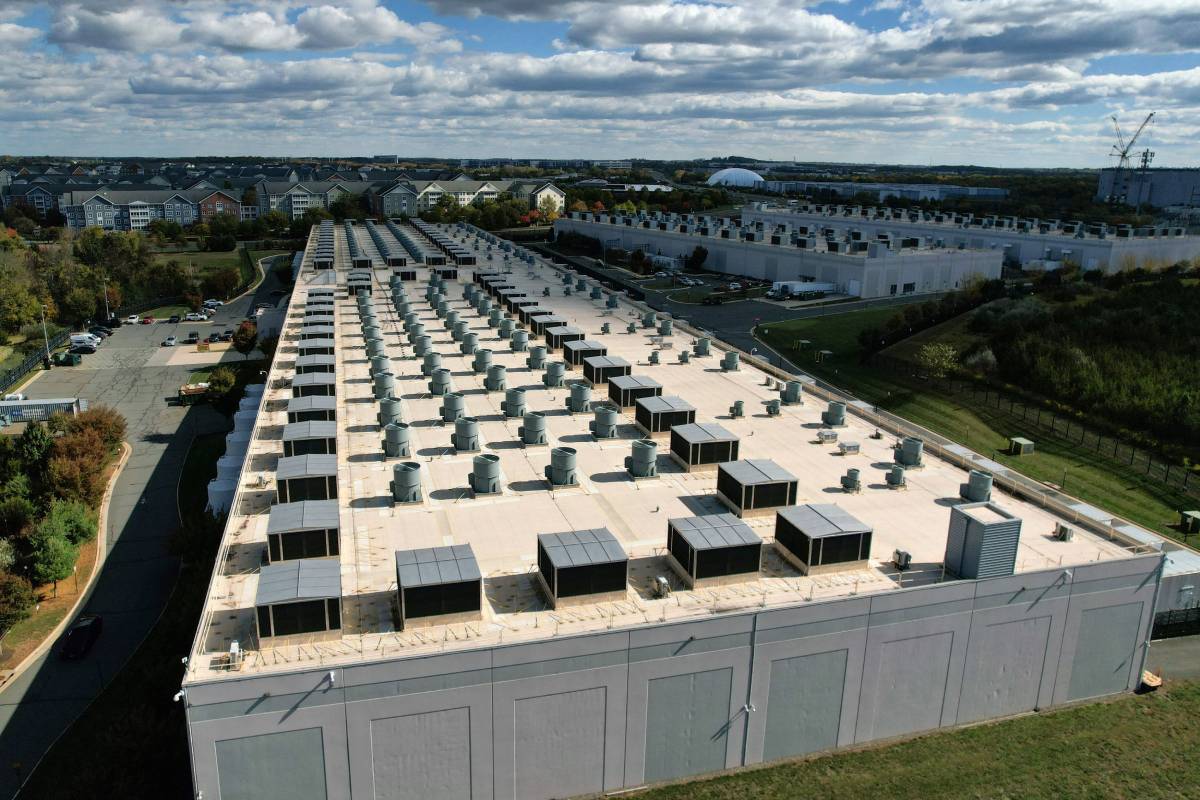
Amazon Pledges $12 Billion for Louisiana AI Data Centers

Amazon confirmed it will allocate $12 billion toward building and expanding data center infrastructure in Louisiana, primarily to support artificial intelligence workloads and cloud services.

February 24, 2026
|

A major infrastructure expansion unfolded as Amazon announced plans to invest $12 billion in AI-focused data centers in the U.S. state of Louisiana. The move strengthens America’s AI compute capacity while signaling intensifying competition among states to attract hyperscale technology investments.

Amazon confirmed it will allocate $12 billion toward building and expanding data center infrastructure in Louisiana, primarily to support artificial intelligence workloads and cloud services.

The investment is expected to generate construction activity, long-term operational jobs, and local economic spillovers. State officials have positioned the project as one of the largest private sector technology commitments in Louisiana’s history.

The expansion aligns with Amazon’s broader AI strategy, which requires vast computing resources to power cloud-based AI tools and enterprise services. The announcement reflects accelerating capital expenditure across the tech sector as companies race to secure compute dominance in the AI era.

The development aligns with a broader trend across global markets where hyperscale cloud providers are dramatically increasing capital spending to meet surging AI demand. Training and deploying advanced AI models require massive server clusters, specialized chips, and robust power infrastructure.

Amazon, through its cloud division, competes with other technology giants in delivering AI services to enterprises and governments. Securing sufficient data center capacity is now a strategic imperative, not just a technical requirement.

For U.S. states, attracting AI infrastructure investments has become a key economic development priority. Incentives such as tax breaks, land grants, and energy partnerships are increasingly deployed to win large-scale projects.

The Louisiana investment reinforces the centrality of domestic compute capacity in national competitiveness and digital sovereignty discussions. Industry analysts view the $12 billion commitment as evidence that AI infrastructure spending remains in a high-growth phase. Market observers note that hyperscalers are locking in long-term capacity to avoid future supply bottlenecks.

Economic development experts suggest Louisiana’s energy profile and available land likely played a decisive role in the decision. Access to stable power supplies is now one of the most critical factors in data center site selection.

Technology strategists argue that infrastructure scale increasingly determines AI leadership. Firms capable of rapidly deploying compute capacity gain advantages in model training speed, customer acquisition, and enterprise partnerships.

While capital-intensive, such investments signal long-term confidence in sustained AI demand. For enterprises, expanded data center capacity could enhance availability and performance of AI cloud services. Companies building AI-driven products may benefit from improved scalability and regional infrastructure resilience.

Investors are likely to monitor Amazon’s capital expenditure trajectory and return on infrastructure investments, particularly amid broader debates about AI spending sustainability.

From a policy perspective, the project highlights competition among U.S. states to attract high-tech infrastructure while balancing environmental, energy, and regulatory considerations. For corporate leaders, access to compute resources is becoming a foundational pillar of strategic planning.

Construction timelines and energy partnerships will determine how quickly the Louisiana facilities come online. Markets will assess whether continued hyperscale investment translates into revenue acceleration.

As AI adoption deepens across industries, infrastructure commitments of this magnitude may become standard rather than exceptional, reshaping regional economic landscapes in the process.

Source: CNBC
Date: February 23, 2026

  • Featured tools
Outplay AI
Free

Outplay AI is a dynamic sales engagement platform combining AI-powered outreach, multi-channel automation, and performance tracking to help teams optimize conversion and pipeline generation.

#
Sales
Learn more
Murf Ai
Free

Murf AI Review – Advanced AI Voice Generator for Realistic Voiceovers

#
Text to Speech
Learn more

Learn more about future of AI

Join 80,000+ Ai enthusiast getting weekly updates on exciting AI tools.
Thank you! Your submission has been received!
Oops! Something went wrong while submitting the form.

Amazon Pledges $12 Billion for Louisiana AI Data Centers

February 24, 2026

Amazon confirmed it will allocate $12 billion toward building and expanding data center infrastructure in Louisiana, primarily to support artificial intelligence workloads and cloud services.

A major infrastructure expansion unfolded as Amazon announced plans to invest $12 billion in AI-focused data centers in the U.S. state of Louisiana. The move strengthens America’s AI compute capacity while signaling intensifying competition among states to attract hyperscale technology investments.

Amazon confirmed it will allocate $12 billion toward building and expanding data center infrastructure in Louisiana, primarily to support artificial intelligence workloads and cloud services.

The investment is expected to generate construction activity, long-term operational jobs, and local economic spillovers. State officials have positioned the project as one of the largest private sector technology commitments in Louisiana’s history.

The expansion aligns with Amazon’s broader AI strategy, which requires vast computing resources to power cloud-based AI tools and enterprise services. The announcement reflects accelerating capital expenditure across the tech sector as companies race to secure compute dominance in the AI era.

The development aligns with a broader trend across global markets where hyperscale cloud providers are dramatically increasing capital spending to meet surging AI demand. Training and deploying advanced AI models require massive server clusters, specialized chips, and robust power infrastructure.

Amazon, through its cloud division, competes with other technology giants in delivering AI services to enterprises and governments. Securing sufficient data center capacity is now a strategic imperative, not just a technical requirement.

For U.S. states, attracting AI infrastructure investments has become a key economic development priority. Incentives such as tax breaks, land grants, and energy partnerships are increasingly deployed to win large-scale projects.

The Louisiana investment reinforces the centrality of domestic compute capacity in national competitiveness and digital sovereignty discussions. Industry analysts view the $12 billion commitment as evidence that AI infrastructure spending remains in a high-growth phase. Market observers note that hyperscalers are locking in long-term capacity to avoid future supply bottlenecks.

Economic development experts suggest Louisiana’s energy profile and available land likely played a decisive role in the decision. Access to stable power supplies is now one of the most critical factors in data center site selection.

Technology strategists argue that infrastructure scale increasingly determines AI leadership. Firms capable of rapidly deploying compute capacity gain advantages in model training speed, customer acquisition, and enterprise partnerships.

While capital-intensive, such investments signal long-term confidence in sustained AI demand. For enterprises, expanded data center capacity could enhance availability and performance of AI cloud services. Companies building AI-driven products may benefit from improved scalability and regional infrastructure resilience.

Investors are likely to monitor Amazon’s capital expenditure trajectory and return on infrastructure investments, particularly amid broader debates about AI spending sustainability.

From a policy perspective, the project highlights competition among U.S. states to attract high-tech infrastructure while balancing environmental, energy, and regulatory considerations. For corporate leaders, access to compute resources is becoming a foundational pillar of strategic planning.

Construction timelines and energy partnerships will determine how quickly the Louisiana facilities come online. Markets will assess whether continued hyperscale investment translates into revenue acceleration.

As AI adoption deepens across industries, infrastructure commitments of this magnitude may become standard rather than exceptional, reshaping regional economic landscapes in the process.

Source: CNBC
Date: February 23, 2026

Promote Your Tool

Copy Embed Code

Similar Blogs

April 14, 2026
|

Memory Costs Pressure Microsoft Surface Pricing

Microsoft’s Surface lineup is experiencing pricing adjustments driven by increased memory (RAM) costs, affecting both Surface Pro and Surface Laptop models.
Read more
April 14, 2026
|

AI Avatar Cloning Enters Creator Economy

The new AI avatar capability allows creators to generate digital replicas that can appear in videos, effectively enabling scalable content production without continuous on-camera presence. These avatars can mimic speech patterns, gestures, and presentation styles, streamlining video creation workflows.
Read more
April 14, 2026
|

Huawei Expands Foldable Smartphone Lead

Huawei’s latest foldable smartphone introduces a wider, tablet-like display format designed to enhance multitasking, productivity, and media consumption. The device expands the company’s foldable portfolio.
Read more
April 14, 2026
|

Google Cuts Pixel 10A Price Amid Android Rivalry

The Pixel 10A, positioned as a midrange smartphone within Google’s hardware lineup, is currently being offered at a discounted price point of $50 off.
Read more
April 14, 2026
|

AT&T Design Legacy Revisited via Western Electric 500

The Western Electric 500 telephone, developed under AT&T’s Bell System ecosystem, became one of the most widely used landline devices in history.
Read more
April 14, 2026
|

Microsoft Tests Autonomous Copilot AI Agents

Microsoft is reportedly experimenting with “OpenClaw-like” AI agents designed to extend Copilot’s functionality beyond simple assistance into autonomous task execution.
Read more