
Water Ready Drones Signal New Robotics Frontier

The HoverAir Aqua introduces waterproofing capabilities that allow stable flight and operation in wet conditions, including takeoff and landing near water surfaces. Early hands-on demonstrations suggest improvements in stability, automated tracking.

May 29, 2026
|
Image Source: CNET

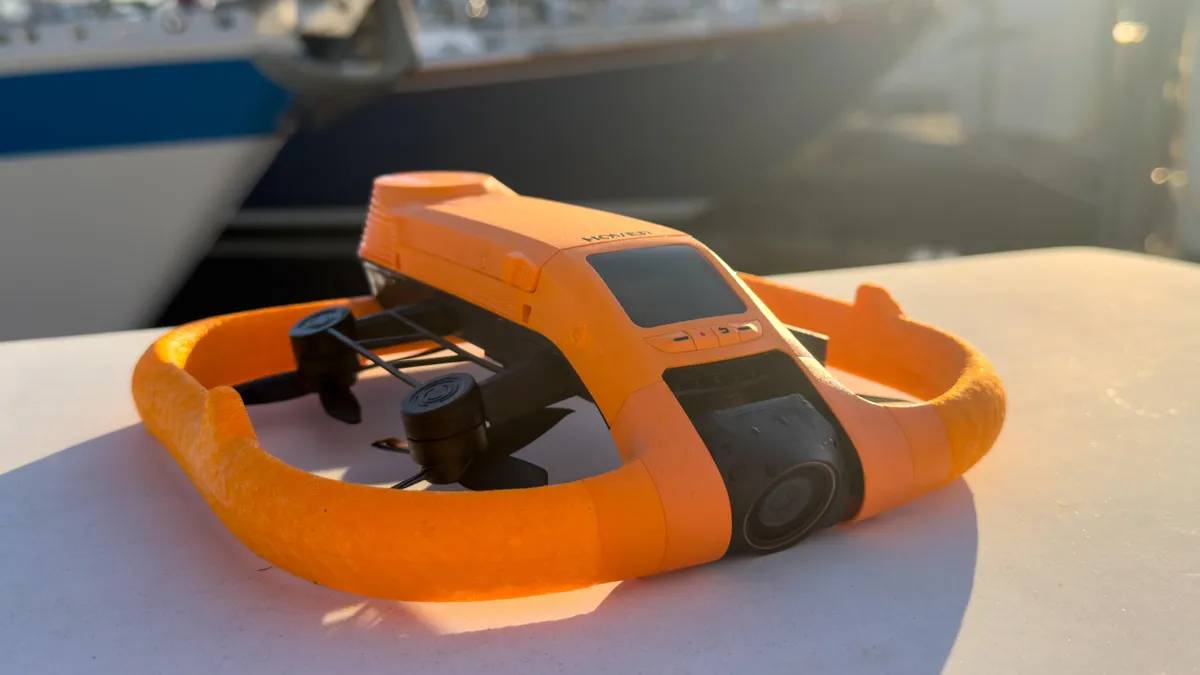
The HoverAir Aqua drone, designed to operate safely over and around water, highlights a new wave of ruggedized consumer drones tailored for extreme environments. The development signals growing diversification in the drone industry, expanding use cases across recreation, environmental monitoring, and industrial inspection in water-heavy and marine settings.

The HoverAir Aqua introduces waterproofing capabilities that allow stable flight and operation in wet conditions, including takeoff and landing near water surfaces. Early hands-on demonstrations suggest improvements in stability, automated tracking, and safety features designed for non-professional users.

Key stakeholders include drone manufacturer ZeroZero Robotics, consumer robotics developers, and recreational tech enthusiasts. The device reflects increasing competition in the compact drone segment, where portability and environmental resilience are becoming key differentiators. Analysts note that water-resistant drone platforms could expand adoption in sectors such as coastal tourism, boating, and emergency response imaging.

The consumer drone market has evolved rapidly over the past decade, transitioning from niche hobbyist devices to widely used tools in photography, mapping, and content creation. However, most mainstream drones remain limited by environmental constraints, particularly water exposure and harsh weather conditions.

Recent advances in sensor miniaturization, waterproof casing design, and autonomous flight control systems have enabled manufacturers to explore more resilient architectures. This shift aligns with broader trends in robotics, where adaptability to real-world conditions is becoming a core design priority.

Historically, drones capable of water operation were largely confined to industrial or military applications. The emergence of consumer-grade water-resistant drones signals a democratization of capabilities once reserved for specialized operations, potentially reshaping outdoor content creation and environmental monitoring workflows.

Industry analysts suggest that water-capable drones represent a natural extension of the consumer drone market’s maturity phase, where differentiation increasingly depends on environmental versatility rather than basic flight capability. Robotics experts highlight that integrating waterproof systems without compromising flight stability remains a significant engineering challenge.

Market observers note growing demand for drones that can support adventure tourism, coastal exploration, and disaster response scenarios such as flood assessment. While HoverAir has not publicly framed Aqua as an enterprise-grade device, specialists believe the underlying technology could be adapted for professional use cases over time.

Commentators also emphasize that ease of use will be critical for adoption, as non-expert users are likely to drive early demand in recreational segments. For drone manufacturers, the introduction of water-resistant consumer models expands addressable markets into marine recreation and environmental documentation sectors. Companies may increasingly compete on durability and AI-assisted autonomy rather than purely on camera quality or flight range.

For investors, this signals incremental growth potential in a maturing drone industry, particularly in niche hardware innovation segments. Businesses in tourism, media production, and environmental monitoring could integrate such drones into operational workflows.

From a regulatory perspective, expanded drone usage in coastal and water-adjacent zones may require updated safety and airspace guidelines, especially in regions with dense maritime activity or protected ecosystems.

Future iterations of water-capable drones are expected to incorporate deeper autonomy, improved battery efficiency, and enhanced obstacle detection for dynamic environments. Analysts anticipate gradual expansion into semi-professional applications, particularly in inspection and emergency response. The key uncertainty lies in balancing cost, durability, and usability, which will determine whether such drones remain niche lifestyle devices or evolve into mainstream utility tools.

Source: CNET
Date: May 29, 2026

  • Featured tools
Tome AI
Free

Tome AI is an AI-powered storytelling and presentation tool designed to help users create compelling narratives and presentations quickly and efficiently. It leverages advanced AI technologies to generate content, images, and animations based on user input.

#
Presentation
#
Startup Tools
Learn more
Hostinger Horizons
Freemium

Hostinger Horizons is an AI-powered platform that allows users to build and deploy custom web applications without writing code. It packs hosting, domain management and backend integration into a unified tool for rapid app creation.

#
Startup Tools
#
Coding
#
Project Management
Learn more

Learn more about future of AI

Join 80,000+ Ai enthusiast getting weekly updates on exciting AI tools.
Thank you! Your submission has been received!
Oops! Something went wrong while submitting the form.

Water Ready Drones Signal New Robotics Frontier

May 29, 2026

The HoverAir Aqua introduces waterproofing capabilities that allow stable flight and operation in wet conditions, including takeoff and landing near water surfaces. Early hands-on demonstrations suggest improvements in stability, automated tracking.

Image Source: CNET

The HoverAir Aqua drone, designed to operate safely over and around water, highlights a new wave of ruggedized consumer drones tailored for extreme environments. The development signals growing diversification in the drone industry, expanding use cases across recreation, environmental monitoring, and industrial inspection in water-heavy and marine settings.

The HoverAir Aqua introduces waterproofing capabilities that allow stable flight and operation in wet conditions, including takeoff and landing near water surfaces. Early hands-on demonstrations suggest improvements in stability, automated tracking, and safety features designed for non-professional users.

Key stakeholders include drone manufacturer ZeroZero Robotics, consumer robotics developers, and recreational tech enthusiasts. The device reflects increasing competition in the compact drone segment, where portability and environmental resilience are becoming key differentiators. Analysts note that water-resistant drone platforms could expand adoption in sectors such as coastal tourism, boating, and emergency response imaging.

The consumer drone market has evolved rapidly over the past decade, transitioning from niche hobbyist devices to widely used tools in photography, mapping, and content creation. However, most mainstream drones remain limited by environmental constraints, particularly water exposure and harsh weather conditions.

Recent advances in sensor miniaturization, waterproof casing design, and autonomous flight control systems have enabled manufacturers to explore more resilient architectures. This shift aligns with broader trends in robotics, where adaptability to real-world conditions is becoming a core design priority.

Historically, drones capable of water operation were largely confined to industrial or military applications. The emergence of consumer-grade water-resistant drones signals a democratization of capabilities once reserved for specialized operations, potentially reshaping outdoor content creation and environmental monitoring workflows.

Industry analysts suggest that water-capable drones represent a natural extension of the consumer drone market’s maturity phase, where differentiation increasingly depends on environmental versatility rather than basic flight capability. Robotics experts highlight that integrating waterproof systems without compromising flight stability remains a significant engineering challenge.

Market observers note growing demand for drones that can support adventure tourism, coastal exploration, and disaster response scenarios such as flood assessment. While HoverAir has not publicly framed Aqua as an enterprise-grade device, specialists believe the underlying technology could be adapted for professional use cases over time.

Commentators also emphasize that ease of use will be critical for adoption, as non-expert users are likely to drive early demand in recreational segments. For drone manufacturers, the introduction of water-resistant consumer models expands addressable markets into marine recreation and environmental documentation sectors. Companies may increasingly compete on durability and AI-assisted autonomy rather than purely on camera quality or flight range.

For investors, this signals incremental growth potential in a maturing drone industry, particularly in niche hardware innovation segments. Businesses in tourism, media production, and environmental monitoring could integrate such drones into operational workflows.

From a regulatory perspective, expanded drone usage in coastal and water-adjacent zones may require updated safety and airspace guidelines, especially in regions with dense maritime activity or protected ecosystems.

Future iterations of water-capable drones are expected to incorporate deeper autonomy, improved battery efficiency, and enhanced obstacle detection for dynamic environments. Analysts anticipate gradual expansion into semi-professional applications, particularly in inspection and emergency response. The key uncertainty lies in balancing cost, durability, and usability, which will determine whether such drones remain niche lifestyle devices or evolve into mainstream utility tools.

Source: CNET
Date: May 29, 2026

Promote Your Tool

Copy Embed Code

Similar Blogs

May 29, 2026
|

YouTube AI Personalization Redefines Scrolling

The new AI system introduces customized content feeds that respond to user prompts and behavior, dynamically adjusting recommendations beyond traditional algorithmic ranking.
Read more
May 29, 2026
|

Google Chrome AI Download Raises Questions

Reports indicate that certain Chrome installations may have quietly fetched a substantial AI model in the background as part of new browser capabilities tied to on-device intelligence.
Read more
May 29, 2026
|

Apple iOS 27 Transforms Siri AI Assistant

Apple’s iOS 27 is reportedly set to introduce a deeply upgraded version of Siri, integrating more advanced AI capabilities, improved contextual understanding, and tighter system-level functionality.
Read more
May 29, 2026
|

Affordable AI PCs Emerge Globally

The Snapdragon C processors are aimed at budget-friendly laptops optimized for basic productivity and AI-assisted tasks such as content summarization and lightweight generative applications.
Read more
May 29, 2026
|

Water Ready Drones Signal New Robotics Frontier

The HoverAir Aqua introduces waterproofing capabilities that allow stable flight and operation in wet conditions, including takeoff and landing near water surfaces. Early hands-on demonstrations suggest improvements in stability, automated tracking.
Read more
May 29, 2026
|

AI Filmmaking Enters Mainstream at Tribeca

The film, reportedly produced with a budget of just $2,000, leverages generative AI tools for scripting, visuals, and post-production workflows.
Read more