
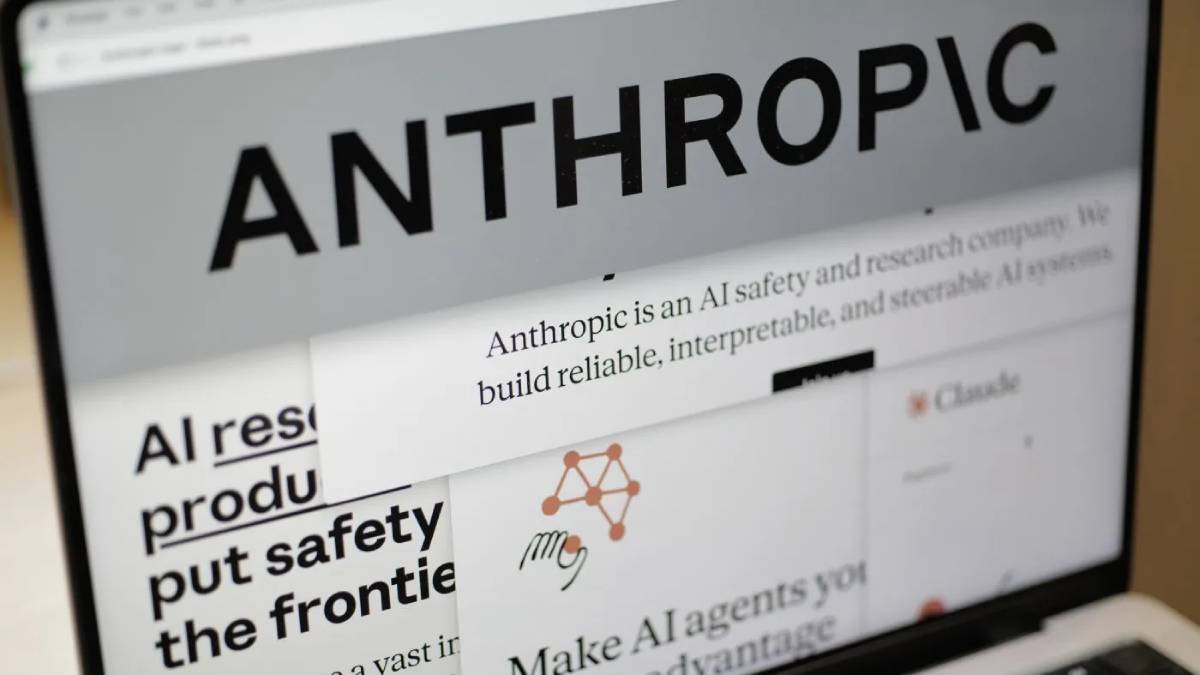
Anthropic Delays Model Over Safety Concerns

Anthropic has stated that its latest AI system will not be released publicly after internal evaluations indicated it could pose significant safety and misuse risks.

April 10, 2026
|

A major development has emerged in the frontier AI sector as Anthropic confirms it is withholding a newly developed model due to elevated safety and misuse risks. The decision underscores escalating concerns around dual-use AI capabilities and signals a tightening stance on deployment thresholds across the advanced AI industry.

Anthropic has stated that its latest AI system will not be released publicly after internal evaluations indicated it could pose significant safety and misuse risks. The company, known for its safety-first positioning in frontier model development, has not disclosed technical specifics but emphasized precautionary containment.

The announcement comes amid intensifying competition among leading AI developers, where rapid model advancement is often balanced against safety testing timelines. The decision highlights a growing industry trend of internal “red-teaming” and capability gating before public deployment. It also raises questions about how regulators and companies define acceptable thresholds for releasing powerful general-purpose AI systems.

The decision by Anthropic reflects a broader shift in the AI industry toward preemptive risk management for increasingly autonomous and capable systems. As large language models evolve into agentic frameworks capable of tool use, reasoning, and multi-step planning, concerns over misuse ranging from cyber offense to misinformation have intensified.

In recent years, AI governance discussions have moved from theoretical risk assessment to operational deployment controls. Companies are increasingly adopting staged release strategies, including restricted access, safety evaluations, and phased rollouts. This approach aligns with growing regulatory attention in the United States, European Union, and Asia-Pacific regions.

Historically, AI deployment focused on performance benchmarks and scalability. However, the current wave of frontier models has shifted emphasis toward alignment, interpretability, and controlled access, reflecting a maturation of safety-first engineering practices across the sector.

AI governance researchers suggest that withholding powerful models may represent an emerging industry norm rather than an exception. Safety analysts argue that pre-release restriction can serve as a critical safeguard in preventing misuse in areas such as automated cyberattacks or scalable misinformation generation.

Supporters of cautious deployment policies highlight that frontier AI systems increasingly demonstrate unpredictable emergent behaviors, making conventional testing insufficient for full risk assessment. They argue that firms like Anthropic are setting precedent for responsible containment practices.

However, industry critics caution that excessive secrecy may limit external auditing and slow down collective safety research. Some policy experts advocate for standardized third-party evaluation frameworks to ensure transparency without compromising safety. The divergence reflects an ongoing tension between openness, competitive advantage, and risk mitigation in AI development.

For enterprises, the decision signals that access to cutting-edge AI capabilities may become increasingly gated, affecting product roadmaps and integration timelines. Companies building on frontier models may need to adapt to slower or restricted release cycles.

For policymakers, the move strengthens arguments for structured oversight frameworks that define release criteria for high-risk AI systems. It may accelerate regulatory efforts focused on model evaluation standards and safety certification.

For investors, the development highlights a bifurcated market dynamic where capability advancement does not always translate into immediate commercialization, reinforcing the importance of governance maturity alongside technical performance.

The decision is likely to intensify debate over how frontier AI systems should be evaluated before public release. Future regulatory and industry standards may formalize thresholds for “too dangerous to deploy” classifications. Stakeholders will closely watch whether other leading AI developers adopt similar withholding strategies or pursue controlled release models under stricter governance frameworks.

Source: The Hill
Date: April 10, 2026

  • Featured tools
Surfer AI
Free

Surfer AI is an AI-powered content creation assistant built into the Surfer SEO platform, designed to generate SEO-optimized articles from prompts, leveraging data from search results to inform tone, structure, and relevance.

#
SEO
Learn more
Outplay AI
Free

Outplay AI is a dynamic sales engagement platform combining AI-powered outreach, multi-channel automation, and performance tracking to help teams optimize conversion and pipeline generation.

#
Sales
Learn more

Learn more about future of AI

Join 80,000+ Ai enthusiast getting weekly updates on exciting AI tools.
Thank you! Your submission has been received!
Oops! Something went wrong while submitting the form.

Anthropic Delays Model Over Safety Concerns

April 10, 2026

Anthropic has stated that its latest AI system will not be released publicly after internal evaluations indicated it could pose significant safety and misuse risks.

A major development has emerged in the frontier AI sector as Anthropic confirms it is withholding a newly developed model due to elevated safety and misuse risks. The decision underscores escalating concerns around dual-use AI capabilities and signals a tightening stance on deployment thresholds across the advanced AI industry.

Anthropic has stated that its latest AI system will not be released publicly after internal evaluations indicated it could pose significant safety and misuse risks. The company, known for its safety-first positioning in frontier model development, has not disclosed technical specifics but emphasized precautionary containment.

The announcement comes amid intensifying competition among leading AI developers, where rapid model advancement is often balanced against safety testing timelines. The decision highlights a growing industry trend of internal “red-teaming” and capability gating before public deployment. It also raises questions about how regulators and companies define acceptable thresholds for releasing powerful general-purpose AI systems.

The decision by Anthropic reflects a broader shift in the AI industry toward preemptive risk management for increasingly autonomous and capable systems. As large language models evolve into agentic frameworks capable of tool use, reasoning, and multi-step planning, concerns over misuse ranging from cyber offense to misinformation have intensified.

In recent years, AI governance discussions have moved from theoretical risk assessment to operational deployment controls. Companies are increasingly adopting staged release strategies, including restricted access, safety evaluations, and phased rollouts. This approach aligns with growing regulatory attention in the United States, European Union, and Asia-Pacific regions.

Historically, AI deployment focused on performance benchmarks and scalability. However, the current wave of frontier models has shifted emphasis toward alignment, interpretability, and controlled access, reflecting a maturation of safety-first engineering practices across the sector.

AI governance researchers suggest that withholding powerful models may represent an emerging industry norm rather than an exception. Safety analysts argue that pre-release restriction can serve as a critical safeguard in preventing misuse in areas such as automated cyberattacks or scalable misinformation generation.

Supporters of cautious deployment policies highlight that frontier AI systems increasingly demonstrate unpredictable emergent behaviors, making conventional testing insufficient for full risk assessment. They argue that firms like Anthropic are setting precedent for responsible containment practices.

However, industry critics caution that excessive secrecy may limit external auditing and slow down collective safety research. Some policy experts advocate for standardized third-party evaluation frameworks to ensure transparency without compromising safety. The divergence reflects an ongoing tension between openness, competitive advantage, and risk mitigation in AI development.

For enterprises, the decision signals that access to cutting-edge AI capabilities may become increasingly gated, affecting product roadmaps and integration timelines. Companies building on frontier models may need to adapt to slower or restricted release cycles.

For policymakers, the move strengthens arguments for structured oversight frameworks that define release criteria for high-risk AI systems. It may accelerate regulatory efforts focused on model evaluation standards and safety certification.

For investors, the development highlights a bifurcated market dynamic where capability advancement does not always translate into immediate commercialization, reinforcing the importance of governance maturity alongside technical performance.

The decision is likely to intensify debate over how frontier AI systems should be evaluated before public release. Future regulatory and industry standards may formalize thresholds for “too dangerous to deploy” classifications. Stakeholders will closely watch whether other leading AI developers adopt similar withholding strategies or pursue controlled release models under stricter governance frameworks.

Source: The Hill
Date: April 10, 2026

Promote Your Tool

Copy Embed Code

Similar Blogs

April 10, 2026
|

Originality AI Detection Tools Drive Content Trust Pus

Originality.ai offers AI detection technology capable of analyzing text to determine whether it has been generated by artificial intelligence models.
Read more
April 10, 2026
|

A2e AI: Unrestricted AI Video Platforms Raise Governance Risks

A2E has launched an AI video generation platform that emphasizes minimal content restrictions, enabling users to create a wide range of synthetic videos.
Read more
April 10, 2026
|

ParakeetAI Interview Tools Gain Enterprise Traction

ParakeetAI offers an AI-powered interview assistant designed to support recruiters and hiring managers through automated candidate evaluation, interview insights, and real-time assistance.
Read more
April 10, 2026
|

Sovereign AI Race Sparks Trillion-Dollar Opportunity

The concept of sovereign AI where nations develop and control their own AI infrastructure, data, and models is gaining traction across major economies. Governments are increasingly investing in domestic AI capabilities to reduce reliance on foreign technology providers.
Read more
April 10, 2026
|

Sopra Steria Next Scales Enterprise GenAI Blueprint

Sopra Steria Next outlined a structured framework designed to help organizations move from pilot AI projects to enterprise-wide deployment. The blueprint emphasizes governance, data readiness, talent upskilling.
Read more
April 10, 2026
|

Cisco Boosts AI Governance with Galileo Deal

Cisco is set to acquire Galileo to enhance its capabilities in AI observability tools that monitor, evaluate, and improve the performance of AI models in production environments.
Read more