
Anthropic’s AI Doctrine Signals Strategic Fault Line in Global Tech Race

Anthropic, backed by major technology players and institutional capital, has positioned itself as a leading AI safety-focused company amid intensifying competition in frontier models.

February 19, 2026
|

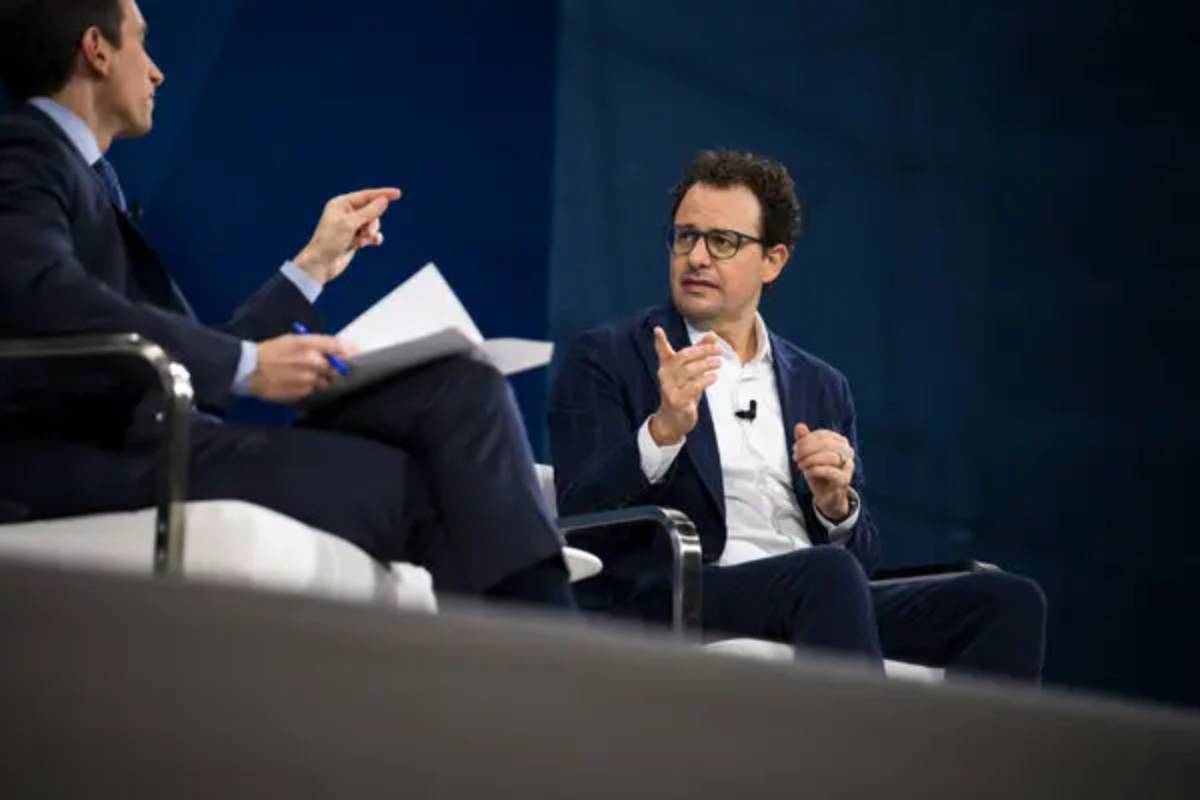
A critical debate at the heart of the global AI race is sharpening as Anthropic and its CEO Dario Amodei articulate a distinct vision for artificial intelligence—one rooted in safety, long-term risk mitigation, and controlled deployment. The stance is shaping capital flows, regulatory discussions, and competitive dynamics across the AI industry.

Anthropic, backed by major technology players and institutional capital, has positioned itself as a leading AI safety-focused company amid intensifying competition in frontier models. Amodei, a former OpenAI executive, has increasingly spoken about existential AI risks, governance guardrails, and the moral responsibility of developers.

The company’s philosophy draws intellectual influence from the effective altruism movement, emphasizing long-term societal impact over rapid commercialization. As AI systems grow more powerful, Anthropic is advocating for measured scaling, robust testing, and collaboration with regulators.

The debate comes at a time when global governments are accelerating AI policy frameworks, and when AI labs are racing to deploy increasingly advanced large language models.

The development aligns with a broader shift across global markets, where artificial intelligence has become both an economic engine and a geopolitical flashpoint. From Washington to Brussels and Beijing, policymakers are grappling with how to regulate frontier AI systems without stifling innovation.

Anthropic emerged as a rival to OpenAI, differentiating itself through its “constitutional AI” approach an attempt to embed ethical guidelines directly into model training. Its AI assistant, Claude, competes in a rapidly expanding enterprise AI market increasingly dominated by large cloud and platform providers.

The philosophical divide reflects deeper tensions in Silicon Valley: whether AI development should prioritize speed-to-market and competitive dominance, or deliberate safety research and global coordination. As AI capabilities scale toward what some describe as artificial general intelligence, the stakes economic, political, and societal are escalating.

Industry analysts note that Anthropic’s safety-forward doctrine could reshape the AI investment thesis. By publicly emphasizing long-term existential risk, Amodei has signaled that AI labs may need to adopt governance models closer to regulated industries such as biotech or nuclear energy.

Supporters argue that this cautious stance enhances credibility with policymakers and enterprise clients wary of reputational or legal exposure. Critics, however, suggest that overemphasis on speculative long-term risks could slow innovation and hand strategic advantage to less constrained global competitors.

Market observers also point to the growing role of institutional investors and sovereign actors in shaping AI trajectories. As capital commitments to frontier AI exceed billions of dollars, governance philosophy is no longer an academic debate it is a core determinant of valuation, partnerships, and global trust.

For global executives, Anthropic’s positioning signals that AI governance is becoming a competitive differentiator. Enterprises integrating advanced AI systems must now weigh not only performance metrics but also alignment, compliance readiness, and reputational safeguards.

Investors may increasingly scrutinize AI companies for risk disclosure, model evaluation transparency, and policy engagement strategies. Governments, meanwhile, could view Anthropic’s framework as a blueprint for collaborative oversight between private labs and regulators.

Companies operating in sensitive sectors finance, healthcare, defense may favor AI providers that demonstrate rigorous safety protocols. The result: a bifurcated AI market where speed and safety compete as parallel value propositions.

As frontier AI systems grow more capable, the philosophical divide between acceleration and restraint is set to intensify. Decision-makers should monitor regulatory alignment, cross-border AI standards, and how capital markets reward differing governance models.

Anthropic’s doctrine may not just shape one company’s strategy it could influence how the next generation of AI is built, deployed, and controlled worldwide.

Source: The New York Times
Date: February 18, 2026

  • Featured tools
Scalenut AI
Free

Scalenut AI is an all-in-one SEO content platform that combines AI-driven writing, keyword research, competitor insights, and optimization tools to help you plan, create, and rank content.

#
SEO
Learn more
Surfer AI
Free

Surfer AI is an AI-powered content creation assistant built into the Surfer SEO platform, designed to generate SEO-optimized articles from prompts, leveraging data from search results to inform tone, structure, and relevance.

#
SEO
Learn more

Learn more about future of AI

Join 80,000+ Ai enthusiast getting weekly updates on exciting AI tools.
Thank you! Your submission has been received!
Oops! Something went wrong while submitting the form.

Anthropic’s AI Doctrine Signals Strategic Fault Line in Global Tech Race

February 19, 2026

Anthropic, backed by major technology players and institutional capital, has positioned itself as a leading AI safety-focused company amid intensifying competition in frontier models.

A critical debate at the heart of the global AI race is sharpening as Anthropic and its CEO Dario Amodei articulate a distinct vision for artificial intelligence—one rooted in safety, long-term risk mitigation, and controlled deployment. The stance is shaping capital flows, regulatory discussions, and competitive dynamics across the AI industry.

Anthropic, backed by major technology players and institutional capital, has positioned itself as a leading AI safety-focused company amid intensifying competition in frontier models. Amodei, a former OpenAI executive, has increasingly spoken about existential AI risks, governance guardrails, and the moral responsibility of developers.

The company’s philosophy draws intellectual influence from the effective altruism movement, emphasizing long-term societal impact over rapid commercialization. As AI systems grow more powerful, Anthropic is advocating for measured scaling, robust testing, and collaboration with regulators.

The debate comes at a time when global governments are accelerating AI policy frameworks, and when AI labs are racing to deploy increasingly advanced large language models.

The development aligns with a broader shift across global markets, where artificial intelligence has become both an economic engine and a geopolitical flashpoint. From Washington to Brussels and Beijing, policymakers are grappling with how to regulate frontier AI systems without stifling innovation.

Anthropic emerged as a rival to OpenAI, differentiating itself through its “constitutional AI” approach an attempt to embed ethical guidelines directly into model training. Its AI assistant, Claude, competes in a rapidly expanding enterprise AI market increasingly dominated by large cloud and platform providers.

The philosophical divide reflects deeper tensions in Silicon Valley: whether AI development should prioritize speed-to-market and competitive dominance, or deliberate safety research and global coordination. As AI capabilities scale toward what some describe as artificial general intelligence, the stakes economic, political, and societal are escalating.

Industry analysts note that Anthropic’s safety-forward doctrine could reshape the AI investment thesis. By publicly emphasizing long-term existential risk, Amodei has signaled that AI labs may need to adopt governance models closer to regulated industries such as biotech or nuclear energy.

Supporters argue that this cautious stance enhances credibility with policymakers and enterprise clients wary of reputational or legal exposure. Critics, however, suggest that overemphasis on speculative long-term risks could slow innovation and hand strategic advantage to less constrained global competitors.

Market observers also point to the growing role of institutional investors and sovereign actors in shaping AI trajectories. As capital commitments to frontier AI exceed billions of dollars, governance philosophy is no longer an academic debate it is a core determinant of valuation, partnerships, and global trust.

For global executives, Anthropic’s positioning signals that AI governance is becoming a competitive differentiator. Enterprises integrating advanced AI systems must now weigh not only performance metrics but also alignment, compliance readiness, and reputational safeguards.

Investors may increasingly scrutinize AI companies for risk disclosure, model evaluation transparency, and policy engagement strategies. Governments, meanwhile, could view Anthropic’s framework as a blueprint for collaborative oversight between private labs and regulators.

Companies operating in sensitive sectors finance, healthcare, defense may favor AI providers that demonstrate rigorous safety protocols. The result: a bifurcated AI market where speed and safety compete as parallel value propositions.

As frontier AI systems grow more capable, the philosophical divide between acceleration and restraint is set to intensify. Decision-makers should monitor regulatory alignment, cross-border AI standards, and how capital markets reward differing governance models.

Anthropic’s doctrine may not just shape one company’s strategy it could influence how the next generation of AI is built, deployed, and controlled worldwide.

Source: The New York Times
Date: February 18, 2026

Promote Your Tool

Copy Embed Code

Similar Blogs

February 19, 2026
|

Macron Doubles Down on EU AI Rulebook Enforcement

Speaking amid intensifying global debate over AI regulation, Macron reaffirmed support for the EU’s landmark AI rulebook, widely known as the EU AI Act.
Read more
February 19, 2026
|

India France Push Global AI Democratization Agenda at Summit

Speaking at the India AI Impact Summit, Modi and Macron emphasized equitable access to AI tools, open innovation frameworks, and safeguards against technological monopolization.
Read more
February 19, 2026
|

Saudi Capital Powers Musk’s xAI Expansion in $3 Billion Strategic Bet

Saudi investment firm Humain has taken a $3 billion stake in xAI, the artificial intelligence venture launched by Elon Musk.
Read more
February 19, 2026
|

Palantir Wins Partial Legal Victory in AI Dispute

A significant legal development unfolded as Palantir Technologies secured a partial court victory in its dispute with former employees tied to an AI startup.
Read more
February 19, 2026
|

US Federal Agencies Accelerate AI Adoption to Meet Efficiency Mandates

Departments are consolidating human resources, procurement, financial management, and IT services into shared service centers.
Read more
February 19, 2026
|

Global Optics Dented as Gates Skips India AI Summit

The summit, positioned as a flagship gathering for India’s AI ecosystem, was expected to feature Bill Gates as a central speaker. His absence, reportedly communicated shortly before the event, created confusion among delegates and partners.
Read more