
Global Optics Dented as Gates Skips India AI Summit

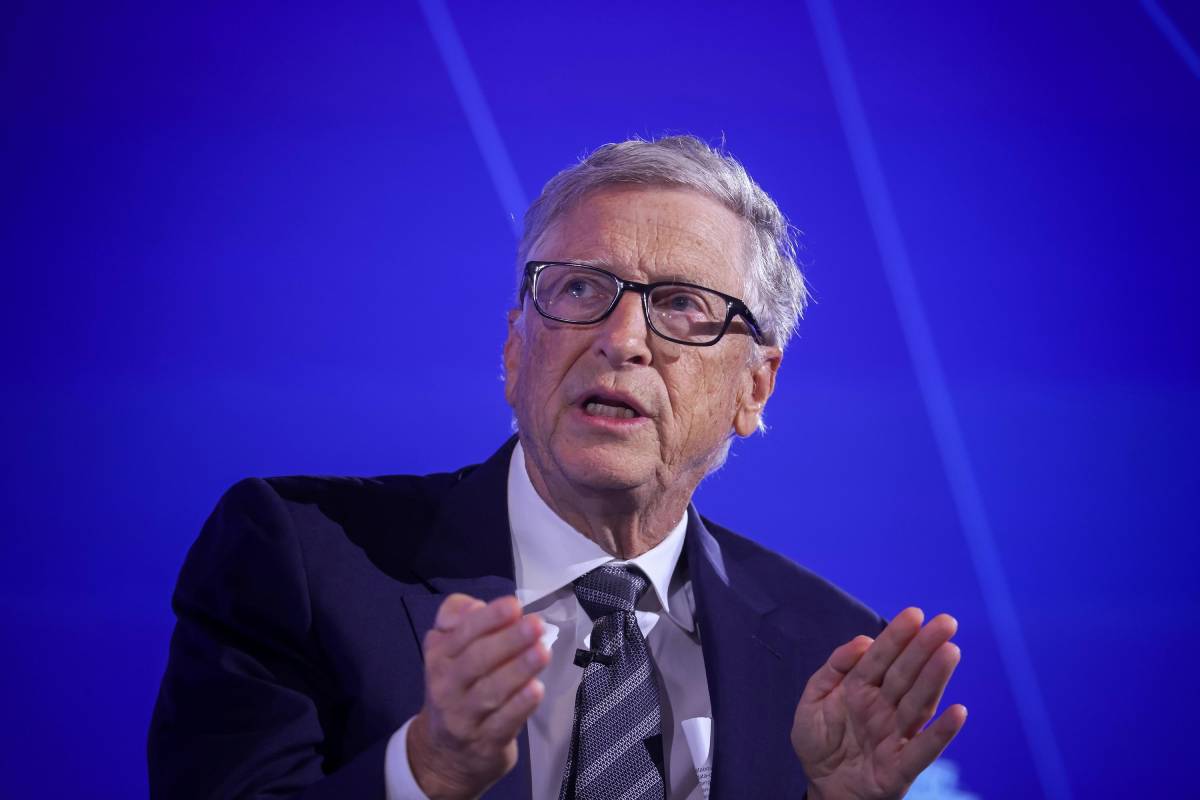
The summit, positioned as a flagship gathering for India’s AI ecosystem, was expected to feature Bill Gates as a central speaker. His absence, reportedly communicated shortly before the event, created confusion among delegates and partners.

February 19, 2026
|

A high profile India AI summit faced reputational strain after Bill Gates failed to deliver his scheduled keynote, with reports citing last minute cancellation and organisational disarray. The development has raised questions over event governance and India’s positioning as a credible global hub for artificial intelligence leadership.

The summit, positioned as a flagship gathering for India’s AI ecosystem, was expected to feature Bill Gates as a central speaker. His absence, reportedly communicated shortly before the event, created confusion among delegates and partners.

Organisers faced criticism over logistical lapses, coordination gaps, and inadequate contingency planning. Attendees reported scheduling inconsistencies and communication breakdowns during the proceedings.

The event was intended to spotlight India’s AI ambitions, attract foreign investment, and strengthen public private collaboration. Instead, the disruption shifted attention toward governance standards and execution capabilities.

The incident also triggered scrutiny across diplomatic and corporate circles, particularly given the summit’s international visibility.

India has been aggressively positioning itself as a global AI powerhouse, aligning policy frameworks with its broader digital transformation agenda. Under the banner of national AI missions and semiconductor initiatives, policymakers have sought to court global technology leaders and investors.

The participation of influential figures such as Bill Gates carries symbolic and strategic weight. As co founder of Microsoft and a leading global philanthropist through the Bill & Melinda Gates Foundation, Gates represents both technological credibility and development focused innovation.

In recent years, India has hosted multiple high level tech summits to reinforce its global standing, especially as AI becomes central to geopolitical competition between major economies. Against this backdrop, execution missteps risk diluting messaging at a time when nations are competing to attract AI capital, talent, and partnerships.

Industry analysts note that high visibility cancellations can quickly overshadow policy announcements. Event management experts argue that large scale international summits require multilayered coordination, especially when global figures are involved.

Technology strategists suggest the setback underscores the importance of institutional reliability in shaping investor confidence. In a competitive AI landscape, credibility is often as critical as capability.

While organisers reportedly expressed regret over the disruption, business leaders have emphasized the need for tighter communication protocols and stronger contingency frameworks. Corporate executives attending the summit highlighted that perception management matters significantly when courting multinational stakeholders.

Policy observers add that India’s AI narrative remains intact, but consistent delivery will be essential to reinforce trust among global partners. For businesses and investors, the episode serves as a reminder that ecosystem maturity extends beyond innovation to governance and execution. International corporations evaluating India as an AI destination will assess not only market scale but also institutional reliability.

Government stakeholders may need to recalibrate event oversight mechanisms and public private coordination models. Investors could demand clearer communication channels and stronger event management standards for future global engagements.

For domestic startups, the focus may shift toward reinforcing operational credibility to match technological ambition. Reputational risk, particularly in frontier sectors like AI, can influence capital flows and strategic partnerships.

Attention now turns to how organisers and policymakers respond. Swift corrective measures, transparent communication, and stronger institutional coordination will be critical ahead of future global AI forums.

India’s AI trajectory remains robust, but execution discipline will determine how effectively it converts ambition into sustained international confidence. For decision makers, credibility will be the ultimate differentiator.

Source: Yahoo News
Date: February 2026

  • Featured tools
Copy Ai
Free

Copy AI is one of the most popular AI writing tools designed to help professionals create high-quality content quickly. Whether you are a product manager drafting feature descriptions or a marketer creating ad copy, Copy AI can save hours of work while maintaining creativity and tone.

#
Copywriting
Learn more
Hostinger Website Builder
Paid

Hostinger Website Builder is a drag-and-drop website creator bundled with hosting and AI-powered tools, designed for businesses, blogs and small shops with minimal technical effort.It makes launching a site fast and affordable, with templates, responsive design and built-in hosting all in one.

#
Productivity
#
Startup Tools
#
Ecommerce
Learn more

Learn more about future of AI

Join 80,000+ Ai enthusiast getting weekly updates on exciting AI tools.
Thank you! Your submission has been received!
Oops! Something went wrong while submitting the form.

Global Optics Dented as Gates Skips India AI Summit

February 19, 2026

The summit, positioned as a flagship gathering for India’s AI ecosystem, was expected to feature Bill Gates as a central speaker. His absence, reportedly communicated shortly before the event, created confusion among delegates and partners.

A high profile India AI summit faced reputational strain after Bill Gates failed to deliver his scheduled keynote, with reports citing last minute cancellation and organisational disarray. The development has raised questions over event governance and India’s positioning as a credible global hub for artificial intelligence leadership.

The summit, positioned as a flagship gathering for India’s AI ecosystem, was expected to feature Bill Gates as a central speaker. His absence, reportedly communicated shortly before the event, created confusion among delegates and partners.

Organisers faced criticism over logistical lapses, coordination gaps, and inadequate contingency planning. Attendees reported scheduling inconsistencies and communication breakdowns during the proceedings.

The event was intended to spotlight India’s AI ambitions, attract foreign investment, and strengthen public private collaboration. Instead, the disruption shifted attention toward governance standards and execution capabilities.

The incident also triggered scrutiny across diplomatic and corporate circles, particularly given the summit’s international visibility.

India has been aggressively positioning itself as a global AI powerhouse, aligning policy frameworks with its broader digital transformation agenda. Under the banner of national AI missions and semiconductor initiatives, policymakers have sought to court global technology leaders and investors.

The participation of influential figures such as Bill Gates carries symbolic and strategic weight. As co founder of Microsoft and a leading global philanthropist through the Bill & Melinda Gates Foundation, Gates represents both technological credibility and development focused innovation.

In recent years, India has hosted multiple high level tech summits to reinforce its global standing, especially as AI becomes central to geopolitical competition between major economies. Against this backdrop, execution missteps risk diluting messaging at a time when nations are competing to attract AI capital, talent, and partnerships.

Industry analysts note that high visibility cancellations can quickly overshadow policy announcements. Event management experts argue that large scale international summits require multilayered coordination, especially when global figures are involved.

Technology strategists suggest the setback underscores the importance of institutional reliability in shaping investor confidence. In a competitive AI landscape, credibility is often as critical as capability.

While organisers reportedly expressed regret over the disruption, business leaders have emphasized the need for tighter communication protocols and stronger contingency frameworks. Corporate executives attending the summit highlighted that perception management matters significantly when courting multinational stakeholders.

Policy observers add that India’s AI narrative remains intact, but consistent delivery will be essential to reinforce trust among global partners. For businesses and investors, the episode serves as a reminder that ecosystem maturity extends beyond innovation to governance and execution. International corporations evaluating India as an AI destination will assess not only market scale but also institutional reliability.

Government stakeholders may need to recalibrate event oversight mechanisms and public private coordination models. Investors could demand clearer communication channels and stronger event management standards for future global engagements.

For domestic startups, the focus may shift toward reinforcing operational credibility to match technological ambition. Reputational risk, particularly in frontier sectors like AI, can influence capital flows and strategic partnerships.

Attention now turns to how organisers and policymakers respond. Swift corrective measures, transparent communication, and stronger institutional coordination will be critical ahead of future global AI forums.

India’s AI trajectory remains robust, but execution discipline will determine how effectively it converts ambition into sustained international confidence. For decision makers, credibility will be the ultimate differentiator.

Source: Yahoo News
Date: February 2026

Promote Your Tool

Copy Embed Code

Similar Blogs

February 19, 2026
|

Macron Doubles Down on EU AI Rulebook Enforcement

Speaking amid intensifying global debate over AI regulation, Macron reaffirmed support for the EU’s landmark AI rulebook, widely known as the EU AI Act.
Read more
February 19, 2026
|

India France Push Global AI Democratization Agenda at Summit

Speaking at the India AI Impact Summit, Modi and Macron emphasized equitable access to AI tools, open innovation frameworks, and safeguards against technological monopolization.
Read more
February 19, 2026
|

Saudi Capital Powers Musk’s xAI Expansion in $3 Billion Strategic Bet

Saudi investment firm Humain has taken a $3 billion stake in xAI, the artificial intelligence venture launched by Elon Musk.
Read more
February 19, 2026
|

Palantir Wins Partial Legal Victory in AI Dispute

A significant legal development unfolded as Palantir Technologies secured a partial court victory in its dispute with former employees tied to an AI startup.
Read more
February 19, 2026
|

US Federal Agencies Accelerate AI Adoption to Meet Efficiency Mandates

Departments are consolidating human resources, procurement, financial management, and IT services into shared service centers.
Read more
February 19, 2026
|

Global Optics Dented as Gates Skips India AI Summit

The summit, positioned as a flagship gathering for India’s AI ecosystem, was expected to feature Bill Gates as a central speaker. His absence, reportedly communicated shortly before the event, created confusion among delegates and partners.
Read more