
Apple Music Adds AI Playlist Playground in iOS 26.4

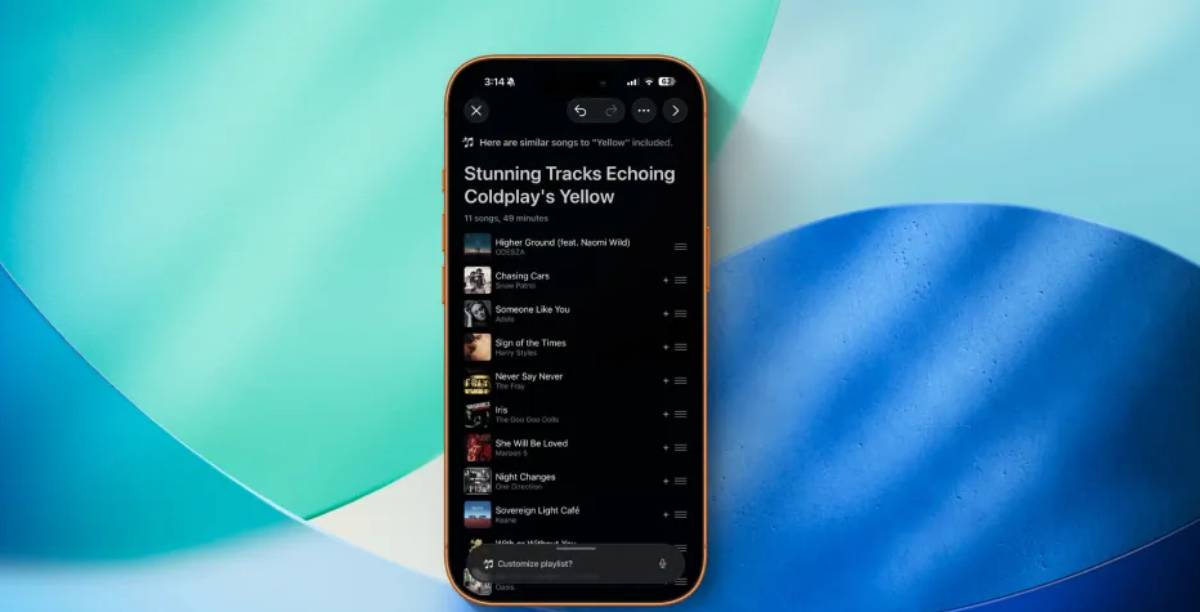
The iOS 26.4 beta introduces Playlist Playground, enabling users to generate custom playlists based on mood, activity, or past listening habits.

February 24, 2026
|

A major development unfolded today as Apple rolled out the iOS 26.4 beta featuring Playlist Playground, a generative AI tool for Apple Music that creates dynamic, personalized playlists. The update signals a strategic push to deepen AI-driven engagement and retention in the competitive music streaming market, impacting consumers, developers, and industry partners globally.

The iOS 26.4 beta introduces Playlist Playground, enabling users to generate custom playlists based on mood, activity, or past listening habits.

AI models scan a user’s library and suggest new combinations, incorporating trending tracks from Apple Music’s catalog. The feature leverages on-device processing to enhance privacy while maintaining real-time responsiveness.

The rollout is currently limited to beta testers but positions Apple to compete directly with AI-driven music recommendations from Spotify, YouTube Music, and other streaming platforms. Analysts note that this functionality could influence subscription decisions and engagement metrics as streaming personalization becomes a core differentiator.

The integration of AI into music streaming represents a broader trend where platforms increasingly rely on generative and predictive models to boost user engagement and subscription revenue. Personalized playlists have become a primary retention tool, with competitors like Spotify’s AI DJ and YouTube Music’s Smart Playlists already testing similar approaches.

Apple Music’s approach with Playlist Playground emphasizes on-device computation and privacy, addressing growing consumer and regulatory concerns over data usage. This aligns with Apple’s wider AI strategy, which blends user-centric design with machine learning, from iPhone camera enhancements to Siri improvements.

Historically, Apple has leveraged ecosystem lock-in devices, services, and content to maintain market share. AI-powered playlist creation strengthens that ecosystem, allowing deeper engagement within Apple Music while potentially drawing users away from rivals in a crowded global streaming market.

Apple executives describe Playlist Playground as a next-generation AI experience for Apple Music, designed to empower users to “discover and curate music intuitively.” Officials emphasize privacy safeguards, with machine learning models primarily operating on-device.

Industry analysts suggest this move could redefine competition in streaming, shifting focus from catalog size to AI-driven personalization capabilities. Engagement metrics, including listening time, retention, and playlist sharing, are expected to improve significantly if adoption grows.

Music industry stakeholders also highlight the potential to surface emerging artists via AI-curated playlists, potentially impacting royalty distributions and discovery pipelines. Analysts note that Apple’s combination of device integration and AI intelligence may set a new benchmark for subscription services, while regulatory scrutiny on algorithmic curation and data privacy could influence rollout strategies.

For global executives, Playlist Playground could reshape Apple Music’s competitive positioning, potentially increasing subscriptions and retention. Labels and content creators may see changes in royalty flows depending on AI-generated exposure patterns.

Investors may interpret AI-driven personalization as a differentiator supporting Apple’s service revenue growth, influencing valuation outlooks. Competitors in streaming may accelerate AI innovation to maintain engagement levels, intensifying market pressure.

From a policy perspective, Apple’s on-device AI approach addresses privacy concerns but may still attract regulatory attention regarding algorithmic recommendations, content visibility, and consumer transparency in AI curation. Companies will need to navigate evolving compliance standards while leveraging AI for commercial advantage.

The key test will be adoption rates among Apple Music subscribers and the feature’s ability to increase engagement metrics. Executives should watch how AI-curated playlists impact retention, subscription growth, and artist visibility.

Future updates may expand Playlist Playground to integrate cross-device synchronization and broader third-party content. The trajectory of AI in streaming will hinge on balancing personalization, privacy, and regulatory compliance.

Source: 9to5Mac
Date: February 16, 2026

  • Featured tools
Alli AI
Free

Alli AI is an all-in-one, AI-powered SEO automation platform that streamlines on-page optimization, site auditing, speed improvements, schema generation, internal linking, and ranking insights.

#
SEO
Learn more
Upscayl AI
Free

Upscayl AI is a free, open-source AI-powered tool that enhances and upscales images to higher resolutions. It transforms blurry or low-quality visuals into sharp, detailed versions with ease.

#
Productivity
Learn more

Learn more about future of AI

Join 80,000+ Ai enthusiast getting weekly updates on exciting AI tools.
Thank you! Your submission has been received!
Oops! Something went wrong while submitting the form.

Apple Music Adds AI Playlist Playground in iOS 26.4

February 24, 2026

The iOS 26.4 beta introduces Playlist Playground, enabling users to generate custom playlists based on mood, activity, or past listening habits.

A major development unfolded today as Apple rolled out the iOS 26.4 beta featuring Playlist Playground, a generative AI tool for Apple Music that creates dynamic, personalized playlists. The update signals a strategic push to deepen AI-driven engagement and retention in the competitive music streaming market, impacting consumers, developers, and industry partners globally.

The iOS 26.4 beta introduces Playlist Playground, enabling users to generate custom playlists based on mood, activity, or past listening habits.

AI models scan a user’s library and suggest new combinations, incorporating trending tracks from Apple Music’s catalog. The feature leverages on-device processing to enhance privacy while maintaining real-time responsiveness.

The rollout is currently limited to beta testers but positions Apple to compete directly with AI-driven music recommendations from Spotify, YouTube Music, and other streaming platforms. Analysts note that this functionality could influence subscription decisions and engagement metrics as streaming personalization becomes a core differentiator.

The integration of AI into music streaming represents a broader trend where platforms increasingly rely on generative and predictive models to boost user engagement and subscription revenue. Personalized playlists have become a primary retention tool, with competitors like Spotify’s AI DJ and YouTube Music’s Smart Playlists already testing similar approaches.

Apple Music’s approach with Playlist Playground emphasizes on-device computation and privacy, addressing growing consumer and regulatory concerns over data usage. This aligns with Apple’s wider AI strategy, which blends user-centric design with machine learning, from iPhone camera enhancements to Siri improvements.

Historically, Apple has leveraged ecosystem lock-in devices, services, and content to maintain market share. AI-powered playlist creation strengthens that ecosystem, allowing deeper engagement within Apple Music while potentially drawing users away from rivals in a crowded global streaming market.

Apple executives describe Playlist Playground as a next-generation AI experience for Apple Music, designed to empower users to “discover and curate music intuitively.” Officials emphasize privacy safeguards, with machine learning models primarily operating on-device.

Industry analysts suggest this move could redefine competition in streaming, shifting focus from catalog size to AI-driven personalization capabilities. Engagement metrics, including listening time, retention, and playlist sharing, are expected to improve significantly if adoption grows.

Music industry stakeholders also highlight the potential to surface emerging artists via AI-curated playlists, potentially impacting royalty distributions and discovery pipelines. Analysts note that Apple’s combination of device integration and AI intelligence may set a new benchmark for subscription services, while regulatory scrutiny on algorithmic curation and data privacy could influence rollout strategies.

For global executives, Playlist Playground could reshape Apple Music’s competitive positioning, potentially increasing subscriptions and retention. Labels and content creators may see changes in royalty flows depending on AI-generated exposure patterns.

Investors may interpret AI-driven personalization as a differentiator supporting Apple’s service revenue growth, influencing valuation outlooks. Competitors in streaming may accelerate AI innovation to maintain engagement levels, intensifying market pressure.

From a policy perspective, Apple’s on-device AI approach addresses privacy concerns but may still attract regulatory attention regarding algorithmic recommendations, content visibility, and consumer transparency in AI curation. Companies will need to navigate evolving compliance standards while leveraging AI for commercial advantage.

The key test will be adoption rates among Apple Music subscribers and the feature’s ability to increase engagement metrics. Executives should watch how AI-curated playlists impact retention, subscription growth, and artist visibility.

Future updates may expand Playlist Playground to integrate cross-device synchronization and broader third-party content. The trajectory of AI in streaming will hinge on balancing personalization, privacy, and regulatory compliance.

Source: 9to5Mac
Date: February 16, 2026

Promote Your Tool

Copy Embed Code

Similar Blogs

April 3, 2026
|

Zorq AI Targets Scalable Content Creation

Zorq AI offers an integrated platform enabling users to generate high-quality images and videos using AI-driven prompts and automation tools.
Read more
April 3, 2026
|

AI Website Builder Accelerates Wix Platform Evolution

Wix’s AI website builder allows users to generate complete websites through conversational prompts, eliminating the need for traditional coding or design expertise.
Read more
April 3, 2026
|

Gemini API Updates Boost Google AI Efficiency

The Gemini API now supports two modes: Flex Inference, enabling dynamic resource allocation to reduce costs for non-urgent workloads, and Priority Inference, which accelerates high-priority requests for time-sensitive applications.
Read more
April 3, 2026
|

Strategic AI Investments Highlight Market Recovery

The two AI stocks spotlighted operate in distinct segments: one focuses on cloud-based AI infrastructure, while the other delivers AI-powered analytics and automation solutions.
Read more
April 3, 2026
|

Microsoft Reduces OpenAI Reliance with AI Stack

Microsoft is expanding its in-house AI capabilities, investing across models, infrastructure, and developer tools to establish a vertically integrated AI stack.
Read more
April 3, 2026
|

AI Growth Pits Google Against Climate Goals

Google is reportedly planning a new AI-focused data center that could rely on a nearby natural gas power plant, deviating from its long-standing renewable energy strategy.
Read more