



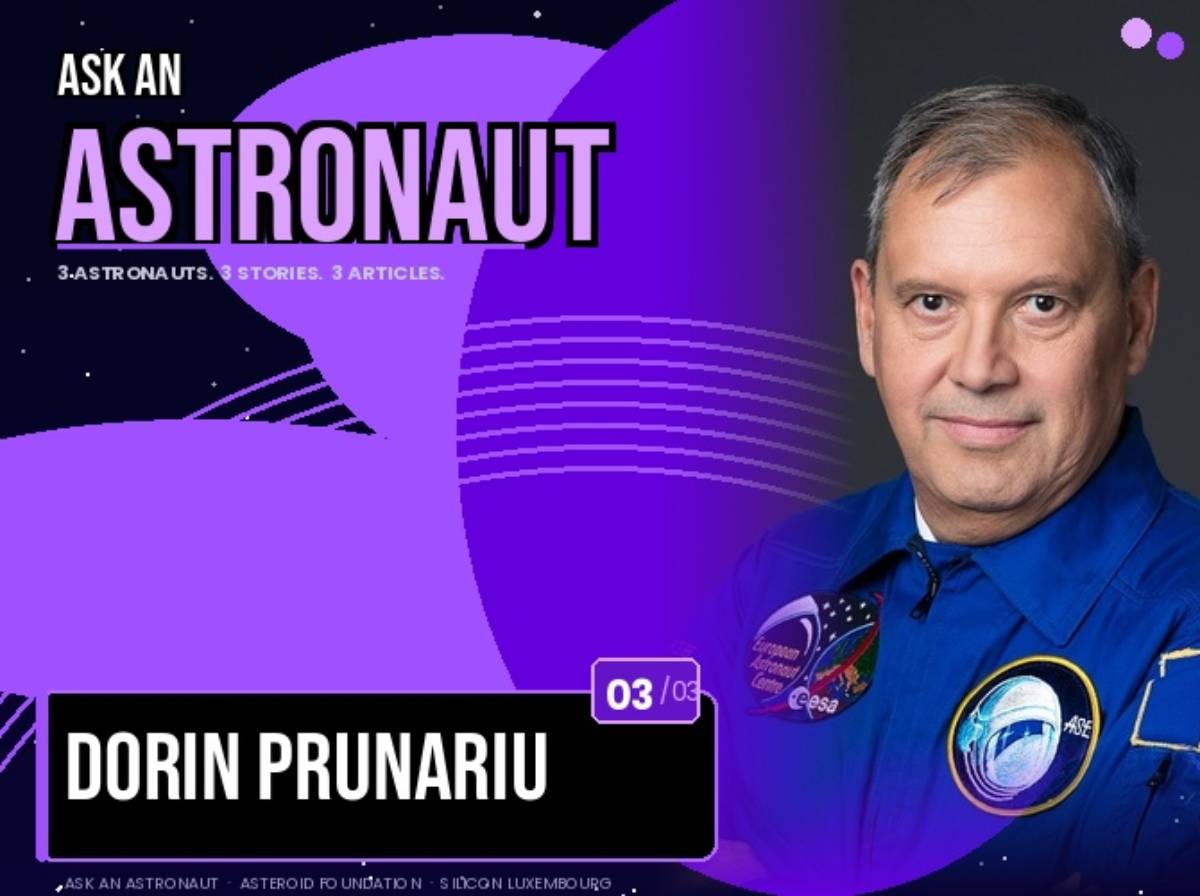
A renewed focus on asteroid science and planetary defense emerged as astronaut Dorin Prunariu shared insights ahead of Asteroid Day 2026. The discussion underscores the growing strategic importance of asteroid research for global security, scientific advancement, and the future commercialization of space resources.
In a special Asteroid Day 2026 feature, Dorin Prunariu reflected on the scientific, economic, and societal significance of asteroids. The conversation highlighted the importance of planetary defense initiatives, international cooperation in space exploration, and ongoing efforts to improve detection and monitoring capabilities.
The discussion comes as governments, space agencies, and private-sector companies increase investments in asteroid tracking technologies and deep-space missions. Key stakeholders include national space agencies, commercial space ventures, research institutions, and policymakers responsible for critical infrastructure protection.
The interview reinforces the growing recognition that asteroid science is no longer solely an academic pursuit but an emerging strategic priority. The development aligns with a broader trend across global space markets where asteroid monitoring and planetary defense are becoming increasingly important policy concerns. While the probability of a major asteroid impact remains low, experts agree that early detection capabilities are essential for mitigating potentially catastrophic risks.
In recent years, international efforts have accelerated through missions designed to study asteroids and test planetary defense technologies. The successful demonstration of asteroid-deflection capabilities by major space agencies has helped transform the field from theoretical research into practical risk management.
Beyond defense considerations, asteroids are attracting interest because of their potential resource value. Scientists and entrepreneurs have long identified certain asteroids as potential sources of rare metals and materials that could support future space-based economies.
Luxembourg itself has positioned itself as a leading advocate of the emerging space resources sector, making asteroid-related discussions particularly relevant to its innovation ecosystem and long-term economic strategy.
Space experts increasingly describe asteroid research as a convergence point between science, security, and commercial opportunity. Analysts argue that advances in observation technologies, artificial intelligence, and satellite infrastructure are significantly improving humanity’s ability to detect and characterize near-Earth objects.
Veteran astronauts such as Dorin Prunariu have consistently emphasized the value of international cooperation in addressing planetary-scale challenges. Experts note that asteroid threats do not recognize national borders, making coordinated global action essential.
Industry leaders also point to the growing commercial dimension of asteroid exploration. While large-scale asteroid mining remains a long-term prospect, research conducted today could establish the technological foundations for future resource extraction and in-space manufacturing.
Policy observers suggest that sustained public engagement initiatives such as Asteroid Day play an important role in raising awareness, encouraging STEM education, and fostering support for long-term space investments.
For businesses, increasing interest in asteroid science may create opportunities across aerospace engineering, satellite services, data analytics, robotics, and advanced materials development. Companies involved in space infrastructure could benefit from growing public and private investment in exploration and monitoring technologies.
Investors may view asteroid-related technologies as part of a broader expansion of the global space economy, which continues to attract capital and strategic attention. For policymakers, the discussion reinforces the need for continued investment in planetary defense capabilities, international coordination mechanisms, and space governance frameworks. Governments must also address legal and regulatory questions surrounding future space-resource utilization as commercial activity beyond Earth becomes increasingly viable.
Asteroid research is expected to remain a growing priority for both governments and private-sector innovators. Decision-makers should monitor upcoming planetary defense missions, advancements in observation technologies, and evolving international frameworks governing space resources.
As humanity expands its presence beyond Earth, asteroids may increasingly be viewed not only as potential hazards but also as strategic assets that shape the future of exploration, security, and economic development.
Source: Silicon Luxembourg
Date: June 25, 2026


