



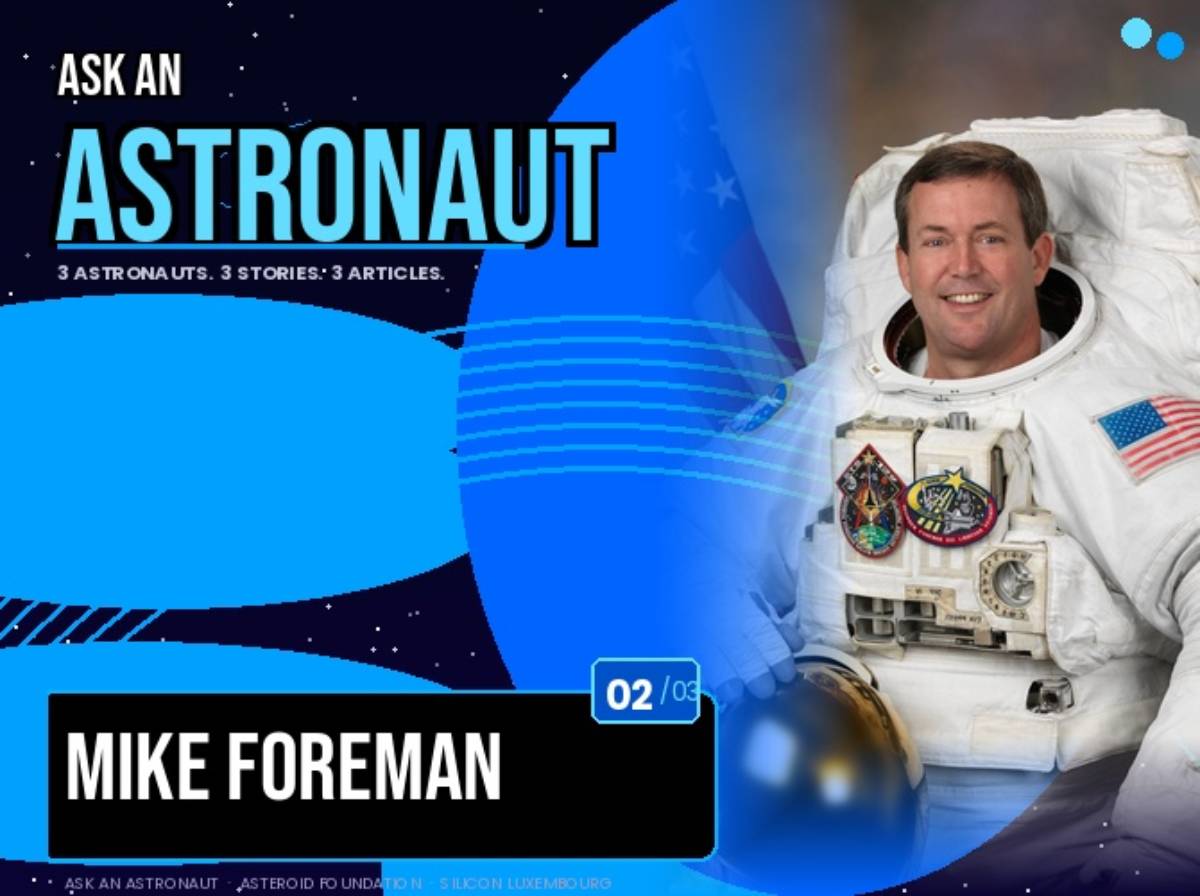
A fresh spotlight has been placed on the future of human space exploration as former astronaut Mike Foreman shared insights on spacewalks and orbital operations ahead of Asteroid Day 2026. His perspectives arrive at a pivotal moment when governments and private companies are accelerating investments in space infrastructure, lunar missions, and commercial orbital activities.
As part of Asteroid Day 2026 activities, veteran astronaut Mike Foreman discussed the realities of conducting spacewalks and the evolving demands of human operations beyond Earth. The conversation highlighted technological advances, operational challenges, and the growing role of astronauts in maintaining increasingly sophisticated space infrastructure.
The discussion comes amid expanding international interest in lunar exploration, commercial space stations, and deep-space missions. Key stakeholders include national space agencies, private aerospace firms, investors, and emerging space startups.
Foreman's insights underscore how human expertise remains critical even as automation and artificial intelligence become more integrated into modern space missions and orbital operations.
Spacewalks remain among the most complex and high-risk activities in human spaceflight. Since the early days of orbital exploration, astronauts have relied on extravehicular activities (EVAs) to repair satellites, maintain space stations, and install critical infrastructure.
Today, the global space sector is undergoing a major transformation. Governments are investing heavily in lunar exploration programs, while private companies are developing commercial stations, reusable launch vehicles, and space-based services. This shift is creating new opportunities for both established aerospace contractors and emerging startups.
The discussion around astronaut expertise is particularly relevant as the industry balances automation with human oversight. While robotics and AI continue to improve, many mission-critical tasks still require human judgment, adaptability, and decision-making in unpredictable environments.
The development aligns with a broader trend where the space economy is evolving from government-led exploration toward commercially driven infrastructure and services. Space industry analysts frequently emphasize that human spaceflight capabilities remain a strategic asset despite rapid advances in autonomous systems. Experts note that spacewalks require a combination of technical precision, situational awareness, and problem-solving skills that remain difficult to fully replicate through automation.
Foreman's observations reinforce a growing consensus within the aerospace sector that future missions will depend on collaboration between astronauts, robotic systems, and AI-enabled tools. Industry leaders increasingly view this hybrid approach as essential for long-duration lunar and Mars missions.
Commercial space executives also argue that experienced astronauts provide valuable operational insights that influence spacecraft design, safety protocols, and mission planning. As private-sector participation expands, lessons learned from veteran astronauts continue to shape industry standards and best practices.
The broader message is that human expertise remains a foundational component of the next generation of space exploration. For businesses, the growing emphasis on human operations in space creates opportunities across aerospace engineering, robotics, advanced materials, communications, and mission support services. Companies supporting astronaut safety and operational efficiency may benefit from increased investment as orbital infrastructure expands.
Investors are increasingly viewing space as a long-term growth sector, particularly in areas tied to satellite services, launch capabilities, and space-based manufacturing. Insights from experienced astronauts help validate the technological and operational requirements of these emerging markets.
For policymakers, the discussion reinforces the need for international cooperation, safety frameworks, workforce development, and regulatory clarity as commercial activities beyond Earth continue to accelerate.
As governments and private companies pursue ambitious lunar and deep-space missions, demand for experienced operational expertise is expected to grow. Decision-makers should monitor developments in commercial space stations, astronaut training programs, and AI-assisted mission systems. While automation will play a larger role, the future of space exploration is likely to remain a partnership between human judgment and advanced technology for decades to come.
Source: Silicon Luxembourg
Date: June 24, 2026


