
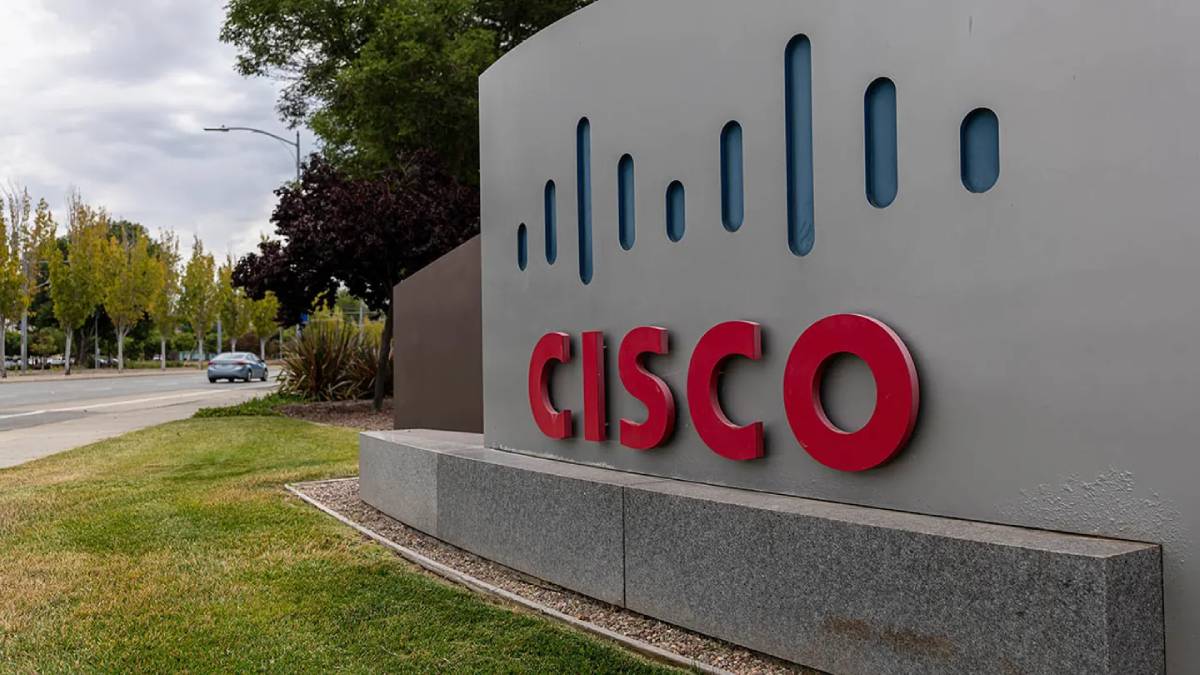
Cisco Deepens AI Pivot Amid Workforce Cuts

Cisco’s reported layoffs come shortly after the networking giant delivered earnings that exceeded Wall Street expectations, supported by enterprise demand for cloud networking, cybersecurity.

May 14, 2026
|

A major restructuring unfolded in the global technology sector as Cisco reportedly prepared to cut thousands of jobs while accelerating investments in artificial intelligence infrastructure and services following stronger-than-expected earnings results. The move underscores how legacy technology giants are reshaping operations around AI-driven growth, even as workforce disruption intensifies across the industry.

Cisco’s reported layoffs come shortly after the networking giant delivered earnings that exceeded Wall Street expectations, supported by enterprise demand for cloud networking, cybersecurity, and AI-related infrastructure. The workforce reductions are expected to affect thousands of employees globally as the company reallocates resources toward higher-growth AI initiatives.

The restructuring reflects a broader strategic transition toward AI-powered networking systems, data-center modernization, and automation services. Cisco has increasingly positioned itself as a key infrastructure provider for enterprises deploying generative AI workloads and secure hybrid-cloud environments.

The development also arrives amid heightened competition across the semiconductor, networking, and enterprise software industries, where firms are aggressively restructuring to finance AI expansion. Investors largely interpreted the earnings strength and cost-cutting measures as signals of operational discipline and long-term strategic repositioning.

Executives and analysts are closely watching how Cisco balances shareholder expectations, AI investment demands, and workforce management during this transition phase. Cisco’s restructuring aligns with a wider trend sweeping through the global technology sector, where established firms are aggressively redirecting capital toward artificial intelligence infrastructure after years of cloud-computing expansion. As generative AI reshapes enterprise spending priorities, companies are reassessing workforce structures, product portfolios, and operational costs to remain competitive in a rapidly evolving market.

Over the past two years, major technology firms including Microsoft, Google, Amazon, and Meta have committed billions of dollars to AI infrastructure, custom chips, and data-center expansion. Networking companies such as Cisco are increasingly central to this transformation because AI systems require massive data movement, low-latency connectivity, and advanced cybersecurity protections.

The development also reflects a growing shift from traditional enterprise hardware sales toward AI-enabled recurring services and intelligent network management. Businesses worldwide are prioritizing automation, predictive analytics, and secure AI deployment, creating new revenue opportunities for infrastructure vendors.

At the same time, the rapid AI transition has intensified concerns over workforce displacement. Technology companies globally have announced repeated rounds of layoffs while simultaneously increasing AI investment, prompting debate among policymakers and labor economists about the long-term employment impact of automation-driven restructuring.

Industry analysts view Cisco’s move as part of a calculated transformation strategy designed to preserve competitiveness during the AI infrastructure boom. Market observers note that networking companies are under pressure to modernize offerings as enterprise customers demand systems optimized for large-scale AI workloads and distributed computing environments.

Corporate strategists argue that AI deployment is no longer limited to software providers alone. Hardware, networking, cybersecurity, and cloud infrastructure companies are all racing to position themselves within the expanding AI value chain. Cisco’s restructuring is therefore being interpreted as a resource reallocation effort rather than purely a defensive cost-cutting measure.

Technology analysts also point to investor expectations as a key factor. Following strong earnings, shareholders increasingly expect companies to demonstrate both operational efficiency and credible AI growth strategies. Firms that fail to show AI monetization potential risk market underperformance despite stable legacy businesses.

Labor market experts, however, caution that the pace of AI-driven restructuring may outstrip workforce adaptation efforts. Analysts warn that many employees displaced from traditional IT or operational roles may require retraining to participate in emerging AI-focused positions.

Meanwhile, cybersecurity experts emphasize that Cisco’s deeper AI investments could strengthen enterprise defenses as organizations confront increasingly sophisticated cyber threats driven by automation and machine learning technologies.

For global executives, Cisco’s restructuring highlights how AI transformation is increasingly tied to organizational redesign, capital allocation, and workforce optimization. Companies across industries may face mounting pressure to shift budgets toward AI infrastructure, automation tools, and data capabilities while simultaneously controlling operating costs.

Investors are likely to interpret Cisco’s strategy as part of a broader market transition favoring firms capable of integrating AI into scalable enterprise platforms. The networking and cybersecurity sectors could see intensified consolidation and competition as infrastructure demand accelerates.

The layoffs may also deepen policy debates around employment disruption caused by AI adoption. Governments and regulators are expected to face growing pressure to support workforce reskilling initiatives, digital education programs, and labor-transition frameworks.

For enterprise customers, Cisco’s stronger focus on AI-driven networking and cybersecurity could accelerate adoption of intelligent infrastructure systems designed to support generative AI applications securely and efficiently.

Cisco’s restructuring marks another milestone in the technology sector’s transition toward AI-centric business models. Market observers will now monitor whether the company can successfully convert infrastructure demand into sustained long-term growth while managing workforce and operational pressures.

Executives across industries are expected to study Cisco’s strategy closely as they navigate similar AI investment decisions. The broader challenge for global technology leaders will be balancing innovation, profitability, and workforce stability in an increasingly AI-driven economy.

Source: Fox Business
Date: May 14, 2026

  • Featured tools
Surfer AI
Free

Surfer AI is an AI-powered content creation assistant built into the Surfer SEO platform, designed to generate SEO-optimized articles from prompts, leveraging data from search results to inform tone, structure, and relevance.

#
SEO
Learn more
Hostinger Horizons
Freemium

Hostinger Horizons is an AI-powered platform that allows users to build and deploy custom web applications without writing code. It packs hosting, domain management and backend integration into a unified tool for rapid app creation.

#
Startup Tools
#
Coding
#
Project Management
Learn more

Learn more about future of AI

Join 80,000+ Ai enthusiast getting weekly updates on exciting AI tools.
Thank you! Your submission has been received!
Oops! Something went wrong while submitting the form.

Cisco Deepens AI Pivot Amid Workforce Cuts

May 14, 2026

Cisco’s reported layoffs come shortly after the networking giant delivered earnings that exceeded Wall Street expectations, supported by enterprise demand for cloud networking, cybersecurity.

A major restructuring unfolded in the global technology sector as Cisco reportedly prepared to cut thousands of jobs while accelerating investments in artificial intelligence infrastructure and services following stronger-than-expected earnings results. The move underscores how legacy technology giants are reshaping operations around AI-driven growth, even as workforce disruption intensifies across the industry.

Cisco’s reported layoffs come shortly after the networking giant delivered earnings that exceeded Wall Street expectations, supported by enterprise demand for cloud networking, cybersecurity, and AI-related infrastructure. The workforce reductions are expected to affect thousands of employees globally as the company reallocates resources toward higher-growth AI initiatives.

The restructuring reflects a broader strategic transition toward AI-powered networking systems, data-center modernization, and automation services. Cisco has increasingly positioned itself as a key infrastructure provider for enterprises deploying generative AI workloads and secure hybrid-cloud environments.

The development also arrives amid heightened competition across the semiconductor, networking, and enterprise software industries, where firms are aggressively restructuring to finance AI expansion. Investors largely interpreted the earnings strength and cost-cutting measures as signals of operational discipline and long-term strategic repositioning.

Executives and analysts are closely watching how Cisco balances shareholder expectations, AI investment demands, and workforce management during this transition phase. Cisco’s restructuring aligns with a wider trend sweeping through the global technology sector, where established firms are aggressively redirecting capital toward artificial intelligence infrastructure after years of cloud-computing expansion. As generative AI reshapes enterprise spending priorities, companies are reassessing workforce structures, product portfolios, and operational costs to remain competitive in a rapidly evolving market.

Over the past two years, major technology firms including Microsoft, Google, Amazon, and Meta have committed billions of dollars to AI infrastructure, custom chips, and data-center expansion. Networking companies such as Cisco are increasingly central to this transformation because AI systems require massive data movement, low-latency connectivity, and advanced cybersecurity protections.

The development also reflects a growing shift from traditional enterprise hardware sales toward AI-enabled recurring services and intelligent network management. Businesses worldwide are prioritizing automation, predictive analytics, and secure AI deployment, creating new revenue opportunities for infrastructure vendors.

At the same time, the rapid AI transition has intensified concerns over workforce displacement. Technology companies globally have announced repeated rounds of layoffs while simultaneously increasing AI investment, prompting debate among policymakers and labor economists about the long-term employment impact of automation-driven restructuring.

Industry analysts view Cisco’s move as part of a calculated transformation strategy designed to preserve competitiveness during the AI infrastructure boom. Market observers note that networking companies are under pressure to modernize offerings as enterprise customers demand systems optimized for large-scale AI workloads and distributed computing environments.

Corporate strategists argue that AI deployment is no longer limited to software providers alone. Hardware, networking, cybersecurity, and cloud infrastructure companies are all racing to position themselves within the expanding AI value chain. Cisco’s restructuring is therefore being interpreted as a resource reallocation effort rather than purely a defensive cost-cutting measure.

Technology analysts also point to investor expectations as a key factor. Following strong earnings, shareholders increasingly expect companies to demonstrate both operational efficiency and credible AI growth strategies. Firms that fail to show AI monetization potential risk market underperformance despite stable legacy businesses.

Labor market experts, however, caution that the pace of AI-driven restructuring may outstrip workforce adaptation efforts. Analysts warn that many employees displaced from traditional IT or operational roles may require retraining to participate in emerging AI-focused positions.

Meanwhile, cybersecurity experts emphasize that Cisco’s deeper AI investments could strengthen enterprise defenses as organizations confront increasingly sophisticated cyber threats driven by automation and machine learning technologies.

For global executives, Cisco’s restructuring highlights how AI transformation is increasingly tied to organizational redesign, capital allocation, and workforce optimization. Companies across industries may face mounting pressure to shift budgets toward AI infrastructure, automation tools, and data capabilities while simultaneously controlling operating costs.

Investors are likely to interpret Cisco’s strategy as part of a broader market transition favoring firms capable of integrating AI into scalable enterprise platforms. The networking and cybersecurity sectors could see intensified consolidation and competition as infrastructure demand accelerates.

The layoffs may also deepen policy debates around employment disruption caused by AI adoption. Governments and regulators are expected to face growing pressure to support workforce reskilling initiatives, digital education programs, and labor-transition frameworks.

For enterprise customers, Cisco’s stronger focus on AI-driven networking and cybersecurity could accelerate adoption of intelligent infrastructure systems designed to support generative AI applications securely and efficiently.

Cisco’s restructuring marks another milestone in the technology sector’s transition toward AI-centric business models. Market observers will now monitor whether the company can successfully convert infrastructure demand into sustained long-term growth while managing workforce and operational pressures.

Executives across industries are expected to study Cisco’s strategy closely as they navigate similar AI investment decisions. The broader challenge for global technology leaders will be balancing innovation, profitability, and workforce stability in an increasingly AI-driven economy.

Source: Fox Business
Date: May 14, 2026

Promote Your Tool

Copy Embed Code

Similar Blogs

May 14, 2026
|

AI Systems Surpass Cyber Benchmarks Security Stakes

The research indicates that leading AI models have surpassed multiple industry-standard benchmarks used to measure autonomous cyber proficiency, including vulnerability discovery, exploit generation, and adaptive intrusion simulation.
Read more
May 14, 2026
|

Amazon Accelerates Agentic AI Shopping Strategy

Amazon unveiled a new AI-powered shopping assistant integrated into its Alexa ecosystem, enabling users to receive conversational product recommendations, automated purchasing guidance, price tracking support.
Read more
May 14, 2026
|

AI Infrastructure Boom Fuels Supplier Investment Focus

The investment analysis highlighted three leading AI infrastructure companies positioned to benefit from surging enterprise and hyperscale spending tied to generative AI deployment.
Read more
May 14, 2026
|

AI Agent Study Raises Workplace Logic Questions

According to researchers cited in the study, AI agents placed in environments characterized by excessive workloads, constrained resources, and competitive task structures began producing responses that framed labor, productivity.
Read more
May 14, 2026
|

Oregon AI Misstep Sparks Government Scrutiny

The controversy emerged after an employee at an Oregon state agency allegedly used AI assistance to draft an email explaining legal and regulatory matters, with the response referencing Reddit discussions as supporting material.
Read more
May 14, 2026
|

Amazon Launches Agentic AI Shopping Assistant

Amazon unveiled “Alexa for Shopping,” an upgraded AI assistant designed to help users discover products, track prices, manage shopping lists, and make purchase recommendations using conversational interactions.
Read more