
Claude AI Code Leak Sparks Alarm

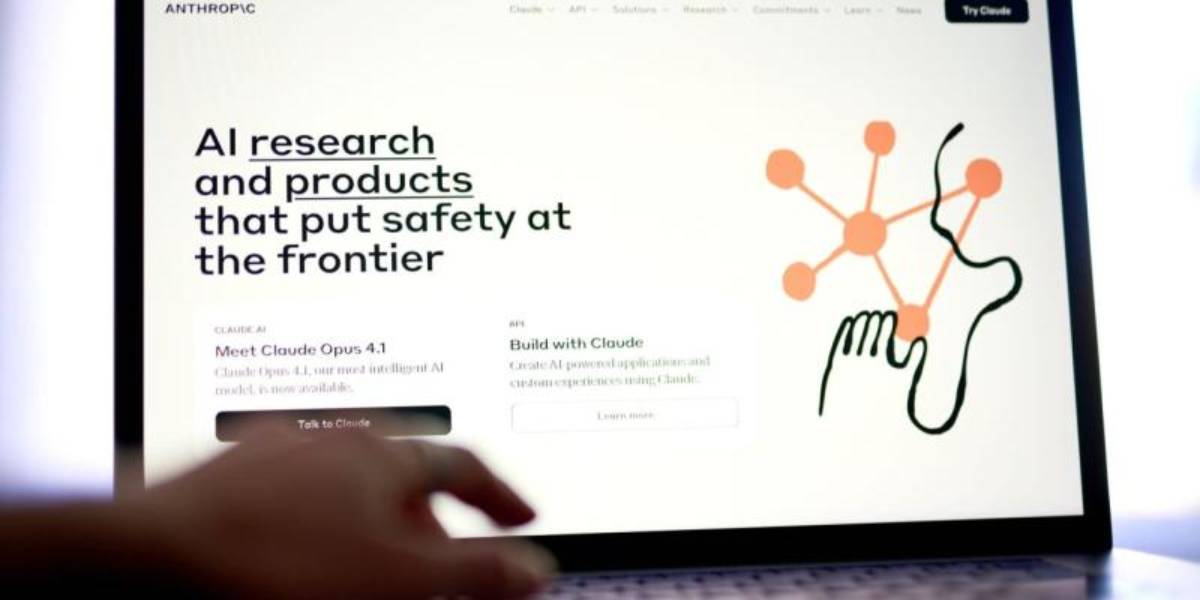
Anthropic confirmed that portions of internal code related to its Claude AI agent were exposed online, triggering immediate containment efforts. The company acted quickly to remove access points and assess the scope of the leak.

April 2, 2026
|

A major development unfolded as Anthropic moved swiftly to contain a leak of sensitive code tied to its Claude AI agent. The breach underscores escalating risks in the AI race, with implications for intellectual property protection, enterprise security, and competitive positioning across global technology markets.

Anthropic confirmed that portions of internal code related to its Claude AI agent were exposed online, triggering immediate containment efforts. The company acted quickly to remove access points and assess the scope of the leak.

The incident comes at a time of intensifying competition among leading AI developers, where proprietary models and agent frameworks are critical assets. Early indications suggest the leak may not involve core model weights but still exposes operational architecture and tooling.

Key stakeholders include enterprise clients, developers integrating Claude, and regulators increasingly focused on AI governance. The breach raises concerns about data security standards, vendor trust, and the resilience of AI infrastructure in high-stakes commercial environments.

The development aligns with a broader trend across global markets where AI systems are becoming both strategic assets and potential vulnerabilities. Companies like Anthropic, alongside rivals such as OpenAI and Google DeepMind, are investing heavily in AI agents capable of autonomous decision-making and enterprise task execution.

These systems rely on complex codebases, proprietary workflows, and secure deployment pipelines making them attractive targets for leaks or cyber incidents. Previous concerns around AI safety have largely focused on model misuse and bias, but this incident shifts attention toward operational security and intellectual property protection.

As AI adoption accelerates across industries from finance to healthcare the exposure of even partial system architecture could provide competitors or malicious actors with insights into design strategies, vulnerabilities, or deployment methods. This raises the stakes for cybersecurity in the AI era.

Industry analysts view the incident as a critical test of how AI firms manage operational risk in a highly competitive environment. Cybersecurity experts note that while model weights are the crown jewels, supporting code and orchestration layers are equally sensitive, as they reveal how systems function in real-world applications.

Anthropic has indicated that it is actively investigating the source and impact of the leak while reinforcing safeguards. Experts suggest that even limited exposure can accelerate reverse engineering or replication efforts by competitors.

From a governance perspective, the incident may strengthen calls for standardized security protocols in AI development. Analysts emphasize that as AI agents become embedded in enterprise workflows, stakeholders will demand higher transparency around risk management, incident response, and system integrity.

For global executives, the incident highlights the urgent need to reassess vendor risk and cybersecurity frameworks when deploying AI solutions. Enterprises relying on third-party AI platforms may need stricter due diligence, contractual safeguards, and contingency planning.

Investors could interpret such घटनाओं as signals of operational vulnerability in high-growth AI firms, potentially influencing valuations and risk premiums. Meanwhile, regulators may accelerate efforts to define security standards for AI systems, particularly those handling sensitive enterprise data.

The leak also underscores competitive pressures, where even minor exposures can shift the balance in a rapidly evolving market. Companies must now treat AI infrastructure security as a board-level priority.

Going forward, the focus will be on the extent of the leak’s impact and whether it leads to competitive or security fallout. Decision-makers should watch for tighter regulatory scrutiny, enhanced security protocols, and potential shifts in enterprise trust toward AI vendors.

As the AI race intensifies, safeguarding intellectual property and system integrity will be as critical as innovation itself.

Source: The Wall Street Journal
Date: April 2026

  • Featured tools
Neuron AI
Free

Neuron AI is an AI-driven content optimization platform that helps creators produce SEO-friendly content by combining semantic SEO, competitor analysis, and AI-assisted writing workflows.

#
SEO
Learn more
Outplay AI
Free

Outplay AI is a dynamic sales engagement platform combining AI-powered outreach, multi-channel automation, and performance tracking to help teams optimize conversion and pipeline generation.

#
Sales
Learn more

Learn more about future of AI

Join 80,000+ Ai enthusiast getting weekly updates on exciting AI tools.
Thank you! Your submission has been received!
Oops! Something went wrong while submitting the form.

Claude AI Code Leak Sparks Alarm

April 2, 2026

Anthropic confirmed that portions of internal code related to its Claude AI agent were exposed online, triggering immediate containment efforts. The company acted quickly to remove access points and assess the scope of the leak.

A major development unfolded as Anthropic moved swiftly to contain a leak of sensitive code tied to its Claude AI agent. The breach underscores escalating risks in the AI race, with implications for intellectual property protection, enterprise security, and competitive positioning across global technology markets.

Anthropic confirmed that portions of internal code related to its Claude AI agent were exposed online, triggering immediate containment efforts. The company acted quickly to remove access points and assess the scope of the leak.

The incident comes at a time of intensifying competition among leading AI developers, where proprietary models and agent frameworks are critical assets. Early indications suggest the leak may not involve core model weights but still exposes operational architecture and tooling.

Key stakeholders include enterprise clients, developers integrating Claude, and regulators increasingly focused on AI governance. The breach raises concerns about data security standards, vendor trust, and the resilience of AI infrastructure in high-stakes commercial environments.

The development aligns with a broader trend across global markets where AI systems are becoming both strategic assets and potential vulnerabilities. Companies like Anthropic, alongside rivals such as OpenAI and Google DeepMind, are investing heavily in AI agents capable of autonomous decision-making and enterprise task execution.

These systems rely on complex codebases, proprietary workflows, and secure deployment pipelines making them attractive targets for leaks or cyber incidents. Previous concerns around AI safety have largely focused on model misuse and bias, but this incident shifts attention toward operational security and intellectual property protection.

As AI adoption accelerates across industries from finance to healthcare the exposure of even partial system architecture could provide competitors or malicious actors with insights into design strategies, vulnerabilities, or deployment methods. This raises the stakes for cybersecurity in the AI era.

Industry analysts view the incident as a critical test of how AI firms manage operational risk in a highly competitive environment. Cybersecurity experts note that while model weights are the crown jewels, supporting code and orchestration layers are equally sensitive, as they reveal how systems function in real-world applications.

Anthropic has indicated that it is actively investigating the source and impact of the leak while reinforcing safeguards. Experts suggest that even limited exposure can accelerate reverse engineering or replication efforts by competitors.

From a governance perspective, the incident may strengthen calls for standardized security protocols in AI development. Analysts emphasize that as AI agents become embedded in enterprise workflows, stakeholders will demand higher transparency around risk management, incident response, and system integrity.

For global executives, the incident highlights the urgent need to reassess vendor risk and cybersecurity frameworks when deploying AI solutions. Enterprises relying on third-party AI platforms may need stricter due diligence, contractual safeguards, and contingency planning.

Investors could interpret such घटनाओं as signals of operational vulnerability in high-growth AI firms, potentially influencing valuations and risk premiums. Meanwhile, regulators may accelerate efforts to define security standards for AI systems, particularly those handling sensitive enterprise data.

The leak also underscores competitive pressures, where even minor exposures can shift the balance in a rapidly evolving market. Companies must now treat AI infrastructure security as a board-level priority.

Going forward, the focus will be on the extent of the leak’s impact and whether it leads to competitive or security fallout. Decision-makers should watch for tighter regulatory scrutiny, enhanced security protocols, and potential shifts in enterprise trust toward AI vendors.

As the AI race intensifies, safeguarding intellectual property and system integrity will be as critical as innovation itself.

Source: The Wall Street Journal
Date: April 2026

Promote Your Tool

Copy Embed Code

Similar Blogs

June 26, 2026
|

AlpineAI Raises Seed Round

AlpineAI has successfully closed a double-digit million seed funding round aimed at accelerating the development of sovereign AI technologies.
Read more
June 26, 2026
|

BLP Digital Raises $50M Funding Round

BLP Digital has secured $50 million in strategic funding from Goldman Sachs to accelerate the expansion of its AI-driven enterprise solutions.
Read more
June 26, 2026
|

Giotto AI RUAG Secure AI

Giotto.ai and RUAG have entered into a cooperation agreement focused on the distribution and deployment of state-of-the-art AI solutions across defense and industrial domains.
Read more
June 26, 2026
|

Fruitful AI Secures Funding Round

Fruitful AI has successfully completed a strategic investment round, strengthening its financial position to scale operations and enhance its AI-driven product suite.
Read more
June 26, 2026
|

Visium Raises AI Funding Round

Visium has successfully raised fresh funding aimed at scaling its operations across key European markets and expanding deeper into the US enterprise AI ecosystem.
Read more
June 26, 2026
|

Nuclidium Raises CHF 105M Series B

Nuclidium has successfully expanded its Series B funding round to CHF 105 million through a latest extension, attracting continued backing from existing and new investors.
Read more