



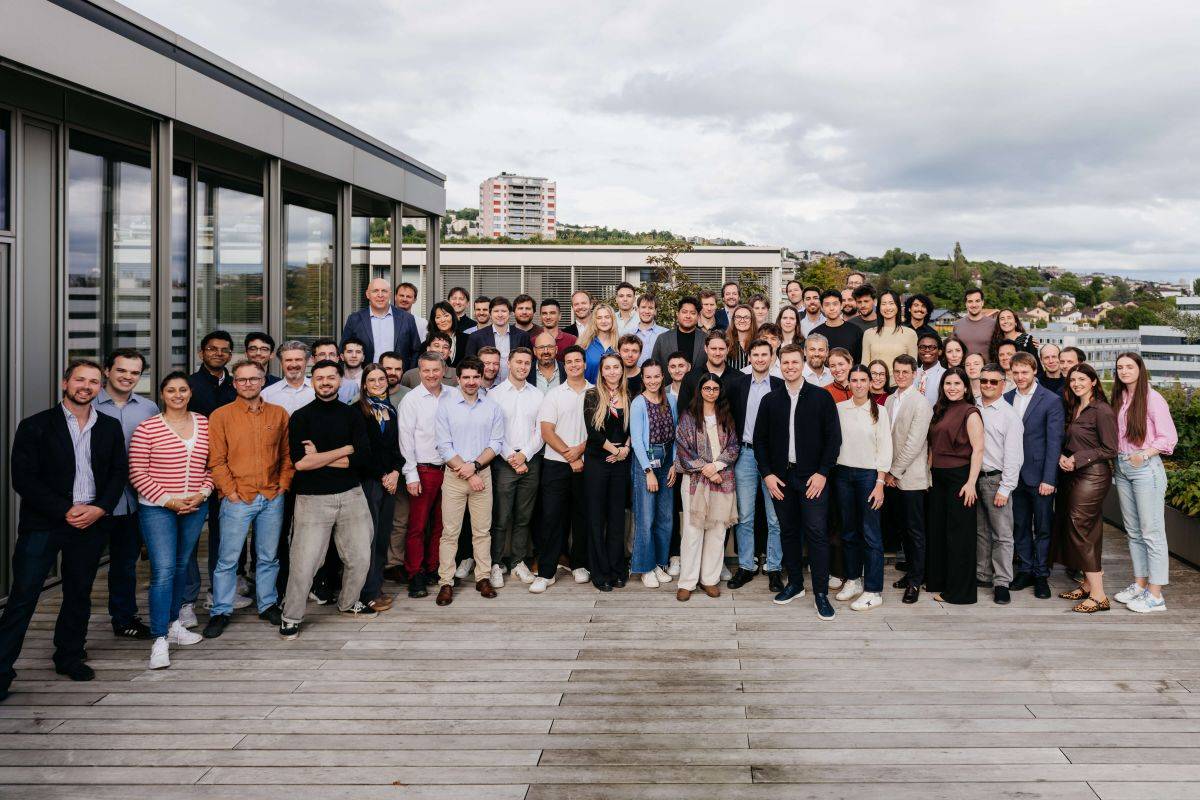
A strategic funding milestone has been secured by Visium as it raises new capital to accelerate expansion across Europe and the United States. The development underscores rising investor confidence in enterprise AI services, signaling intensified competition in the global AI consulting and implementation landscape.
Visium has successfully raised fresh funding aimed at scaling its operations across key European markets and expanding deeper into the US enterprise AI ecosystem. The company plans to deploy the capital toward hiring talent, strengthening delivery capabilities, and enhancing its AI consulting and data engineering offerings.
The funding round reflects continued investor appetite for applied AI firms that bridge the gap between advanced machine learning models and enterprise deployment. While financial details of the round are not fully disclosed in the announcement, the strategic focus is clearly on international expansion and enterprise adoption. The move positions Visium to compete more aggressively in high-demand AI transformation projects across industries.
The funding comes at a time when global demand for enterprise AI solutions is accelerating rapidly. Organizations across sectors such as finance, healthcare, retail, and manufacturing are increasingly investing in AI-driven transformation to improve efficiency, automation, and decision-making.
Visium operates in the growing “applied AI” segment, where companies focus not only on model development but also on deployment, integration, and scaling within real-world business environments. This segment has become highly competitive as traditional consulting firms and tech giants expand their AI capabilities.
Across Europe and the US, governments and corporations are also prioritizing AI adoption as part of broader digital transformation agendas. This has created a strong pipeline of enterprise demand, particularly for firms capable of delivering end-to-end AI solutions that align with regulatory and operational requirements in complex industries.
Industry analysts suggest that Visium’s expansion strategy aligns with a broader shift toward operational AI, where businesses prioritize real-world deployment over experimental model development. Experts highlight that firms with strong engineering talent and domain expertise are best positioned to capture enterprise AI budgets.
A technology analyst noted that “the next phase of AI growth will be defined by companies that can operationalize intelligence at scale within enterprise systems.” Investors are increasingly focusing on firms that demonstrate measurable business impact rather than purely research-driven capabilities.
Market observers also point out that Europe remains a strong hub for AI engineering talent, while the US offers deeper enterprise demand and larger-scale commercialization opportunities. This dual-market strategy is seen as critical for sustained growth in the competitive AI services ecosystem.
For enterprises, Visium’s expansion signals increased availability of specialized AI partners capable of delivering end-to-end transformation projects. Businesses may benefit from faster deployment cycles and more tailored AI solutions across operations, analytics, and customer experience.
For investors, the move reinforces confidence in applied AI as a scalable and commercially viable segment within the broader artificial intelligence market. However, competition is intensifying as both consulting giants and AI-native startups compete for enterprise contracts.
From a policy perspective, regulators in both Europe and the US may increasingly focus on AI governance, data privacy, and responsible deployment standards as adoption accelerates across industries.
Looking ahead, Visium’s success will depend on its ability to scale delivery capabilities while maintaining quality across diverse markets. Key watchpoints include client acquisition in the US, expansion speed in Europe, and competition from global consulting firms. The broader AI services market is expected to grow rapidly, but execution efficiency and talent retention will be critical differentiators.
Source: Startupticker
Date: June 26, 2026


