
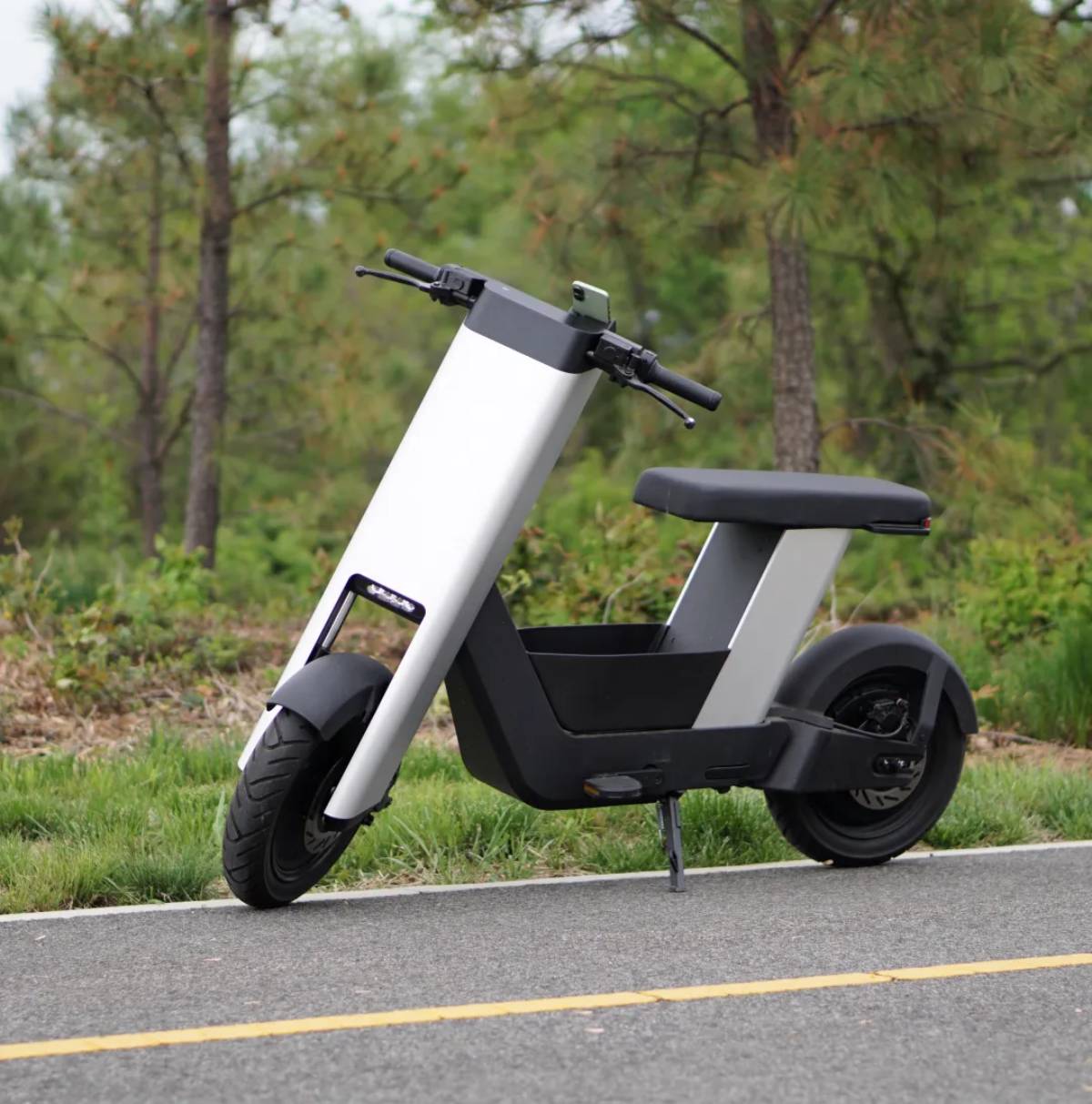
Cybertruck-Style E-Bike Targets Urban Mobility

The newly introduced e-bike, often described as the “Cybertruck of e-bikes,” is designed with a rugged, futuristic aesthetic and enhanced performance capabilities aimed at replacing short car commutes.

April 17, 2026
|
Image Source: The Verge

A new high-design electric bicycle inspired by automotive-grade engineering has entered the urban mobility market, positioning itself as a potential substitute for short-distance car travel. The development signals a strategic shift in micro-mobility innovation, with implications for transportation ecosystems, consumer mobility behavior, and sustainable urban infrastructure planning.

The newly introduced e-bike, often described as the “Cybertruck of e-bikes,” is designed with a rugged, futuristic aesthetic and enhanced performance capabilities aimed at replacing short car commutes. Developed by Infinite Machine, the model emphasizes durability, integrated digital systems, and high-torque electric propulsion.

The product targets urban commuters seeking alternatives to internal combustion vehicles for short trips. Its design prioritizes both form factor innovation and functional efficiency, aligning with the growing demand for electrified micro-mobility solutions. The launch comes amid rising global interest in compact electric transport options, particularly in congested metropolitan regions where traditional vehicles face regulatory and infrastructural constraints.

The e-bike sector has experienced rapid expansion over the past decade, driven by urban congestion, climate policy shifts, and advances in battery technology. Cities across Europe, North America, and parts of Asia have increasingly promoted micro-mobility solutions as part of broader decarbonization strategies.

This development aligns with a broader trend across global markets where transportation is being redefined by electrification, shared mobility platforms, and AI-driven urban planning systems. E-bikes, scooters, and compact EVs are now seen as integral components of future mobility ecosystems rather than niche alternatives.

Historically, bicycles served as low-cost transportation solutions, but modern e-bikes now integrate advanced propulsion systems, connectivity features, and smart controls. The entry of high-performance, design-forward models reflects a shift toward premiumization in the segment, where consumer expectations increasingly mirror automotive-level performance and design standards.

Mobility analysts suggest that high-performance e-bikes represent a convergence of automotive engineering principles and lightweight electric transport design. Experts note that consumer interest in replacing short car trips with electric micro-vehicles is accelerating, particularly in dense urban environments where parking and congestion costs are high.

Industry observers highlight that premium e-bike manufacturers are increasingly positioning their products as lifestyle replacements rather than simple commuting tools. This shift is being reinforced by advances in battery density, torque systems, and integrated smart controls.

Transportation policy analysts argue that adoption will depend heavily on infrastructure readiness, including dedicated cycling lanes, charging accessibility, and regulatory classification frameworks. While manufacturers emphasize performance and design, policymakers focus on safety compliance and urban integration. The divergence between innovation speed and regulatory adaptation remains a key tension in the sector.

For mobility companies, the emergence of automotive nspired e-bikes represents both an opportunity and a competitive disruption. Traditional automotive firms may face increased pressure in short-distance transport segments, while micro-mobility startups could see expanded market demand.

Investors in sustainable transport technologies may interpret this trend as a signal of accelerating adoption of alternative mobility ecosystems. However, scalability remains dependent on infrastructure investment and consumer behavioral shifts.

From a policy perspective, governments may need to update regulatory frameworks to accommodate high-speed, high-performance e-bikes. Issues such as road classification, safety standards, and insurance requirements will become increasingly important as micro-mobility blurs the line between bicycles and light electric vehicles.

Looking ahead, the success of premium e-bikes will depend on infrastructure development and consumer willingness to transition from car dependency. Market growth is expected to continue, particularly in urban centers prioritizing sustainability. Decision-makers should monitor regulatory evolution and infrastructure investments, which will determine adoption rates. The broader trajectory suggests that micro-mobility will increasingly compete directly with short-distance automotive travel in global cities.

Source: The Verge
Date: April 17, 2026

  • Featured tools
Writesonic AI
Free

Writesonic AI is a versatile AI writing platform designed for marketers, entrepreneurs, and content creators. It helps users create blog posts, ad copies, product descriptions, social media posts, and more with ease. With advanced AI models and user-friendly tools, Writesonic streamlines content production and saves time for busy professionals.

#
Copywriting
Learn more
Hostinger Website Builder
Paid

Hostinger Website Builder is a drag-and-drop website creator bundled with hosting and AI-powered tools, designed for businesses, blogs and small shops with minimal technical effort.It makes launching a site fast and affordable, with templates, responsive design and built-in hosting all in one.

#
Productivity
#
Startup Tools
#
Ecommerce
Learn more

Learn more about future of AI

Join 80,000+ Ai enthusiast getting weekly updates on exciting AI tools.
Thank you! Your submission has been received!
Oops! Something went wrong while submitting the form.

Cybertruck-Style E-Bike Targets Urban Mobility

April 17, 2026

The newly introduced e-bike, often described as the “Cybertruck of e-bikes,” is designed with a rugged, futuristic aesthetic and enhanced performance capabilities aimed at replacing short car commutes.

Image Source: The Verge

A new high-design electric bicycle inspired by automotive-grade engineering has entered the urban mobility market, positioning itself as a potential substitute for short-distance car travel. The development signals a strategic shift in micro-mobility innovation, with implications for transportation ecosystems, consumer mobility behavior, and sustainable urban infrastructure planning.

The newly introduced e-bike, often described as the “Cybertruck of e-bikes,” is designed with a rugged, futuristic aesthetic and enhanced performance capabilities aimed at replacing short car commutes. Developed by Infinite Machine, the model emphasizes durability, integrated digital systems, and high-torque electric propulsion.

The product targets urban commuters seeking alternatives to internal combustion vehicles for short trips. Its design prioritizes both form factor innovation and functional efficiency, aligning with the growing demand for electrified micro-mobility solutions. The launch comes amid rising global interest in compact electric transport options, particularly in congested metropolitan regions where traditional vehicles face regulatory and infrastructural constraints.

The e-bike sector has experienced rapid expansion over the past decade, driven by urban congestion, climate policy shifts, and advances in battery technology. Cities across Europe, North America, and parts of Asia have increasingly promoted micro-mobility solutions as part of broader decarbonization strategies.

This development aligns with a broader trend across global markets where transportation is being redefined by electrification, shared mobility platforms, and AI-driven urban planning systems. E-bikes, scooters, and compact EVs are now seen as integral components of future mobility ecosystems rather than niche alternatives.

Historically, bicycles served as low-cost transportation solutions, but modern e-bikes now integrate advanced propulsion systems, connectivity features, and smart controls. The entry of high-performance, design-forward models reflects a shift toward premiumization in the segment, where consumer expectations increasingly mirror automotive-level performance and design standards.

Mobility analysts suggest that high-performance e-bikes represent a convergence of automotive engineering principles and lightweight electric transport design. Experts note that consumer interest in replacing short car trips with electric micro-vehicles is accelerating, particularly in dense urban environments where parking and congestion costs are high.

Industry observers highlight that premium e-bike manufacturers are increasingly positioning their products as lifestyle replacements rather than simple commuting tools. This shift is being reinforced by advances in battery density, torque systems, and integrated smart controls.

Transportation policy analysts argue that adoption will depend heavily on infrastructure readiness, including dedicated cycling lanes, charging accessibility, and regulatory classification frameworks. While manufacturers emphasize performance and design, policymakers focus on safety compliance and urban integration. The divergence between innovation speed and regulatory adaptation remains a key tension in the sector.

For mobility companies, the emergence of automotive nspired e-bikes represents both an opportunity and a competitive disruption. Traditional automotive firms may face increased pressure in short-distance transport segments, while micro-mobility startups could see expanded market demand.

Investors in sustainable transport technologies may interpret this trend as a signal of accelerating adoption of alternative mobility ecosystems. However, scalability remains dependent on infrastructure investment and consumer behavioral shifts.

From a policy perspective, governments may need to update regulatory frameworks to accommodate high-speed, high-performance e-bikes. Issues such as road classification, safety standards, and insurance requirements will become increasingly important as micro-mobility blurs the line between bicycles and light electric vehicles.

Looking ahead, the success of premium e-bikes will depend on infrastructure development and consumer willingness to transition from car dependency. Market growth is expected to continue, particularly in urban centers prioritizing sustainability. Decision-makers should monitor regulatory evolution and infrastructure investments, which will determine adoption rates. The broader trajectory suggests that micro-mobility will increasingly compete directly with short-distance automotive travel in global cities.

Source: The Verge
Date: April 17, 2026

Promote Your Tool

Copy Embed Code

Similar Blogs

April 17, 2026
|

Cybertruck-Style E-Bike Targets Urban Mobility

The newly introduced e-bike, often described as the “Cybertruck of e-bikes,” is designed with a rugged, futuristic aesthetic and enhanced performance capabilities aimed at replacing short car commutes.
Read more
April 17, 2026
|

Casely Reissues Power Bank Recall Over Safety

Casely has officially reannounced a recall of its portable power bank products originally flagged in 2025, following confirmation of a fatality associated with battery malfunction.
Read more
April 17, 2026
|

Telegram Scrutiny Over $21B Crypto Scam

Investigations highlight that Telegram has remained a hosting channel for a sprawling crypto scam ecosystem despite prior sanctions and enforcement actions targeting related entities.
Read more
April 17, 2026
|

Europe Launches Online Age Verification App

European regulators have rolled out a new age verification app designed to help online platforms confirm user eligibility for age-restricted content and services.
Read more
April 17, 2026
|

Meta Raises Quest 3 Prices on Supply Strain

Meta has officially raised prices on its Quest 3 and Quest 3S VR headsets, citing increased memory (RAM) costs amid global supply constraints.
Read more
April 17, 2026
|

Ozlo Sleepbuds See 30% Price Cut

Ozlo Sleepbuds, designed for noise-masking and sleep optimization, are currently being offered at nearly 30% off their standard retail price in a limited-time promotional campaign aligned with Mother’s Day gifting demand.
Read more