
Developer Momentum Builds Around Omnibox as Browser Innovation Accelerates

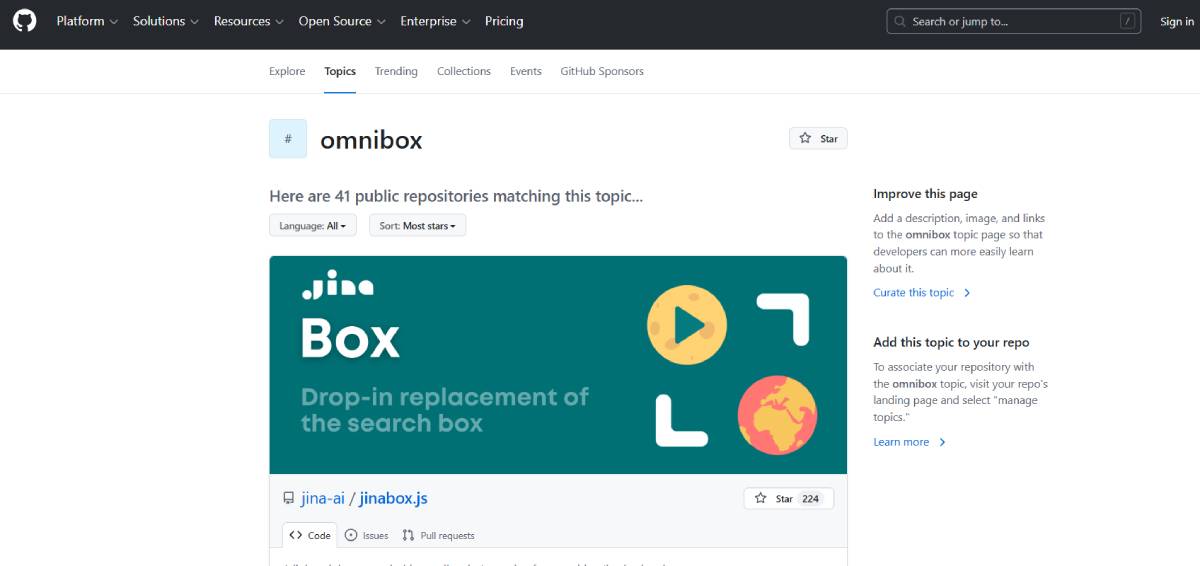
The GitHub “Omnibox” topic aggregates dozens of open-source projects focused on extending the capabilities of browser address bars and command palettes.

March 6, 2026
|

A notable development is emerging in the open-source ecosystem as developers increasingly build tools around the Omnibox architecture showcased across projects on GitHub. The surge in activity highlights how browser-based command interfaces are evolving into powerful productivity hubs, influencing how enterprises and developers design search, navigation, and AI-assisted workflows online.

The GitHub “Omnibox” topic aggregates dozens of open-source projects focused on extending the capabilities of browser address bars and command palettes. Developers are building tools that allow users to search databases, trigger workflows, launch commands, and integrate APIs directly from a unified interface.

Many projects are designed as browser extensions compatible with platforms such as Google Chrome, Mozilla Firefox, and Microsoft Edge.

Recent development activity suggests increasing experimentation with AI-powered features, enabling omnibox interfaces to generate results, execute queries, and automate tasks in real time.

For software companies and enterprise IT teams, these innovations signal a shift toward command-driven productivity environments embedded directly within web browsers.

The concept of the omnibox an integrated address bar that doubles as a search and command interface first gained mainstream prominence in Google Chrome, where users could type web addresses, search queries, or commands into a single field.

Over time, developers began expanding this concept into broader productivity tools. Modern command palettes in software applications, developer environments, and browsers now serve as universal control centers for navigating complex digital systems.

This evolution aligns with broader industry trends toward command-first interfaces and AI-assisted computing. Software platforms increasingly aim to reduce friction by allowing users to perform multiple tasks from a single interface, eliminating the need for complex navigation menus.

Open-source communities on GitHub have played a significant role in accelerating this innovation, creating modular omnibox tools that integrate with APIs, enterprise databases, and AI services. As digital workflows become more complex, such command-driven interfaces may become central to enterprise productivity systems.

Technology analysts note that omnibox-style interfaces represent an emerging paradigm in digital interaction, where the browser itself becomes a programmable operating layer for work.

Experts argue that command-based interfaces are particularly powerful when paired with AI models capable of interpreting natural language. Instead of navigating multiple tools, users could simply issue commands or queries directly through the omnibox.

Industry strategists also point out that this model mirrors the rise of command palettes in modern developer platforms and productivity software. Tools like integrated development environments and enterprise dashboards increasingly rely on universal command bars to accelerate navigation and automation.

Open-source contributors emphasize that GitHub’s collaborative ecosystem allows developers worldwide to experiment with new omnibox capabilities, rapidly iterating features such as AI query handling, workflow triggers, and data retrieval. Such experimentation could ultimately influence how browsers evolve into intelligent productivity platforms.

For enterprises, omnibox-driven interfaces could significantly reshape productivity workflows. Employees may soon access internal data, trigger automation processes, and run analytics queries directly from a browser command bar.

Technology investors are also monitoring the rise of command-driven interfaces, particularly as they intersect with AI. Startups building productivity tools, browser extensions, and developer platforms may leverage omnibox frameworks to differentiate their offerings.

From a policy perspective, increased browser-level automation may raise questions around security, data access, and privacy controls. Enterprises implementing omnibox integrations will need to ensure appropriate authentication systems and governance frameworks are in place.

Ultimately, these tools could streamline digital work environments while simultaneously expanding the attack surface for cyber risks. Looking ahead, omnibox innovation may play a central role in shaping the next generation of browser-based productivity tools. As AI models integrate more deeply into command interfaces, the omnibox could evolve into a universal control center for digital work. Decision-makers should watch how developers combine open-source innovation with enterprise automation, potentially redefining how professionals interact with the web.

Source: GitHub Topics – Omnibox
Date: March 6, 2026

  • Featured tools
Kreateable AI
Free

Kreateable AI is a white-label, AI-driven design platform that enables logo generation, social media posts, ads, and more for businesses, agencies, and service providers.

#
Logo Generator
Learn more
Wonder AI
Free

Wonder AI is a versatile AI-powered creative platform that generates text, images, and audio with minimal input, designed for fast storytelling, visual creation, and audio content generation

#
Art Generator
Learn more

Learn more about future of AI

Join 80,000+ Ai enthusiast getting weekly updates on exciting AI tools.
Thank you! Your submission has been received!
Oops! Something went wrong while submitting the form.

Developer Momentum Builds Around Omnibox as Browser Innovation Accelerates

March 6, 2026

The GitHub “Omnibox” topic aggregates dozens of open-source projects focused on extending the capabilities of browser address bars and command palettes.

A notable development is emerging in the open-source ecosystem as developers increasingly build tools around the Omnibox architecture showcased across projects on GitHub. The surge in activity highlights how browser-based command interfaces are evolving into powerful productivity hubs, influencing how enterprises and developers design search, navigation, and AI-assisted workflows online.

The GitHub “Omnibox” topic aggregates dozens of open-source projects focused on extending the capabilities of browser address bars and command palettes. Developers are building tools that allow users to search databases, trigger workflows, launch commands, and integrate APIs directly from a unified interface.

Many projects are designed as browser extensions compatible with platforms such as Google Chrome, Mozilla Firefox, and Microsoft Edge.

Recent development activity suggests increasing experimentation with AI-powered features, enabling omnibox interfaces to generate results, execute queries, and automate tasks in real time.

For software companies and enterprise IT teams, these innovations signal a shift toward command-driven productivity environments embedded directly within web browsers.

The concept of the omnibox an integrated address bar that doubles as a search and command interface first gained mainstream prominence in Google Chrome, where users could type web addresses, search queries, or commands into a single field.

Over time, developers began expanding this concept into broader productivity tools. Modern command palettes in software applications, developer environments, and browsers now serve as universal control centers for navigating complex digital systems.

This evolution aligns with broader industry trends toward command-first interfaces and AI-assisted computing. Software platforms increasingly aim to reduce friction by allowing users to perform multiple tasks from a single interface, eliminating the need for complex navigation menus.

Open-source communities on GitHub have played a significant role in accelerating this innovation, creating modular omnibox tools that integrate with APIs, enterprise databases, and AI services. As digital workflows become more complex, such command-driven interfaces may become central to enterprise productivity systems.

Technology analysts note that omnibox-style interfaces represent an emerging paradigm in digital interaction, where the browser itself becomes a programmable operating layer for work.

Experts argue that command-based interfaces are particularly powerful when paired with AI models capable of interpreting natural language. Instead of navigating multiple tools, users could simply issue commands or queries directly through the omnibox.

Industry strategists also point out that this model mirrors the rise of command palettes in modern developer platforms and productivity software. Tools like integrated development environments and enterprise dashboards increasingly rely on universal command bars to accelerate navigation and automation.

Open-source contributors emphasize that GitHub’s collaborative ecosystem allows developers worldwide to experiment with new omnibox capabilities, rapidly iterating features such as AI query handling, workflow triggers, and data retrieval. Such experimentation could ultimately influence how browsers evolve into intelligent productivity platforms.

For enterprises, omnibox-driven interfaces could significantly reshape productivity workflows. Employees may soon access internal data, trigger automation processes, and run analytics queries directly from a browser command bar.

Technology investors are also monitoring the rise of command-driven interfaces, particularly as they intersect with AI. Startups building productivity tools, browser extensions, and developer platforms may leverage omnibox frameworks to differentiate their offerings.

From a policy perspective, increased browser-level automation may raise questions around security, data access, and privacy controls. Enterprises implementing omnibox integrations will need to ensure appropriate authentication systems and governance frameworks are in place.

Ultimately, these tools could streamline digital work environments while simultaneously expanding the attack surface for cyber risks. Looking ahead, omnibox innovation may play a central role in shaping the next generation of browser-based productivity tools. As AI models integrate more deeply into command interfaces, the omnibox could evolve into a universal control center for digital work. Decision-makers should watch how developers combine open-source innovation with enterprise automation, potentially redefining how professionals interact with the web.

Source: GitHub Topics – Omnibox
Date: March 6, 2026

Promote Your Tool

Copy Embed Code

Similar Blogs

March 18, 2026
|

Micron Set for Earnings Surge from AI Demand

Micron is set to report its Q1 2026 earnings next week, with analysts forecasting substantial year-over-year growth due to heightened demand for DRAM and NAND memory in AI applications.
Read more
March 18, 2026
|

Meta Manus Expands AI Agent Desktop Reach

Meta’s Manus desktop app allows users to deploy the AI agent outside cloud-only environments, enhancing speed, personalization, and offline capabilities.
Read more
March 18, 2026
|

AI Advertising Crackdown Bans “Remove Anything” Claims

The ruling by the Advertising Standards Authority determined that the ad’s claims were misleading and could exaggerate the app’s capabilities.
Read more
March 18, 2026
|

Court Ruling Boosts Perplexity AI Competition

A court decision has halted efforts by Amazon to ban or limit AI agents developed by Perplexity AI on its platform. The ruling allows continued deployment and operation of these AI tools, at least temporarily.
Read more
March 18, 2026
|

Compute Divide Intensifies US China AI Rivalry

The growing disparity in computing power driven by access to advanced semiconductors and large-scale data centers is becoming central to AI competitiveness.
Read more
March 18, 2026
|

Samsung Signals AI Driven Chip Boom Into 2026

An executive at Samsung Electronics indicated that demand for AI-related semiconductors is expected to remain robust through 2026, driven by expanding use cases in data.
Read more