



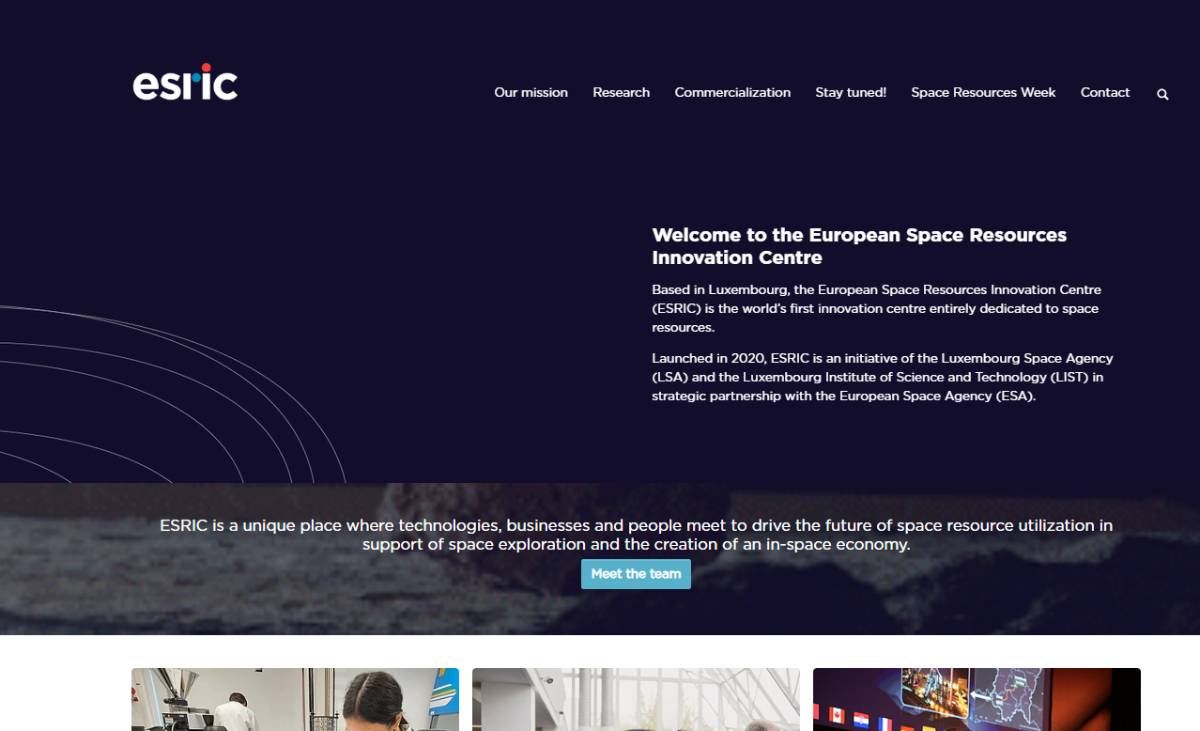
Luxembourg's European Space Resources Innovation Centre (ESRIC) is celebrating five years of advancing space resources research, startup development, and sustainable technology innovation. The milestone highlights Europe's growing ambition to build a competitive space economy while supporting entrepreneurs, scientific research, and commercial technologies with applications both on Earth and beyond.
Over the past five years, ESRIC has established itself as a leading innovation hub focused on space resources, entrepreneurship, and sustainable technologies. The initiative has supported startups, research institutions, and industry partners developing technologies related to space exploration, resource utilization, robotics, advanced materials, and environmental sustainability.
The centre has fostered collaboration between public institutions, universities, private companies, and international organizations, helping transform scientific research into commercially viable businesses. Its activities also strengthen Luxembourg's broader strategy of positioning itself as a global leader in the emerging space economy while encouraging innovation that benefits multiple industries beyond aerospace.
Luxembourg has spent more than a decade building one of Europe's most ambitious national space strategies. Through investments in satellite communications, commercial space initiatives, and regulatory innovation, the country has positioned itself as a leading destination for companies developing next-generation space technologies.
ESRIC was established to accelerate innovation in space resources, including technologies that may eventually enable the extraction and utilization of materials from the Moon, asteroids, and other celestial bodies. While many of these capabilities remain long-term objectives, research conducted today is already producing commercial applications in robotics, artificial intelligence, advanced manufacturing, environmental monitoring, and resource management.
The initiative aligns with broader European efforts to strengthen technological sovereignty, promote sustainable innovation, and expand the continent's participation in the rapidly growing global space economy. Increasing collaboration between governments, academia, and private industry has become essential for maintaining competitiveness in this strategically important sector.
Industry experts view ESRIC's progress as evidence that innovation ecosystems built around specialized research can generate long-term economic value beyond their original scientific objectives. Analysts note that technologies initially developed for space missions frequently find commercial applications in healthcare, manufacturing, energy, agriculture, and environmental sustainability.
Space industry leaders emphasize that successful commercialization depends on sustained collaboration between governments, investors, research institutions, and entrepreneurs. Public-private partnerships remain critical for reducing technological risk while accelerating market adoption.
Innovation specialists also argue that Luxembourg's long-term commitment to space resources has helped attract international startups, researchers, and investors seeking access to specialized expertise and supportive policy frameworks. Many believe initiatives like ESRIC demonstrate how smaller economies can achieve global influence by focusing investment on high-value, knowledge-intensive industries with significant future growth potential.
For businesses, ESRIC's continued development creates new opportunities across aerospace, advanced manufacturing, robotics, artificial intelligence, resource management, and sustainability technologies. Startups and established companies may benefit from stronger research collaboration, commercialization support, and access to international innovation networks.
Investors are likely to monitor emerging space technologies as commercialization opportunities continue expanding across multiple industries. For policymakers, the initiative reinforces the importance of long-term investment in research, education, and innovation infrastructure to strengthen economic competitiveness. The programme also illustrates how government-supported innovation ecosystems can accelerate private-sector growth while advancing strategic technological capabilities.
Looking ahead, ESRIC is expected to expand its support for deep-tech startups, international partnerships, and breakthrough research in space resources and sustainable technologies. Decision-makers will closely monitor commercialization outcomes, private investment activity, and cross-sector innovation emerging from the programme. As the global space economy continues to evolve, Luxembourg's long-term commitment positions it to remain an influential player in Europe's next generation of space innovation.
Source: Silicon Luxembourg
Date: July 10, 2026


