
Europe’s AI Wake-Up Call: Schneider Electric CEO Sovereign Tech Push

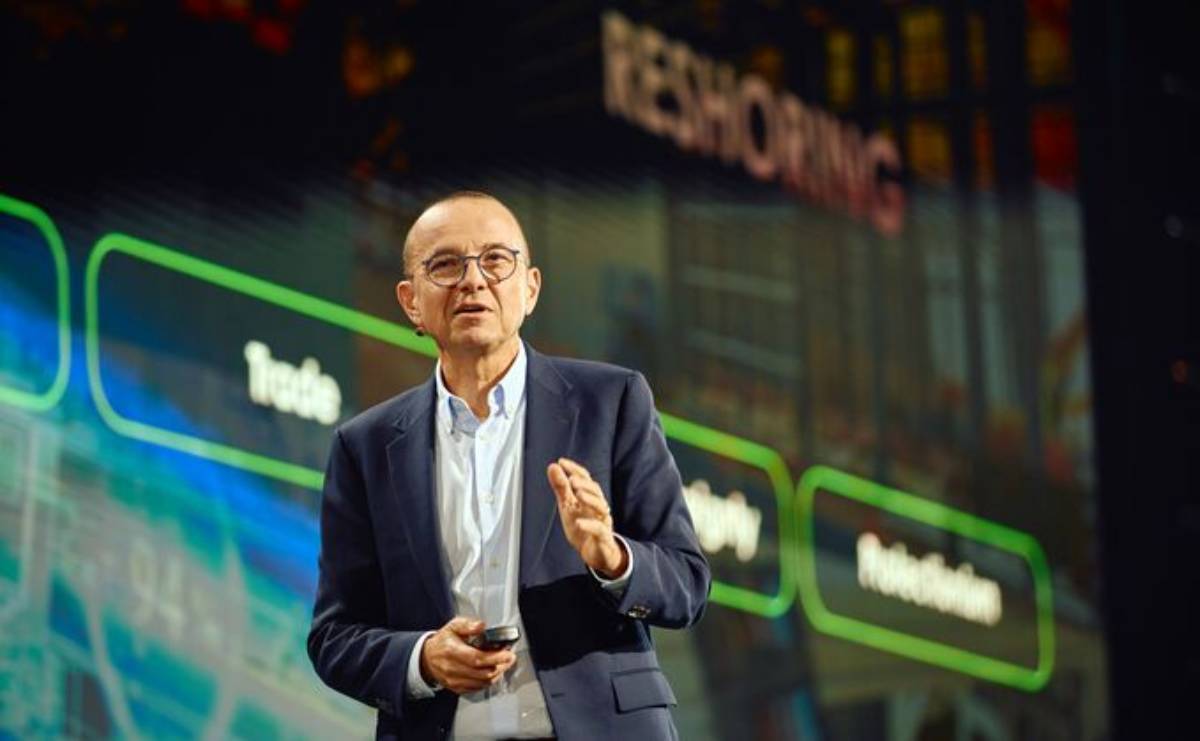
A strategic warning from Europe’s industrial leadership is gaining traction as Schneider Electric CEO Peter Herweck calls for stronger AI sovereignty across the continent. Speaking to CNBC.

January 22, 2026
|

A strategic warning from Europe’s industrial leadership is gaining traction as Schneider Electric CEO Peter Herweck calls for stronger AI sovereignty across the continent. Speaking to CNBC, he underscored the risks of overreliance on foreign AI platforms, signalling growing urgency for policymakers, enterprises, and investors to rethink Europe’s technological independence

Schneider Electric’s CEO emphasized that Europe must build its own AI capabilities rather than depend heavily on U.S. and Chinese technology ecosystems. The remarks come amid accelerating global investment in generative and industrial AI, where control over data, infrastructure, and compute power is becoming a strategic asset.

Herweck highlighted the role of European industry in anchoring AI development, particularly in energy management, automation, and manufacturing sectors where Schneider Electric operates at scale. The comments arrive as the European Union advances regulatory frameworks such as the AI Act, while simultaneously facing criticism for lagging in AI infrastructure, cloud platforms, and large-scale model development.

The development aligns with a broader trend across global markets where AI is increasingly viewed as a pillar of economic and geopolitical power. The United States continues to dominate foundation models and cloud infrastructure, while China is rapidly scaling state-backed AI ecosystems. Europe, by contrast, has focused heavily on regulation, ethics, and data protection.

While these guardrails have positioned the EU as a global standard-setter, critics argue they have also slowed commercial AI deployment. Recent debates around digital sovereignty spanning semiconductors, cloud computing, and energy systems reflect growing concern that Europe risks becoming strategically dependent in critical technologies.

Schneider Electric’s intervention adds an industrial voice to this debate, reinforcing calls from European leaders to pair regulation with large-scale investment, public-private partnerships, and industrial AI platforms rooted in European values and supply chains.

Industry analysts view the remarks as a signal that European multinationals are becoming more vocal about AI competitiveness. “This is not just about technology it’s about resilience and control,” said one Brussels-based digital policy expert, noting parallels with Europe’s push for energy security after recent geopolitical shocks.

Executives across manufacturing and energy sectors have echoed concerns that reliance on non-European AI stacks could expose businesses to regulatory conflicts, data sovereignty risks, and supply disruptions. While EU officials have acknowledged these challenges, they maintain that Europe’s regulatory-first approach builds long-term trust and adoption.

Market observers note that companies like Schneider Electric, Siemens, and SAP are increasingly positioned as anchors for a European industrial AI ecosystem, blending operational technology with AI-driven decision-making at scale.

For European businesses, the call for AI sovereignty could accelerate investment in regional cloud providers, industrial AI platforms, and local data infrastructure. Companies may reassess vendor strategies to reduce exposure to geopolitical and regulatory risk.

Investors could see renewed momentum in European AI automation, and semiconductor initiatives, particularly those aligned with public funding. For policymakers, the message is clear: regulation alone is insufficient. Analysts warn that without coordinated investment and faster execution, Europe risks ceding not just AI leadership but long-term industrial competitiveness in a data-driven global economy.

Looking ahead, AI sovereignty is expected to rise on the EU’s strategic agenda through 2026, alongside energy transition and industrial resilience. Decision-makers will watch for concrete funding commitments, cross-border AI projects, and partnerships between industry and governments. The challenge for Europe will be translating strong rhetoric into scalable AI infrastructure before global technology gaps widen further.

Source & Date

Source: CNBC
Date: January 20, 2026

  • Featured tools
WellSaid Ai
Free

WellSaid AI is an advanced text-to-speech platform that transforms written text into lifelike, human-quality voiceovers.

#
Text to Speech
Learn more
Upscayl AI
Free

Upscayl AI is a free, open-source AI-powered tool that enhances and upscales images to higher resolutions. It transforms blurry or low-quality visuals into sharp, detailed versions with ease.

#
Productivity
Learn more

Learn more about future of AI

Join 80,000+ Ai enthusiast getting weekly updates on exciting AI tools.
Thank you! Your submission has been received!
Oops! Something went wrong while submitting the form.

Europe’s AI Wake-Up Call: Schneider Electric CEO Sovereign Tech Push

January 22, 2026

A strategic warning from Europe’s industrial leadership is gaining traction as Schneider Electric CEO Peter Herweck calls for stronger AI sovereignty across the continent. Speaking to CNBC.

A strategic warning from Europe’s industrial leadership is gaining traction as Schneider Electric CEO Peter Herweck calls for stronger AI sovereignty across the continent. Speaking to CNBC, he underscored the risks of overreliance on foreign AI platforms, signalling growing urgency for policymakers, enterprises, and investors to rethink Europe’s technological independence

Schneider Electric’s CEO emphasized that Europe must build its own AI capabilities rather than depend heavily on U.S. and Chinese technology ecosystems. The remarks come amid accelerating global investment in generative and industrial AI, where control over data, infrastructure, and compute power is becoming a strategic asset.

Herweck highlighted the role of European industry in anchoring AI development, particularly in energy management, automation, and manufacturing sectors where Schneider Electric operates at scale. The comments arrive as the European Union advances regulatory frameworks such as the AI Act, while simultaneously facing criticism for lagging in AI infrastructure, cloud platforms, and large-scale model development.

The development aligns with a broader trend across global markets where AI is increasingly viewed as a pillar of economic and geopolitical power. The United States continues to dominate foundation models and cloud infrastructure, while China is rapidly scaling state-backed AI ecosystems. Europe, by contrast, has focused heavily on regulation, ethics, and data protection.

While these guardrails have positioned the EU as a global standard-setter, critics argue they have also slowed commercial AI deployment. Recent debates around digital sovereignty spanning semiconductors, cloud computing, and energy systems reflect growing concern that Europe risks becoming strategically dependent in critical technologies.

Schneider Electric’s intervention adds an industrial voice to this debate, reinforcing calls from European leaders to pair regulation with large-scale investment, public-private partnerships, and industrial AI platforms rooted in European values and supply chains.

Industry analysts view the remarks as a signal that European multinationals are becoming more vocal about AI competitiveness. “This is not just about technology it’s about resilience and control,” said one Brussels-based digital policy expert, noting parallels with Europe’s push for energy security after recent geopolitical shocks.

Executives across manufacturing and energy sectors have echoed concerns that reliance on non-European AI stacks could expose businesses to regulatory conflicts, data sovereignty risks, and supply disruptions. While EU officials have acknowledged these challenges, they maintain that Europe’s regulatory-first approach builds long-term trust and adoption.

Market observers note that companies like Schneider Electric, Siemens, and SAP are increasingly positioned as anchors for a European industrial AI ecosystem, blending operational technology with AI-driven decision-making at scale.

For European businesses, the call for AI sovereignty could accelerate investment in regional cloud providers, industrial AI platforms, and local data infrastructure. Companies may reassess vendor strategies to reduce exposure to geopolitical and regulatory risk.

Investors could see renewed momentum in European AI automation, and semiconductor initiatives, particularly those aligned with public funding. For policymakers, the message is clear: regulation alone is insufficient. Analysts warn that without coordinated investment and faster execution, Europe risks ceding not just AI leadership but long-term industrial competitiveness in a data-driven global economy.

Looking ahead, AI sovereignty is expected to rise on the EU’s strategic agenda through 2026, alongside energy transition and industrial resilience. Decision-makers will watch for concrete funding commitments, cross-border AI projects, and partnerships between industry and governments. The challenge for Europe will be translating strong rhetoric into scalable AI infrastructure before global technology gaps widen further.

Source & Date

Source: CNBC
Date: January 20, 2026

Promote Your Tool

Copy Embed Code

Similar Blogs

March 20, 2026
|

AI Agents Rise as Assistants Amid Growing Global Scrutiny

AI-powered agents are increasingly capable of acting autonomously booking travel, managing emails, making purchases, and interacting with digital platforms on behalf of users.
Read more
March 20, 2026
|

Alibaba Targets $100B AI Revenue in Five Years

Alibaba has outlined plans to scale its artificial intelligence business to $100 billion in revenue over the next five years, reflecting a major shift in corporate priorities.
Read more
March 20, 2026
|

Yotta Targets $4B Valuation Ahead of IPO

Yotta is reportedly positioning itself for a public listing, targeting a valuation of approximately $4 billion. The company is engaging with investors and advisors as it prepares for an IPO in the near term.
Read more
March 20, 2026
|

DoorDash Launches Tasks App for AI Training

DoorDash’s new “Tasks” app enables couriers to earn additional income by completing assignments that involve recording videos of real-world environments.
Read more
March 20, 2026
|

Bezos Explores $100B AI Transformation Fund

Jeff Bezos is reportedly in discussions with investors to launch a massive AI-focused investment vehicle, potentially one of the largest technology funds ever created.
Read more
March 18, 2026
|

Micron Set for Earnings Surge from AI Demand

Micron is set to report its Q1 2026 earnings next week, with analysts forecasting substantial year-over-year growth due to heightened demand for DRAM and NAND memory in AI applications.
Read more